Medicine · 4 min read
Antibiotics: when they help and why unnecessary use matters
A practical guide to appropriate antibiotic use, clear prescription instructions and knowing when to seek advice.
AI-assisted general health education, not personal medical advice or human clinical review. Do not start, stop or change prescribed treatment on your own; contact your clinician about concerns or side effects. Severe reactions require immediate medical attention.
Information may contain errors, omissions or outdated guidance. This article is general education, not individual medical or other professional advice. Verify important information before acting and consult an appropriately qualified professional. Never disregard medical advice, delay care or change treatment because of this article. See our accuracy disclaimer and terms.
A useful medicine needs the right reason
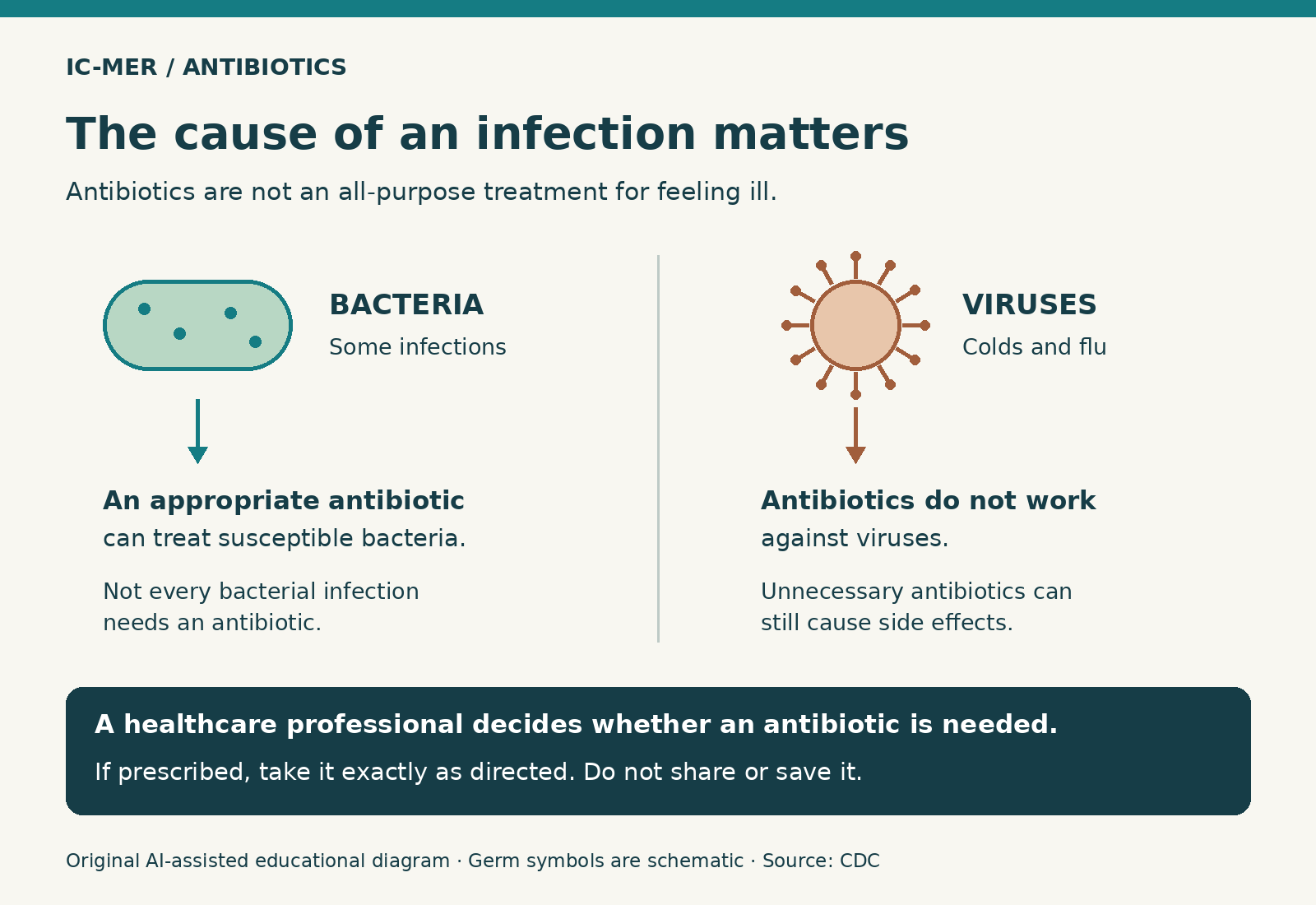
When you feel miserable, leaving an appointment without a prescription can feel disappointing. But an antibiotic is not a general shortcut to recovery. It treats certain bacterial infections by killing bacteria or limiting their growth. It does not treat the viruses that cause colds or flu. The useful question is not whether a medicine sounds strong, but whether it addresses the illness you actually have.
Antibiotics can be lifesaving when needed. Avoiding unnecessary use does not mean refusing appropriate treatment. A clinician assesses the likely cause and your circumstances, then recommends a plan. Ask what that plan is meant to accomplish, including symptom relief and follow-up if you are not improving.
Symptoms alone do not choose the treatment
CDC lists strep throat, whooping cough and urinary tract infections among infections antibiotics can treat. However, many sinus infections and some ear infections can improve without them. The distinction is more useful than a blanket rule that every bacterial illness needs an antibiotic.
A runny nose with yellow or green mucus is not, by itself, a reason to take antibiotics. Most sore throats and most cases of bronchitis also do not need them. If you are told your illness is viral, ask what you can safely do for discomfort and which changes should prompt another assessment. Do not pressure a clinician for a prescription just in case.
Imagine two relatives who both have a sore throat. One received an antibiotic after an assessment; the other has not been assessed. Similar symptoms do not make sharing the first person's prescription a sensible plan. The second person needs advice appropriate to their own illness. This is a hypothetical example, not a way to diagnose either person.
Resistance happens in germs, not in your willpower
Antibiotic resistance means bacteria can withstand medicines intended to control them. It does not mean your body has become immune to an antibiotic. Resistant infections can be harder to treat, and resistance can spread between germs and through communities.
Antibiotics affect helpful bacteria as well as bacteria causing illness. Their use creates pressure that favors resistant germs, which can survive and multiply. Resistance is not only the result of an individual taking medicine incorrectly: it is a wider problem involving healthcare, animals, agriculture and the environment. Using antibiotics appropriately is one practical contribution, not a personal guarantee that a resistant infection will never occur.
Sources: [3]
If prescribed, leave with clear instructions
Take your antibiotic exactly as prescribed. Do not share it, save it for another illness or use someone else's supply. Ask the pharmacist to clarify instructions you do not understand, and contact the prescriber about side effects or concerns rather than choosing a different dose or duration yourself.
Before leaving, make the plan usable at home. Can you explain when each dose is due and the prescribed treatment length? Do you know whom to contact if you miss a dose, vomit after taking it or cannot obtain the medicine? These are questions for your particular prescription; a general article cannot give one answer for every antibiotic.
Keep the label and written instructions together. If another person helps manage your medicines, agree how you will record doses so nobody has to guess. Bring your medication list and allergy history to the consultation. If a past reaction is unclear, describe what happened rather than testing the medicine yourself. Ask a pharmacist how to dispose of any medicine that remains after a clinician changes treatment.
Side effects deserve attention
Antibiotics can cause problems such as nausea, rash, diarrhea or yeast infections. Serious allergic reactions can also occur. Contact a healthcare professional about side effects; a severe reaction needs immediate medical attention. Concern about resistance should never become a reason to ignore a reaction or postpone necessary care.
C. diff is a bacterium that can cause diarrhea and inflammation of the colon. Most C. diff infections occur during or soon after antibiotic use. Antibiotics can disrupt helpful gut bacteria, making it easier for C. diff to grow. Not every episode of diarrhea is C. diff, but diarrhea during or after antibiotics warrants contacting a healthcare professional for assessment. Tell them which antibiotic you took and when.
Before starting treatment, ask what side effects to watch for and how to get help outside office hours. Write the contact details beside the medication instructions. That small preparation is more useful than trying to decide, while unwell, whether an unfamiliar symptom is something you were supposed to expect.
Make the next conversation specific
Try three questions: What is the likely cause of this illness? What benefit would an antibiotic offer in my case? What is the follow-up plan if symptoms persist or worsen? If an antibiotic is prescribed, add questions about dosing, treatment length and side effects.
A decision against antibiotics should still come with a care plan. A decision to prescribe should come with instructions you understand. In either case, the aim is appropriate treatment for the person and infection in front of the clinician—not the largest number of medicines.
Sources & further reading
- CDC: Healthy Habits—Antibiotic Do's and Don'tsChecked 2026-10-26
- FDA: Antibiotics and Antibiotic ResistanceChecked 2026-10-26
- CDC: About Antimicrobial ResistanceChecked 2026-10-26
- MedlinePlus: AntibioticsChecked 2026-10-26
- CDC: About C. diffChecked 2026-10-26
About this article
Prepared with AI assistance and an AI fact-checking pass against the sources listed above. No human clinical review is claimed. Evidence may change; consult appropriate qualified professionals for decisions about your circumstances.
Spotted a problem? Suggest a correction.