Medicine · 7 min read
Adult vaccinations: planning a conversation with your clinician
A few records and focused questions can make an adult vaccination conversation more useful. Here is how to prepare, clarify the plan and keep track afterward.
Prepared with AI assistance for general education. This is not an individualized vaccination schedule or human clinical review. Discuss vaccine selection, timing, contraindications and aftercare with a qualified healthcare professional using current guidance. Do not change prescribed medicines on your own.
Information may contain errors, omissions or outdated guidance. This article is general education, not individual medical or other professional advice. Verify important information before acting and consult an appropriately qualified professional. Never disregard medical advice, delay care or change treatment because of this article. See our accuracy disclaimer and terms.
Start with a review, not a memory test
An adult vaccination visit is easier when you bring a few useful facts rather than try to memorize a schedule. The aim is to find out what protection is appropriate for you now, what you have already received, and what needs follow-up. A recommendation for a friend of the same age may not answer all of those questions for you.
Vaccines can help protect adults against serious diseases. Your vaccination needs can change with age, health conditions, work, travel and previous doses. Feeling well does not settle whether a vaccine is recommended. A review with your healthcare professional connects these factors to current guidance and your circumstances.
This article is a preparation guide for that conversation in the United States, not a personalized vaccination schedule. Recommendations and available products can change. Ask your clinician to use current guidance at the time of your visit rather than relying on an old chart, a remembered advertisement or a social-media list.
Bring the records you can find
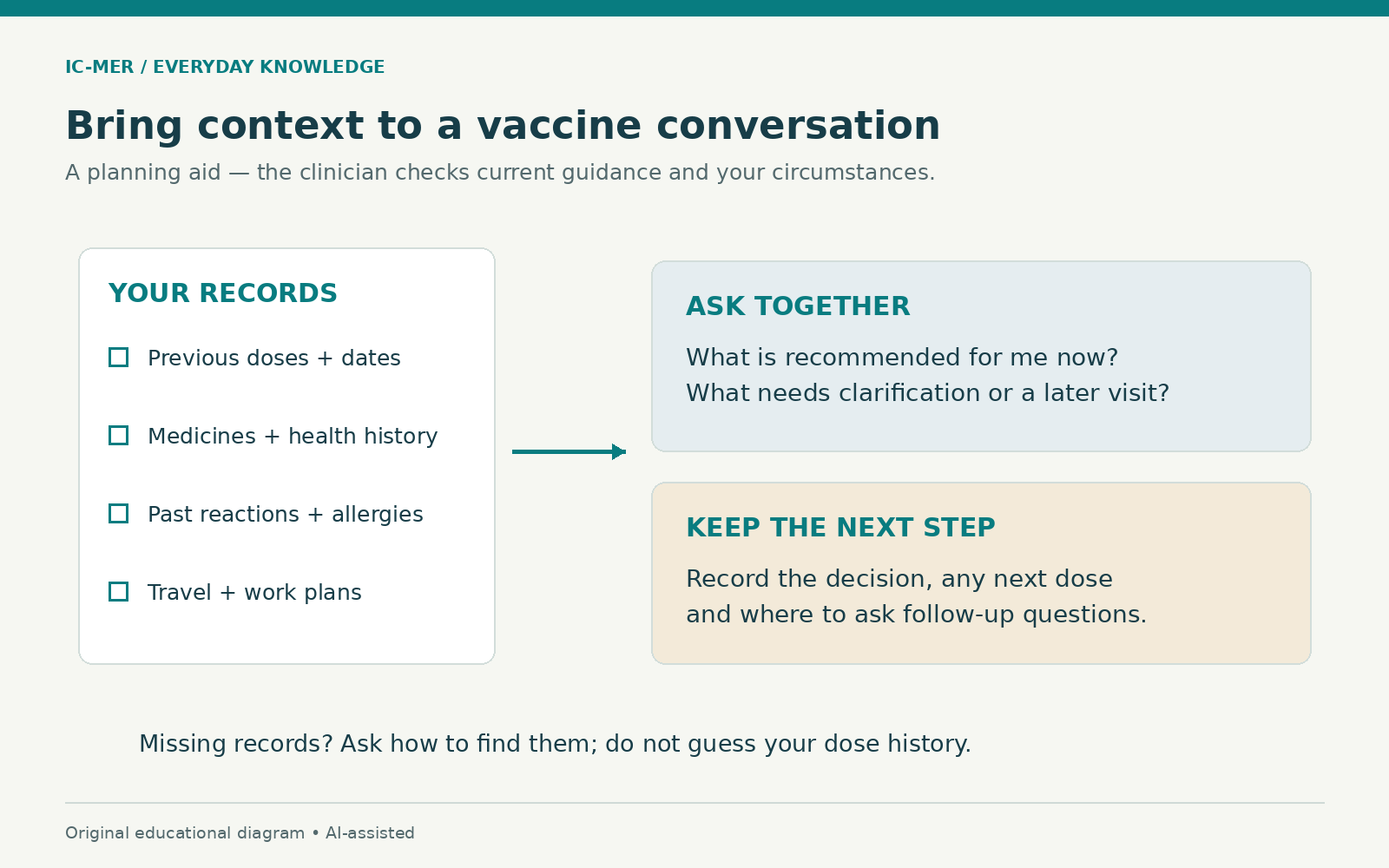
Look for a vaccination card, records from previous clinicians, pharmacy documentation, school records, military or other employment records, and information kept by family members. A state immunization registry may also have adult records. CDC itself does not keep a national file of your personal vaccinations.
Put what you find in one folder or a clearly named digital file. Keep the actual dates and vaccine names visible. If you remember a dose but cannot find documentation, label it as a memory rather than silently treating it as a confirmed record. Let the clinician decide what evidence is sufficient for the vaccine in question.
An incomplete history is a reason to ask for help, not to postpone the conversation indefinitely. A clinician may recommend additional vaccination or, for some diseases, testing for immunity. Do not order a broad set of antibody tests on your own or assume every missing record means every series must be repeated.
Make a short health and life update
Alongside the records, bring a current medication list and note important health changes. Tell the vaccine provider about pregnancy or plans for pregnancy, immune-system problems, cancer treatment, a transplant, medicines that suppress immunity, and significant reactions after earlier doses. Include recent vaccinations received elsewhere so the provider can check timing.
Add upcoming travel and any work-related exposure concerns. For a trip, write down the destinations, dates and type of activities instead of saying only that you are going abroad. Travel recommendations can depend on the itinerary as well as your health and vaccination history.
A simple page can have three headings: what I received, what changed, and what I want to ask. For example, a traveler might note an upcoming departure and missing childhood records; someone starting a new treatment might list the treatment date and the prescribing office. These are ways to organize a discussion, not instructions to select particular vaccines.
Ask what the recommendation means for you
For each vaccine being discussed, ask what disease it helps prevent and why it is being considered for you. Ask about the expected benefit, known risks, the product being offered and whether your history changes the plan. It is reasonable to ask the clinician to explain unfamiliar terms in everyday language.
You can say, “I want to understand the main reason for this recommendation in my situation.” If you have several questions, start with the one most likely to affect your decision. A specific concern about a previous experience is easier to address than a general request to explain everything about vaccination.
Ask which parts of the plan need action now and which need more information first. If a record must be obtained or another clinician consulted, agree on who will do that and when you should hear back. Leaving with a clear next step is more useful than leaving with a list of vaccine names you cannot interpret.
If you bring a news story or a message from a friend, identify the exact point that concerns you. For example: “Does this apply to the product you are recommending, and does it apply to someone with my history?” Ask where you can read reliable information afterward. You do not need to resolve every online claim during one appointment. Focus first on the decision in front of you and the information needed to make it. If the explanation is still unclear, repeat it back in your own words and invite the clinician to correct your understanding.
Sources: [3]
Describe previous reactions precisely
A sore arm after an earlier dose and a severe allergic reaction are different concerns. Tell the provider what happened, how soon it began, how long it lasted and whether you needed emergency treatment. If you have documentation, bring it. Do not dismiss a serious reaction, but do not label every unpleasant experience as an allergy without review.
Providers should screen for reasons a particular vaccine should not be given and for circumstances requiring extra caution before each dose. Pregnancy and severe immune suppression can affect which vaccines are suitable, particularly live vaccines. A moderate or severe current illness can also change the timing.
Call the vaccination service if you become ill before the appointment and describe the symptoms. Let the clinical team decide whether to proceed or reschedule. Do not stop prescribed medicines, alter treatment or try to manage an allergy yourself to make a vaccination appointment possible.
Sources: [5]
Plan for the visit and the hours afterward
Before vaccination, ask for the relevant patient information and aftercare instructions. CDC describes Vaccine Information Statements as resources explaining benefits and risks. Ask what effects are expected for the product, which symptoms require medical attention, how long to remain at the vaccination site and whom to contact afterward.
If needles, fainting or previous difficult appointments worry you, say so before the injection. Ask what the service can do to help you through the visit. Bring the glasses, hearing aids, interpreter arrangements or support you need to understand the conversation, and request instructions in a form you can use later.
Put the clinic contact details beside your appointment note. Practical planning might include leaving enough time for the visit and arranging help with a demanding task if needed. These arrangements do not predict how you will feel; they simply make it easier to follow the instructions you receive.
Sources: [2]
Check availability and payment before traveling
Vaccines may be offered by medical offices, pharmacies, health departments and community health centers, but a particular location may not stock the product recommended for you. Ask whether an appointment or prescription is needed and whether the service can review your history. Pharmacy rules vary by state and by the vaccine and patient involved.
Confirm coverage with both the provider and your insurer. Ask about the specific vaccine, the location, network status and any visit or administration charges. A statement that vaccines are covered does not answer every billing question. Keep a note of what you were told and ask for clarification if the provider and plan give different answers.
If you are uninsured or cost is a barrier, ask a health department or federally funded health center about available options and eligibility. Some centers use income-based sliding fees. Do not assume that every vaccine is free at every location; check the actual service before making the trip.
Turn a recommendation into a completed plan
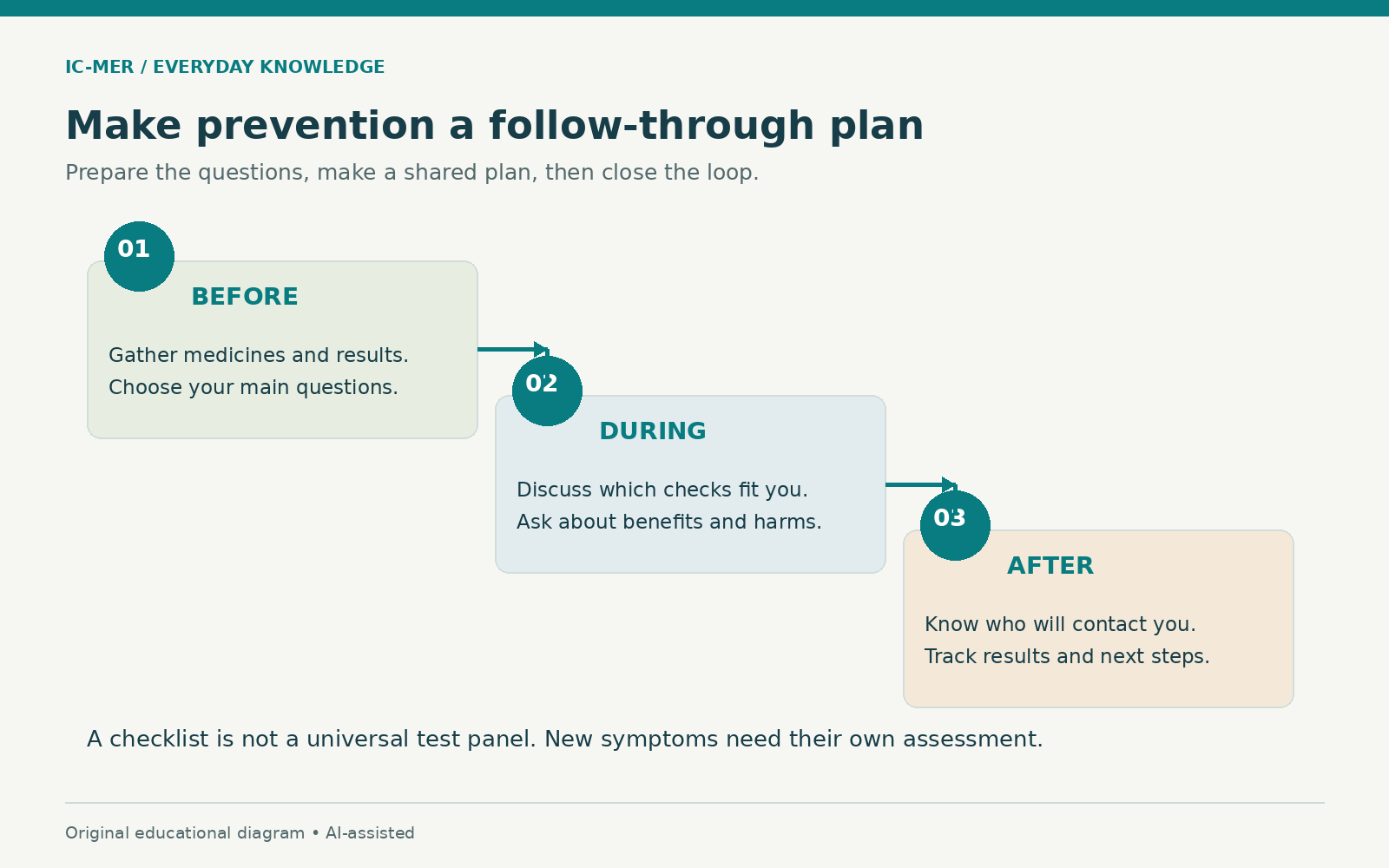
Before leaving, ask whether another dose or later review is needed and when to arrange it. If you receive a referral, check where to go and what information the other provider needs. Put the agreed date or reminder in the calendar while the details are still clear.
Ask for an updated vaccination record and share it with your usual healthcare team if the dose was given elsewhere. When a provider participates in an immunization registry, ask about recording the dose there too. Keep your own copy with important health documents so a future change of clinic does not leave you starting over.
Your take-home note can be brief: the vaccine or decision discussed, what happened today, the next action, and the person or office to contact. If you remain uncertain, write down the unresolved question and arrange a follow-up discussion. The useful outcome is an informed, documented plan that fits your circumstances—not a perfect memory of every recommendation.
Sources & further reading
- CDC: Staying Up to Date with Your Vaccine RecordsChecked 2026-10-25
- CDC: Vaccine Administration—Before Giving VaccineChecked 2026-10-25
- CDC: Adult Immunization StandardsChecked 2026-10-25
- CDC: What Vaccines Are Recommended for YouChecked 2026-10-25
- CDC: Contraindications and PrecautionsChecked 2026-10-25
- CDC: How to Pay for Adult VaccinesChecked 2026-10-25
- CDC: Where to Find VaccinesChecked 2026-10-25
About this article
Prepared with AI assistance and an AI fact-checking pass against the sources listed above. No human clinical review is claimed. Evidence may change; consult appropriate qualified professionals for decisions about your circumstances.
Spotted a problem? Suggest a correction.