Medicine · 7 min read
Building balanced meals without following a fad diet
A workable meal can start with familiar food, a few useful additions and a plan that fits real life.
General nutrition education for adults, not an individualized diet or treatment plan. Discuss medical dietary restrictions with a qualified clinician or registered dietitian.
Information may contain errors, omissions or outdated guidance. This article is general education, not individual medical or other professional advice. Verify important information before acting and consult an appropriately qualified professional. Never disregard medical advice, delay care or change treatment because of this article. See our accuracy disclaimer and terms.
Start with the meal you already eat
A balanced meal does not need a new identity, an expensive powder or a complicated rule book. Start with a meal you regularly enjoy and ask what would make it more varied and satisfying. If lunch is usually bread and cheese, could you add tomatoes, a piece of fruit or a portion of beans? If dinner is rice with sauce, what vegetables and protein foods could belong in that same dish? These are planning questions, not a prescription for exact portions.
The useful goal is a repeatable pattern. A meal that fits your appetite, culture, budget and available cooking time is easier to use than a perfect-looking menu that never reaches the table. Think of balance across meals and days rather than treating a single lunch as a pass-or-fail test. The examples here are original meal ideas for generally healthy adults; they have not been calculated to meet anyone’s individual nutrient needs.
Use food groups as ingredients, not rigid compartments
The current U.S. Dietary Guidelines, covering 2025–2030, emphasize nutrient-dense foods including vegetables, fruit, protein foods, dairy and whole grains. WHO’s 2026 guidance describes adequacy, balance, moderation and variety as central principles, while recognizing that food patterns differ with people and cultures. Neither idea requires every meal to look like the same photograph.
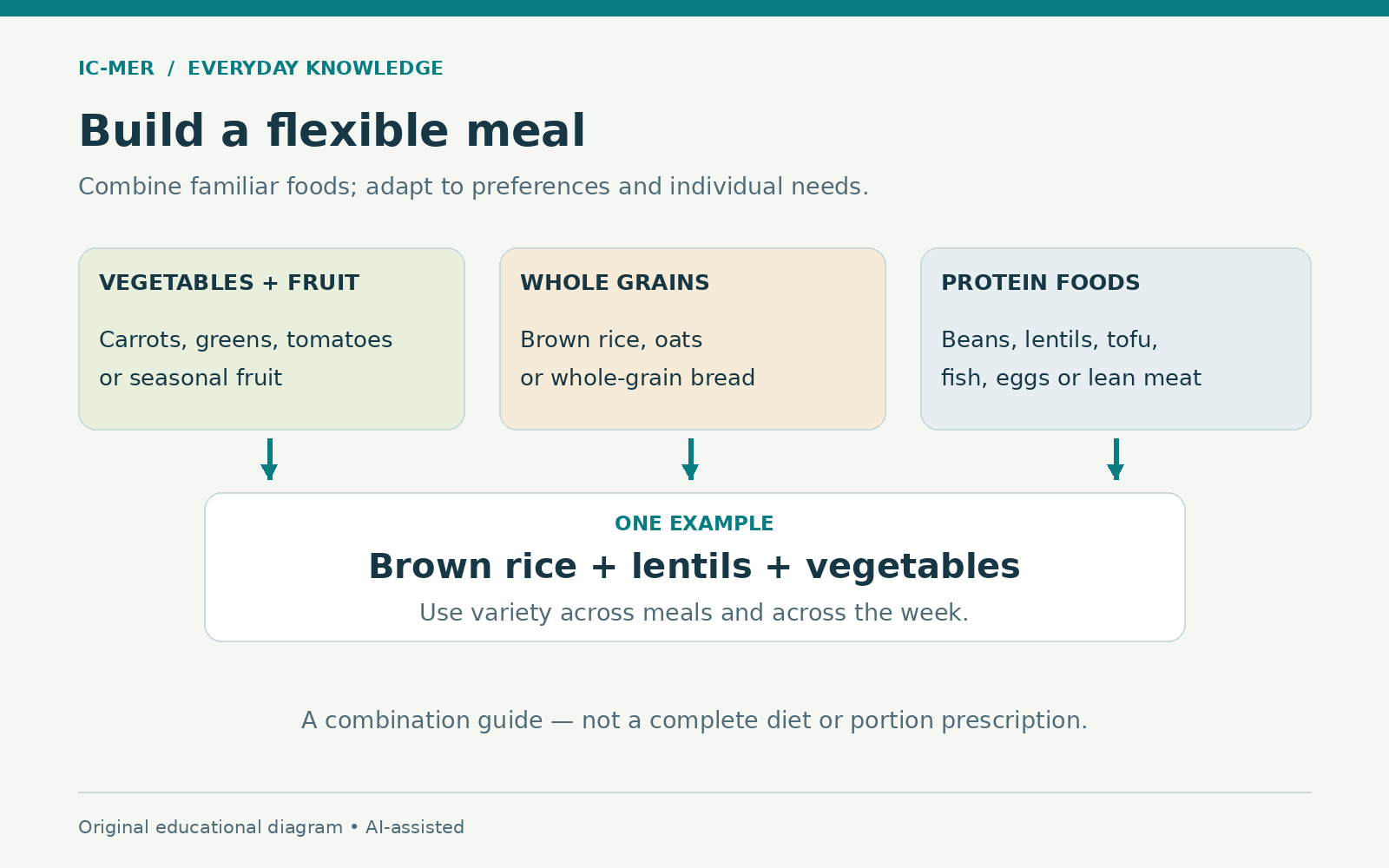
For a practical assembly method, choose a vegetable or fruit, a protein food and a grain or other familiar staple, then consider what else the day needs. Lentils, eggs, fish, poultry and tofu can each play different roles in a meal. Milk, yogurt or an appropriate alternative may fit at breakfast or another eating occasion rather than beside every dinner. These categories overlap: beans are not just one isolated nutrient, and a mixed dish can contain several components.
A vegetable-and-bean stew with bread, a rice bowl with tofu and vegetables, or eggs with toast and fruit are examples to adapt. The diagram accompanying this article shows possible components, not required fractions of a plate. If you already have a clinician-prescribed food plan, use that plan as the starting point.
Make one useful change to a familiar dish
Imagine a fictional household that often makes pasta with tomato sauce. Instead of discarding a convenient meal, its members could add a vegetable they enjoy and include beans, fish or another suitable protein food. They might try whole-grain pasta, mix it with their usual pasta, or choose a whole grain at another meal. The aim is to expand practical options, not to attach moral value to the original dinner.
Now consider a breakfast that must be eaten quickly. One person might prepare oats with yogurt and fruit; another may prefer eggs, bread and sliced vegetables. A third may use leftovers from dinner. The best version depends on food tolerance and the rest of the day. Keep two dependable breakfasts in mind so that improving meals does not require inventing a recipe every morning.
Write a short “add or swap” note on a shopping list: add a vegetable to the usual dinner, swap one refined-grain product for a whole-grain version you like, or choose an unsweetened drink with one meal. Try one change for a week and decide whether it worked. This is an everyday planning exercise, not a validated behavior-change program.
Convenience can belong in a balanced kitchen
Fresh produce is not the only useful option. The current dietary guidance also allows frozen, dried and canned fruits and vegetables with little or no added sugar. A freezer bag or a can can make it possible to assemble a meal when shopping or chopping is difficult. Check the actual product rather than assuming that its package determines its value.
Build a small set of compatible ingredients. For example, keep a grain or staple, a protein food and a vegetable that you know how to prepare. A meal assembled from these items may be less impressive than a new recipe, but it gives you a workable alternative when plans change. Choose quantities you can store and use safely. Convenience should be evaluated alongside cost, waste and the effort required to turn the food into dinner.
Avoid turning “less processed” into a demand to make everything from scratch. The preparation method, ingredients and overall pattern matter. A practical question is whether a product helps you eat a varied meal or mainly adds something you are trying to limit. One packaged ingredient does not define the whole meal.
Sources: [1]
Read the part of the label that answers your question
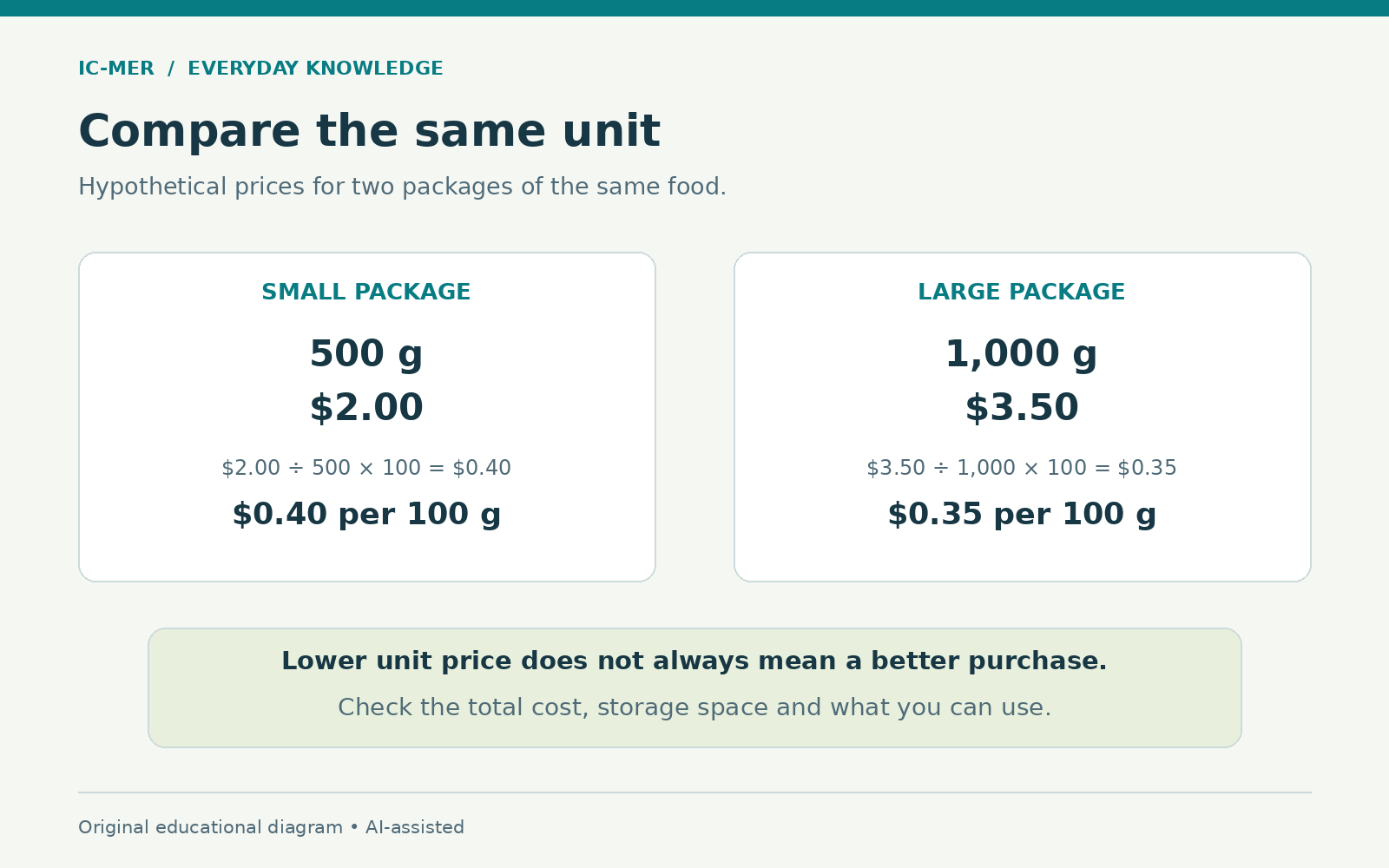
FDA explains that the listed serving size reflects what people typically consume; it is not a personal recommendation. Check that size before comparing products, because the nutrient amounts usually refer to it. Compare similar foods on an equivalent amount, and pay attention to nutrients relevant to your needs, such as sodium, added sugars or dietary fiber.
For an invented example, suppose one serving of a soup contains 400 milligrams of sodium and the container holds two servings. Eating the entire container supplies 800 milligrams. Those figures describe the fictional product, not a target for lunch. If you add another ingredient, its contribution also counts. The calculation helps you understand what is present without deciding that the food is automatically suitable or unsuitable.
Choose a single comparison question at first. You might compare two similar sauces for sodium, then select the one that works with your taste and budget. You do not need to calculate every nutrient in every recipe to make a useful improvement. People following a medical nutrition plan may need more specific information and professional guidance.
Sources: [3]
Leave room for appetite, enjoyment and ordinary life
A meal plan should include foods you actually want to eat. If a proposed change leaves you continually hungry, makes meals unpleasant or requires shopping at several stores, reconsider the plan. A more substantial meal, a different ingredient or a simpler preparation may be more practical. This article does not set calorie limits or promise weight loss.
When eating with other people, begin with a shared base and allow adjustments. A family could put a grain, vegetables and a protein food on the table and let each person assemble a meal appropriate to their needs. Do not use an adult example to impose portions on children. A special occasion also does not require a compensatory fast or a punishment workout the next day.
Consider drinks and extras as part of the pattern rather than afterthoughts. Water can be an uncomplicated choice when it is safe and available. Sauces, toppings and snacks can still be enjoyed; noticing how they fit is more useful than pretending they do not count. If you have a prescribed fluid limit, follow the advice given for your condition.
Recognize when a general guide is not enough
Be cautious about plans promising rapid cures, demanding the removal of many foods without a clear reason, or making a branded supplement essential to ordinary meals. Ask what the plan requires you to buy, whether it can accommodate your circumstances and who is qualified to help if problems develop. A striking testimonial does not establish that a diet will help you.
Kidney disease, diabetes treatment, pregnancy, food allergy, swallowing difficulty and a history of an eating disorder can change what is appropriate. Seek individual advice before making major restrictions or changes that conflict with treatment. Do not stop medicines because of a food claim. Persistent difficulty eating, unintentional weight loss or distress around meals deserves professional attention rather than another internet challenge.
Build your next three meals
Choose three familiar meals and write the ingredients you already have. Identify one realistic addition or substitution for each. Check preparation time, food allergies and storage needs, then buy only what completes the plan. Keep a backup meal for the evening when your schedule changes. This small exercise can reveal a missing ingredient without turning your entire kitchen upside down.
After trying the meals, review usefulness rather than perfection. Did the food taste good? Was there enough? What was wasted? What would make it easier next time? Keep the changes that fit and revise the rest. Balanced eating is a pattern of workable choices, not membership in a diet club.
Sources & further reading
- Dietary Guidelines for Americans, 2025–2030Checked 2026-10-22
- Healthy diet, updated January 2026Checked 2026-10-22
- How to Understand and Use the Nutrition Facts LabelChecked 2026-10-22
About this article
Prepared with AI assistance and an AI fact-checking pass against the sources listed above. No human clinical review is claimed. Evidence may change; consult appropriate qualified professionals for decisions about your circumstances.
Spotted a problem? Suggest a correction.