Environment · 7 min read
Mold and moisture: preventing problems in your home
Find the moisture source, respond safely to damp materials and know when a household mold problem needs experienced professional help.
General environmental-health education, not a building assessment, medical diagnosis or complete remediation plan. Seek experienced help for significant water damage, contamination or health concerns. AI-assisted content and review do not certify safety.
Information may contain errors, omissions or outdated guidance. This article is general education, not individual medical or other professional advice. Verify important information before acting and consult an appropriately qualified professional. Never disregard medical advice, delay care or change treatment because of this article. See our accuracy disclaimer and terms.
Look for the water problem behind the patch
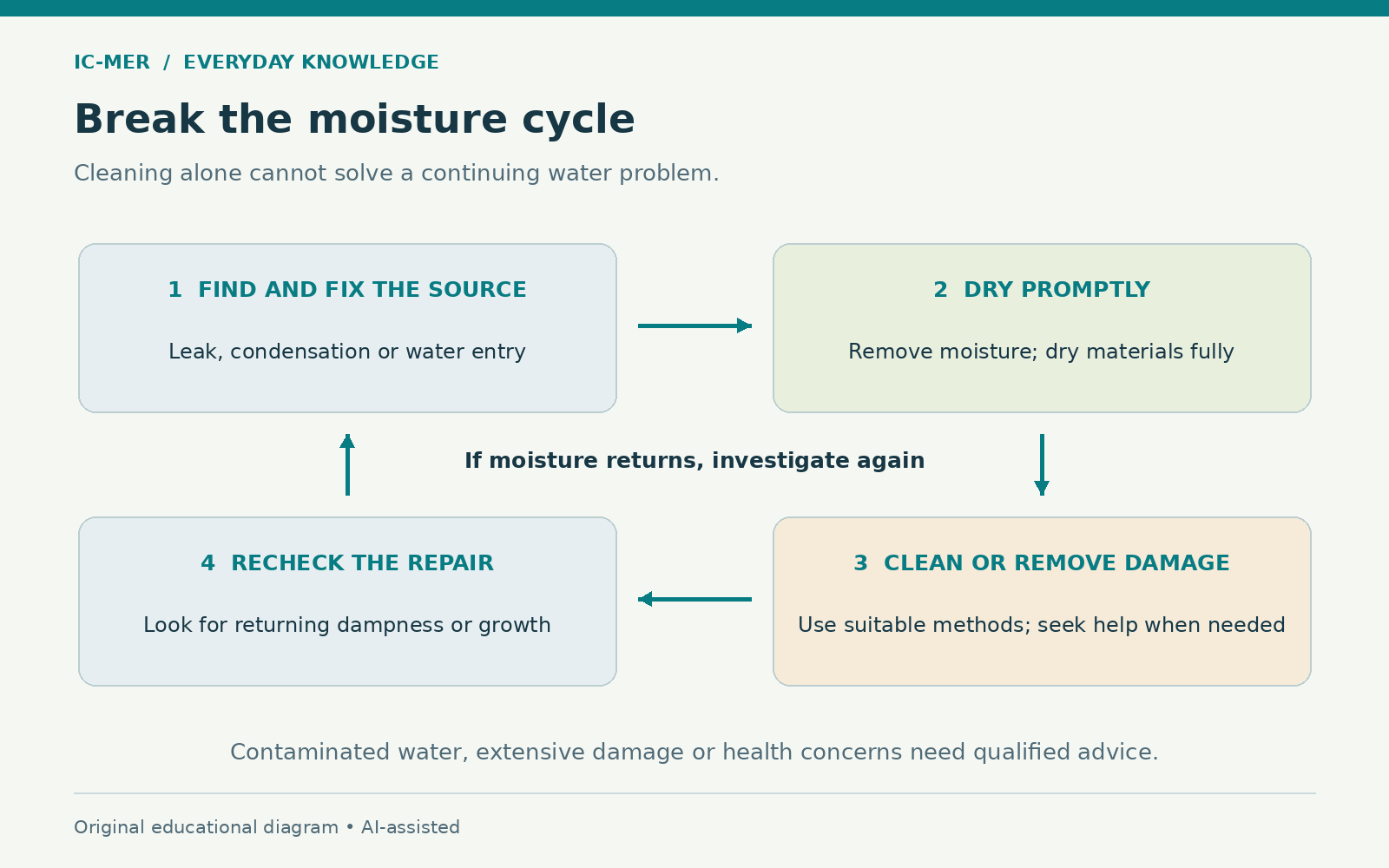
A patch on a wall often prompts a search for a stronger cleaner. The more useful first question is where the moisture came from. EPA explains that indoor mold growth depends on moisture; removing visible growth without correcting the water problem invites recurrence.
You do not need to identify every possible building defect before reporting a concern. Note where the dampness appears, whether it follows rain or use of a fixture, and whether the area dries. Keep the description specific: a wet cupboard floor below a sink says more than a general complaint that the room feels unhealthy.
This guide concerns household prevention and decisions about getting help. It is not a flood-remediation manual, a medical diagnosis or a certification that a building is safe. Large water losses, contaminated water and suspected hidden damage need a different level of assessment from routine bathroom maintenance.
Sources: [1]
Separate an active leak from persistent humidity
CDC recommends fixing leaks in roofs, walls and plumbing, using kitchen and bathroom exhaust that vents outdoors, and keeping indoor humidity no higher than 50 percent. An air conditioner or dehumidifier can help with humidity, but it does not repair a leaking pipe.
For a practical inspection, consider the location and timing. Dampness below a plumbing connection suggests a different next check from condensation appearing on several windows. You can record the pattern without claiming to know the cause. A plumber or building professional can investigate what the observations mean.
A humidity reading is one piece of information, not proof that every surface or concealed space is dry. If you use a meter, note the room and time with the reading. Avoid buying several devices before deciding what question you are trying to answer. The useful result is a corrective action and follow-up, not a collection of numbers.
Sources: [2]
Respond promptly when materials get wet
EPA recommends drying water-damaged areas and materials within 24–48 hours to help prevent mold growth. This is a prompt-action goal, not a promise that mold is absent before a particular hour or that everything can be saved afterward.
Safety comes before entering or handling a damaged area. If water may be contaminated, electrical hazards are possible or structural damage is suspected, keep clear and seek qualified help. A household checklist cannot establish that a flooded room is safe to enter.
In a fictional small leak, the resident reports the plumbing problem promptly, records which belongings are wet and asks who will assess drying needs. That is more useful than closing the cupboard and waiting to see whether an odor develops. Do not conceal wet materials behind a cosmetic repair before the underlying problem is resolved.
Sources: [1]
Decide whether cleanup is suitable for you
EPA says a moldy area smaller than about 10 square feet can often be handled by the resident, following its guidance. Size is only one consideration. Extensive water damage, sewage or other contaminated water, suspected HVAC contamination and health concerns change the decision. A small visible patch is not a guarantee of a small underlying problem.
If you know or suspect that the heating, ventilation or air-conditioning system is contaminated with mold, EPA advises against running it because it could spread mold. Obtain appropriate assessment. If contaminated water caused the damage, use a professional experienced with that type of cleanup.
Before hiring someone, ask about relevant experience, the proposed scope, how the moisture source will be addressed and how completion will be assessed. Keep the answers with the estimate. A promise to spray the room without explaining moisture control does not answer the central question.
Sources: [3]
Use suitable methods and protection
EPA describes cleaning mold from hard surfaces with detergent and water and drying them completely. Porous materials such as carpet or ceiling tiles may need disposal. Do not paint or caulk over moldy surfaces. Review the full EPA instructions before deciding to do the work yourself.
EPA’s protective guidance includes suitable gloves, goggles without ventilation holes and a properly fitting N95 respirator to reduce exposure. Protection does not make every job appropriate for household cleanup. CDC advises people with breathing problems such as asthma, people with weakened immune systems, and children not to enter mold-damaged buildings. People with weakened immune systems should not take part in or be present during mold removal. Ask for help arranging safe alternatives.
Follow product labels and never mix bleach with ammonia or other cleaners; CDC warns that this can produce poisonous gas. Do not improvise stronger mixtures or combine products because the first one did not remove a stain. Some cosmetic staining can remain after cleanup; appearance alone cannot tell you whether moisture and contamination have been properly addressed.
Avoid turning a home test into a safety certificate
EPA explains that visible mold usually does not require sampling and that federal limits for mold or mold spores have not been established. A sample therefore cannot demonstrate compliance with a federal indoor-mold standard that does not exist. Where sampling is useful, experienced professionals should design and interpret it.
A household kit is not the first step simply because the patch looks unfamiliar. Ask what decision a test would change. If the immediate tasks are to fix a leak and arrange safe cleanup, waiting for a species name may not help either task.
This does not mean every professional assessment is unnecessary. Hidden damage, unclear moisture pathways and questions about cleanup can require specialized judgment. The distinction is between answering a defined question and purchasing a result that is marketed as a universal safe-or-unsafe verdict.
Sources: [4]
Treat health concerns as health concerns
CDC notes that damp and moldy environments can cause symptoms in some people and none in others. Possible effects include nasal or throat irritation, coughing, wheezing, eye irritation and skin rash. People with asthma or mold allergy may have more severe reactions; people with weakened immune systems or chronic lung disease can be at greater risk of lung infections.
A photograph of a wall does not diagnose the cause of a person’s symptoms. Seek medical advice for health concerns and explain the exposure history. At the same time, do not require proof that a building caused illness before addressing a known moisture problem.
A household can keep two records: the building issue for the owner or contractor and the symptoms for the healthcare professional. That separation helps each person answer the question within their expertise. It also avoids promising that a particular cleaning product will cure a medical problem.
Sources: [2]
Give renters and shared households a clear handoff
If another person is responsible for maintenance, report the location, when you noticed it and any continuing water entry. Include photographs when safe to take them and retain a copy of the message. Ask who will investigate, what work is planned and how you will be told it is complete.
An example report might say that the cupboard below the sink was wet on two mornings and that stored paper became damp. It need not guess at a mold species or diagnose the plumbing. If the response addresses only the visible stain, ask how the moisture source and affected materials will be assessed.
For a shared home, agree on who notices recurring dampness, who contacts maintenance and where the records are kept. These are practical communication suggestions, not statements about a landlord’s legal duties or a tenant’s legal remedies. Those depend on the location, agreement and circumstances.
Check that the problem stays resolved
After work is completed, keep the repair description and revisit the original concern. Does dampness return after the same activity or the next rain? Is there a continuing musty odor? Has the affected area been assessed rather than simply covered? Bring unresolved observations back to the person responsible.
A useful maintenance note connects the problem, the action and the follow-up. For example: leak reported, connection repaired, affected materials assessed, area checked again. Do not replace that chain with a receipt for a dehumidifier or a photograph of fresh paint.
Prevention is easier to organize when the next action is clear. Address water promptly, use appropriate help for the scale and hazards, and keep track of recurrence. The aim is a dry, well-maintained home with concerns investigated on their merits, not an impossible promise of eliminating every mold spore.
Sources & further reading
- EPA: A Brief Guide to Mold, Moisture and Your HomeChecked 2026-10-23
- CDC: MoldChecked 2026-10-23
- EPA: Mold Cleanup in Your HomeChecked 2026-10-23
- EPA: Mold Testing or SamplingChecked 2026-10-23
- CDC: What to Wear Before Entering a Home or Building with Mold DamageChecked 2026-10-23
- CDC: About Invasive Mold InfectionsChecked 2026-10-23
About this article
Prepared with AI assistance and an AI fact-checking pass against the sources listed above. No human clinical review is claimed. Evidence may change; consult appropriate qualified professionals for decisions about your circumstances.
Spotted a problem? Suggest a correction.