Business · 4 min read
Understanding an invoice before you pay it
Check the supplier, agreed work, quantities, arithmetic and payment instructions before approving a small-business invoice.
General U.S.-oriented business education, not legal, tax or accounting advice. The invoice example is fictional. AI-assisted writing and factual review do not certify a transaction or supplier.
Information may contain errors, omissions or outdated guidance. This article is general education, not individual medical or other professional advice. Verify important information before acting and consult an appropriately qualified professional. Never disregard medical advice, delay care or change treatment because of this article. See our accuracy disclaimer and terms.
Treat the invoice as a request to check
An invoice asks for payment. It is not, by itself, proof that your business ordered the work, received it or still owes the amount shown. Start by matching the request to your own records rather than following the most urgent instruction on the page.
The FTC warns that fake invoices may bill for unrequested services, including domain registration or technical support, and may use past-due language to create pressure. An unfamiliar bill deserves investigation. A familiar logo is not enough to authenticate it.
Sources: [1]
Match the supplier, order and delivery
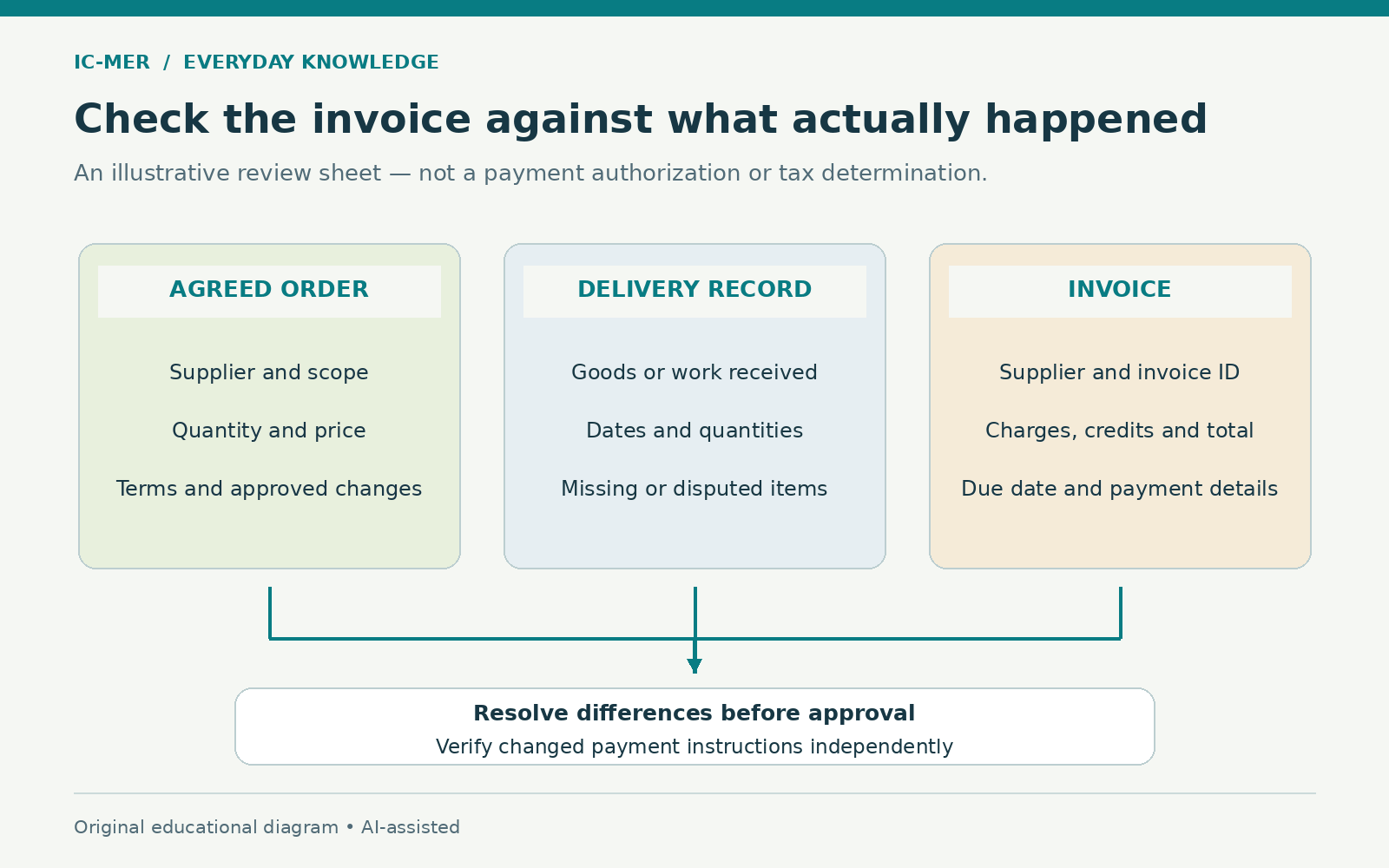
As a practical checking method, place three things together: what was agreed, evidence of what arrived or was completed, and the invoice. An email agreement may be the starting record for a very small business; another business may use purchase orders and receiving records.
Check the supplier’s identity, your business name, invoice number, issue date and the period or delivery being billed. Then compare each item, quantity, rate and extra charge with the agreement. For services, ask the person responsible whether the described stage of work was completed.
A partial delivery, a deposit or an agreed credit can change the amount still due. If something does not match, keep the invoice marked as awaiting clarification and record the specific question. A question about one line should not disappear into a general note saying that the bill looks wrong.
Recalculate the total and identify what remains due
Consider a fictional invoice for six boxes at $25 each, plus $12 delivery, less a $20 credit. The calculation is $150 + $12 − $20 = $142 before any applicable tax. If a $50 deposit has already been paid and is to be applied to this amount, the remaining balance is $92 before any applicable tax adjustment. These figures illustrate arithmetic only, not tax treatment.
Check whether the invoice already deducted a deposit or credit so you do not deduct it twice. Compare any tax or fee with the applicable rules and agreement, and seek advice if its treatment is unclear. A neat total can still be based on the wrong quantity or price.
Understand the payment terms
Find the due date and the event from which a payment period runs. If the wording is unclear, ask the verified supplier to confirm the date. Do not assume every invoice uses the same meaning for a short label such as net 30.
Check any discount conditions, late charge or recurring service period against the agreement. These terms are not universally enforceable merely because they appear on a bill. Resolve discrepancies through the appropriate business process and get qualified advice for a material dispute.
Before scheduling payment, search your records for the invoice number and amount. A reminder or resent attachment should not create a second payment. Keep a simple distinction between received, under review, approved and paid.
Verify changes to payment instructions separately
The FBI describes business email compromise schemes in which apparently familiar senders request fraudulent payments. A real-looking message or an existing email thread does not establish that new bank details are genuine.
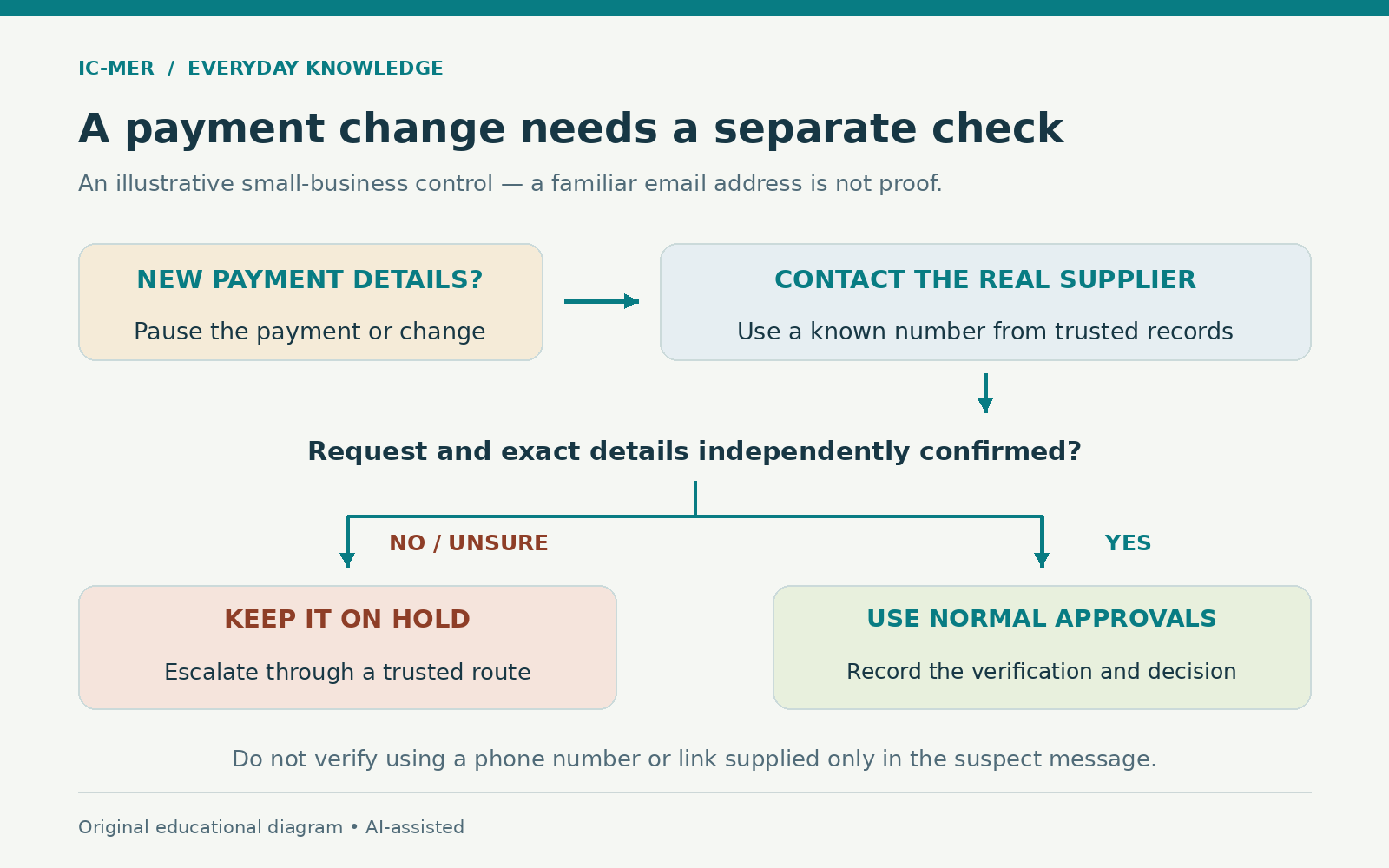
Confirm a changed account number, payment destination or procedure through a trusted contact method you obtain independently, such as a previously verified telephone number. Do not rely on the number or link supplied in the questionable message. Be especially cautious when someone presses for immediate action.
If money has already been sent to a suspected scammer, contact your financial institution immediately and report the incident to the FBI’s Internet Crime Complaint Center, IC3. Recovery is not guaranteed. Preserve relevant messages and payment details for the people handling the response.
Sources: [2]
Save the decision with the evidence
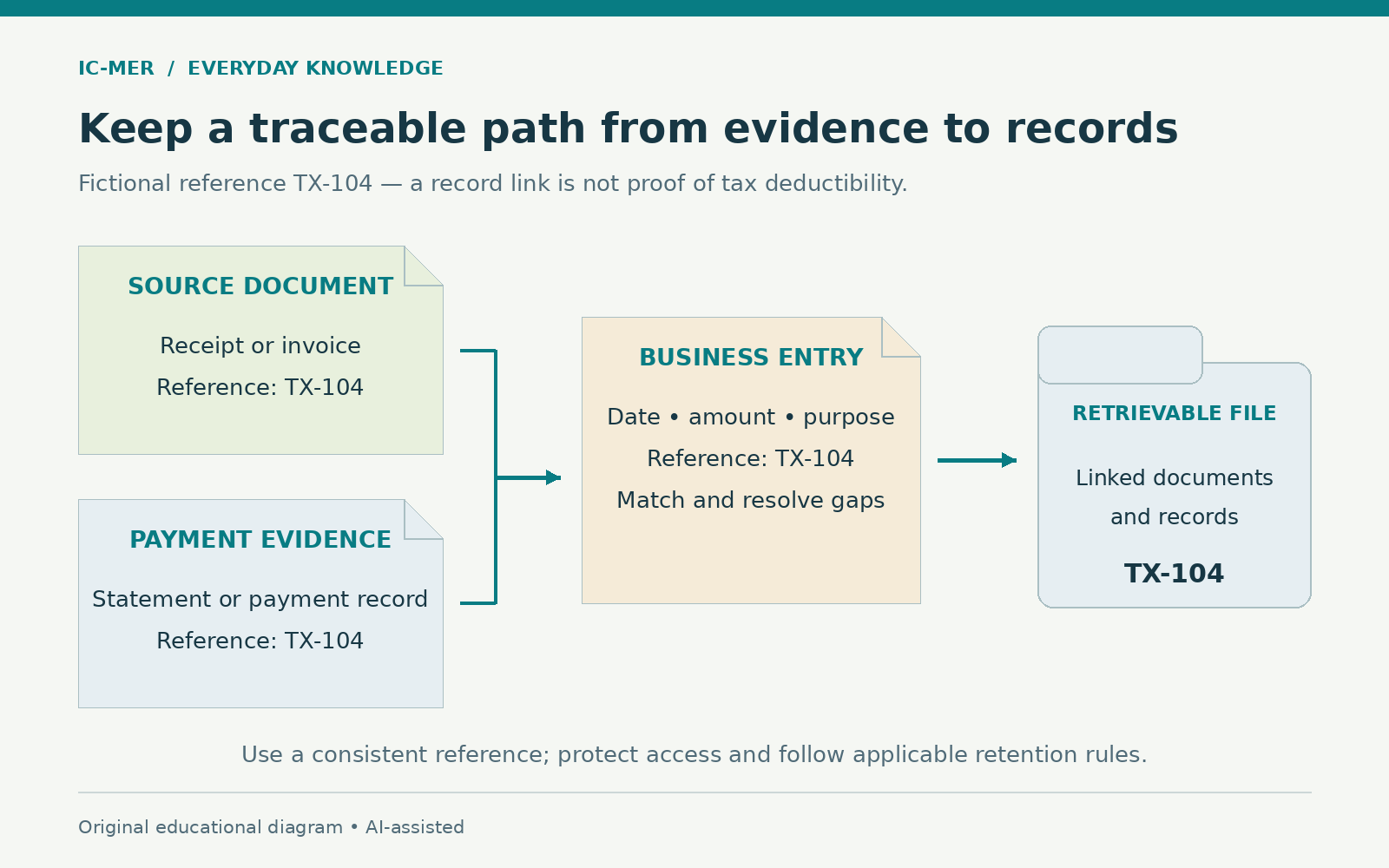
The IRS identifies invoices, paid bills, receipts and payment records among the documents that support business books and tax entries. Keep the invoice together with relevant supporting records and your payment confirmation in an orderly, protected system.
For a small team, record who approved the invoice and the reference used for payment. A sole proprietor can still leave a dated note explaining a corrected quantity or agreed credit. This suggested workflow helps a later reader understand what happened; it does not establish that an expense is tax-deductible.
Before you pay, be able to answer five questions: who is requesting the money, what was agreed, what was received, how was the balance calculated and where is the verified payment going? If a material answer is missing, resolve it before approving the payment.
Sources: [3]
Sources & further reading
- FTC: Run a small business? Pay your bills, not scammersChecked 2026-10-23
- FBI: Business Email CompromiseChecked 2026-10-23
- IRS: What kind of records should I keep?Checked 2026-10-23
About this article
Prepared with AI assistance and an AI fact-checking pass against the sources listed above. No human clinical review is claimed. Evidence may change; consult appropriate qualified professionals for decisions about your circumstances.
Spotted a problem? Suggest a correction.