Medicine · 6 min read
Walking for health: building a routine that lasts
Build a walking routine around your day, with manageable starts, a useful intensity check, safer routes and a backup for busy or difficult days.
General health education, prepared with AI assistance and independent AI factual review; not human clinical review or personalized exercise advice. Consult a qualified healthcare professional about activity suited to your health. Call 911 in the United States for a suspected medical emergency.
Information may contain errors, omissions or outdated guidance. This article is general education, not individual medical or other professional advice. Verify important information before acting and consult an appropriately qualified professional. Never disregard medical advice, delay care or change treatment because of this article. See our accuracy disclaimer and terms.
Make the next walk easy to begin
A walking plan has to survive an ordinary day: a late meeting, a school pickup, an unfinished chore, or rain arriving just as you find your shoes. Start by designing a walk you could actually repeat. The first question is where it fits, rather than how impressive it sounds.
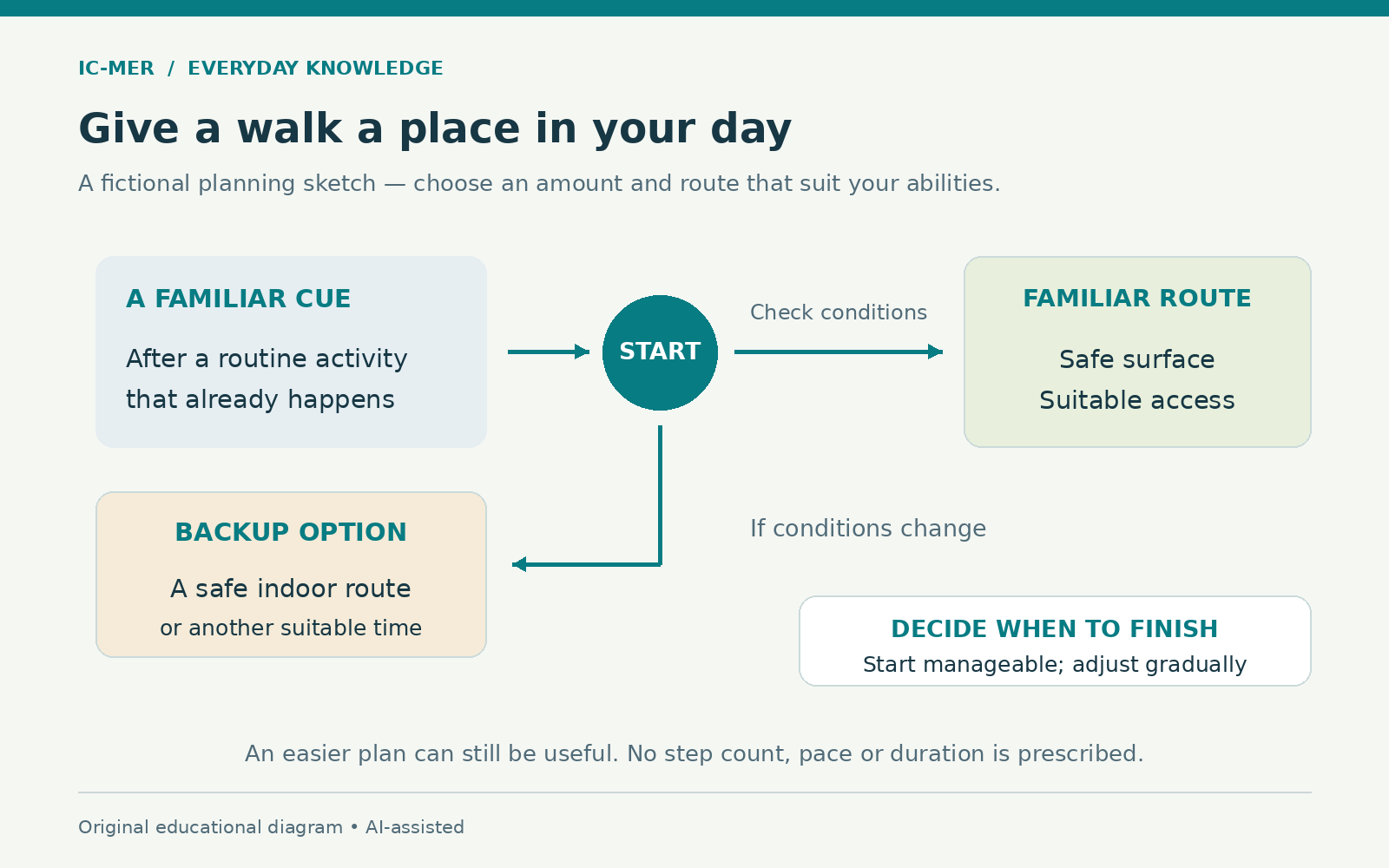
Choose a clear starting cue, a familiar route and a way to shorten the outing if necessary. For example, you might decide to walk after putting away lunch, beginning from your own doorway and turning back at a convenient point. This is a planning example, not a prescribed duration or distance. Someone else may prefer a suitable indoor space or a companion.
Keep the plan small enough to understand in one sentence. A complicated challenge with changing daily targets can be harder to organize than a familiar outing. You can revise the plan after trying it; there is no need to buy a watch, join a competition or choose a lifelong routine before your first walk.
Before the first outing, decide what you will need to take and where you will leave from. Having those choices settled can make the start feel less like another task to organize at the last minute.
Use the weekly guideline as a direction
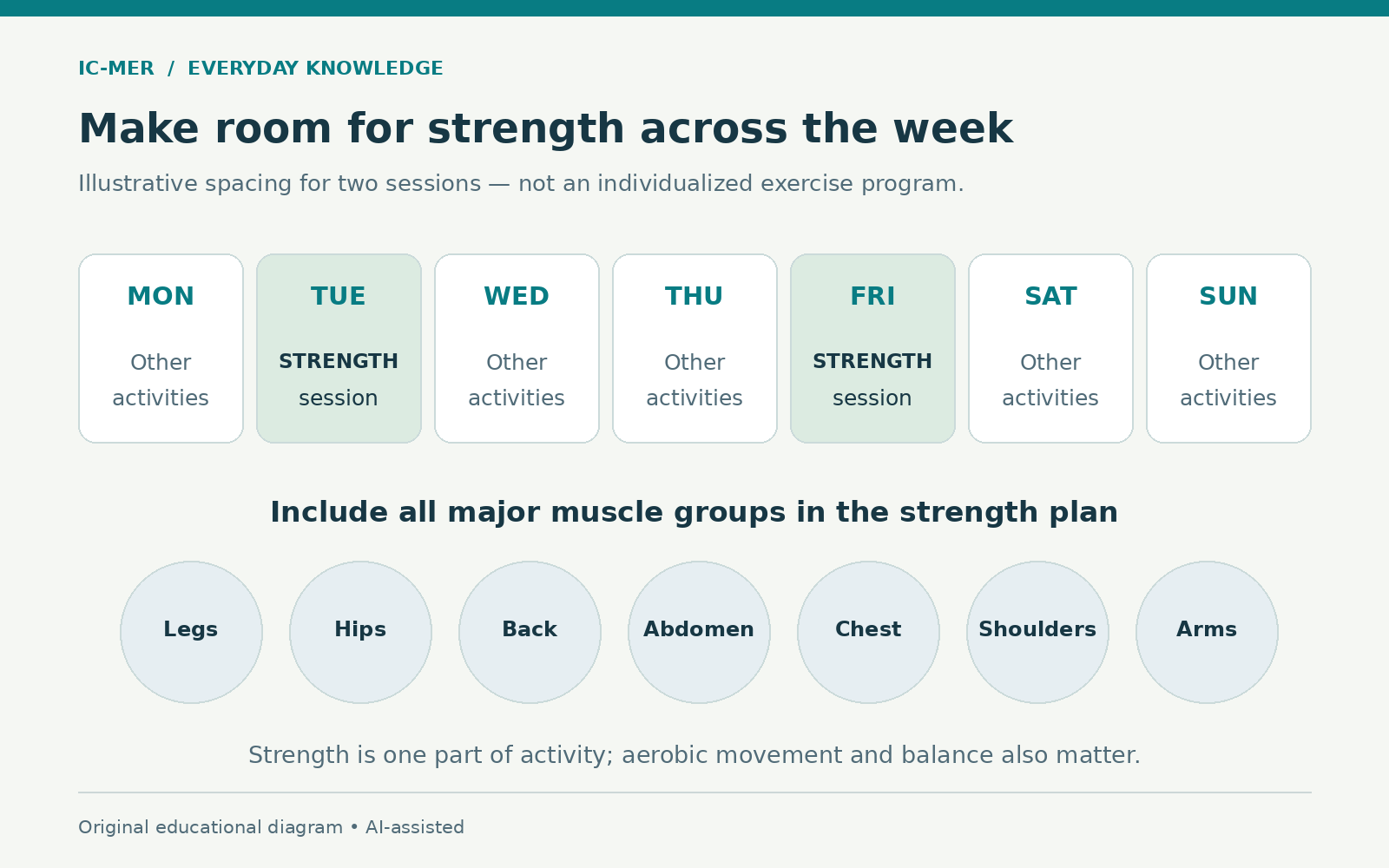
CDC recommends at least 150 minutes of moderate-intensity aerobic activity a week for adults, or 75 minutes of vigorous activity, or an equivalent combination. Adults also need muscle-strengthening activity on at least two days each week. A walking routine can contribute to the aerobic part; it does not automatically cover the strengthening part.
You can divide activity into smaller chunks. Some activity is better than none, so a person starting from little movement does not have to reach the weekly recommendation immediately. Build toward an amount that fits your health and abilities.
For planning, distinguish your eventual aim from your next appointment with yourself. Writing a weekly goal does not create a free half-hour tomorrow. Look at your actual commitments and choose an opening. If only a shorter opening is available, use that information to shape a realistic plan rather than treating the entire day as a failure.
Sources: [1]
Notice effort rather than chasing a speed
At moderate intensity, breathing is harder but you can generally talk without being able to sing. At vigorous intensity, you can say only a few words before pausing for breath. The effort of a given pace varies with fitness and other circumstances; a speed that feels easy to one person may be demanding for another.
For your own notes, a simple description such as comfortable, moderately effortful or too demanding may be more useful than comparing your pace with a friend. Ask a clinician about suitable intensity if a health condition makes this uncertain. The talk test is a practical guide to effort, not a test that rules out illness.
A leisurely outing and a brisk walk can both have a place in your day, but do not label every minute outdoors as moderate activity. Equally, you need not make every outing a test. A routine can include a relaxed social walk as well as periods of activity that meet your intended effort level.
Sources: [2]
Choose a route you would happily repeat
Before making a route your default, consider crossings, uneven surfaces, lighting, access to shade or shelter, and whether you can turn back easily. Outdoor exercise guidance emphasizes weather awareness, visibility near traffic and carrying identification and a phone. A route should fit the conditions and your abilities, not just look appealing on a map.
Imagine using it on a less convenient day. Is the entrance open at your planned time? Does the route require a difficult crossing? Would you feel comfortable there alone? Could a companion meet you somewhere easier? These questions help you decide between real options without needing an elaborate training plan.
If a route regularly creates a problem, change it. You might choose a shorter loop, a different time or an appropriate indoor location. Indoor walking also needs enough clear space and suitable footing. Choosing a different setting is part of planning, not evidence that you lack commitment.
Sources: [3]
Give busy days their own version
CDC advises starting slowly, setting aside suitable times and choosing activities and locations you enjoy. It also suggests activity with others when companionship helps. Use those ideas to create a main plan and a backup that suit your household.
One example is a planned outdoor walk after work, with an indoor alternative when conditions are unsuitable. Another is arranging a weekend outing with a friend while keeping weekday walks independent of that friend’s availability. Agree in advance that either person may shorten or cancel for health or safety reasons.
Write down the practical obstacle rather than judging yourself. “I forgot my shoes” suggests a different response from “the path was closed.” “This time clashes with caring responsibilities” may call for a different time entirely. A useful backup addresses the obstacle you actually face. It should not require extra travel or equipment that makes the difficult day harder.
Sources: [4]
Build gradually and respond to symptoms
Increase activity gradually, and avoid increasing frequency, duration and effort all at once. Stop if exercise causes pain. Persistent muscle or joint pain deserves medical advice. If you have a condition, recent injury or uncertainty about safe activity, ask a healthcare professional for guidance suited to you.
Chest pain or discomfort during activity needs urgent attention. Heart attack symptoms can include chest discomfort, shortness of breath, pain in the arms, jaw, neck or back, and feeling faint or weak. If you notice symptoms of a heart attack, call 911 immediately in the United States. Do not finish a route or wait for an activity target before seeking help.
Your plan should make stopping possible. Keep a way to return, let a companion know when you need to pause, and do not turn a group outing into a promise to maintain someone else’s pace. An activity goal never requires ignoring a new symptom.
Keep a small, useful record
Try a brief note after an outing: when you went, roughly how long you were active, how it felt and what made starting easier or harder. This is a personal planning aid, not a medical assessment. If counting steps encourages you, it can be part of the note, but the note can be useful without a device.
Review the pattern rather than one isolated day. Perhaps a midday walk was easy to arrange twice, while evening walks repeatedly collided with another responsibility. That is useful scheduling information. Keep the workable slot and reconsider the difficult one. Avoid using a missed day as a reason to attempt an unusually demanding catch-up session.
Choose a reason you can remember on an ordinary afternoon: time outside, a break from the desk, a shared activity, or working toward general fitness. No particular walk promises weight loss or prevention of illness. A personally meaningful reason can still help you decide what place walking should have in your week.
Leave room for the rest of your activity
For adults 65 and older, CDC recommends aerobic activity, muscle-strengthening activity and balance activities. People who cannot meet the recommendations should be as active as their abilities and conditions allow. A familiar walking route can be one part of that broader plan.
At the end of your first trial week, make one decision: keep the plan, change the cue, change the route or ask for help adapting it. There is no required pace of improvement in this article. The useful outcome is a plan you understand, can start safely and can adjust when life changes.
Sources: [7]
Sources & further reading
- CDC — Adult Activity: An OverviewChecked 2026-10-23
- CDC — What Counts as Physical Activity for AdultsChecked 2026-10-23
- MedlinePlus — Outdoor fitness routineChecked 2026-10-23
- CDC — Steps for Getting Started With Physical ActivityChecked 2026-10-23
- MedlinePlus — How to avoid exercise injuriesChecked 2026-10-23
- CDC — About Heart Attack Symptoms, Risk, and RecoveryChecked 2026-10-23
- CDC — Older Adults: Adding Activity RecommendationsChecked 2026-10-23
About this article
Prepared with AI assistance and an AI fact-checking pass against the sources listed above. No human clinical review is claimed. Evidence may change; consult appropriate qualified professionals for decisions about your circumstances.
Spotted a problem? Suggest a correction.