Medicine · 6 min read
Added sugars: making sense of drinks snacks and labels
A useful sugar-label check starts with the drink or snack you have often, the serving you actually use, and what could replace it.
General nutrition education for adults, prepared with AI assistance and independently checked by an AI reviewer. This is not personalized dietary or diabetes advice. Follow individualized guidance from your qualified healthcare professional.
Information may contain errors, omissions or outdated guidance. This article is general education, not individual medical or other professional advice. Verify important information before acting and consult an appropriately qualified professional. Never disregard medical advice, delay care or change treatment because of this article. See our accuracy disclaimer and terms.
Start with one familiar choice
A sweetened coffee on the way to work, a drink with lunch, or a snack after dinner can become so familiar that it barely registers as a choice. That makes a recurring item a useful starting point for thinking about added sugars. You do not need to audit every meal or replace your entire pantry. Pick something you buy often and find out what is actually in the amount you usually have.
CDC identifies sugary drinks as a leading source of added sugars in the American diet. Its examples include sweetened tea and coffee, fruit drinks, sports drinks and energy drinks as well as soda. The relevant question is not whether the packaging looks sporty, natural or expensive. It is whether the drink contains added sugars and whether you want it to be your everyday default.
For a practical first step, put your usual drink next to an alternative you would realistically enjoy. Perhaps that is cold water, unsweetened tea, or plain sparkling water. Compare price, convenience and taste as well as the label. A replacement that fits the way you live is more useful than a perfect-sounding choice you will never buy again.
Sources: [1]
Total sugars and added sugars are different lines
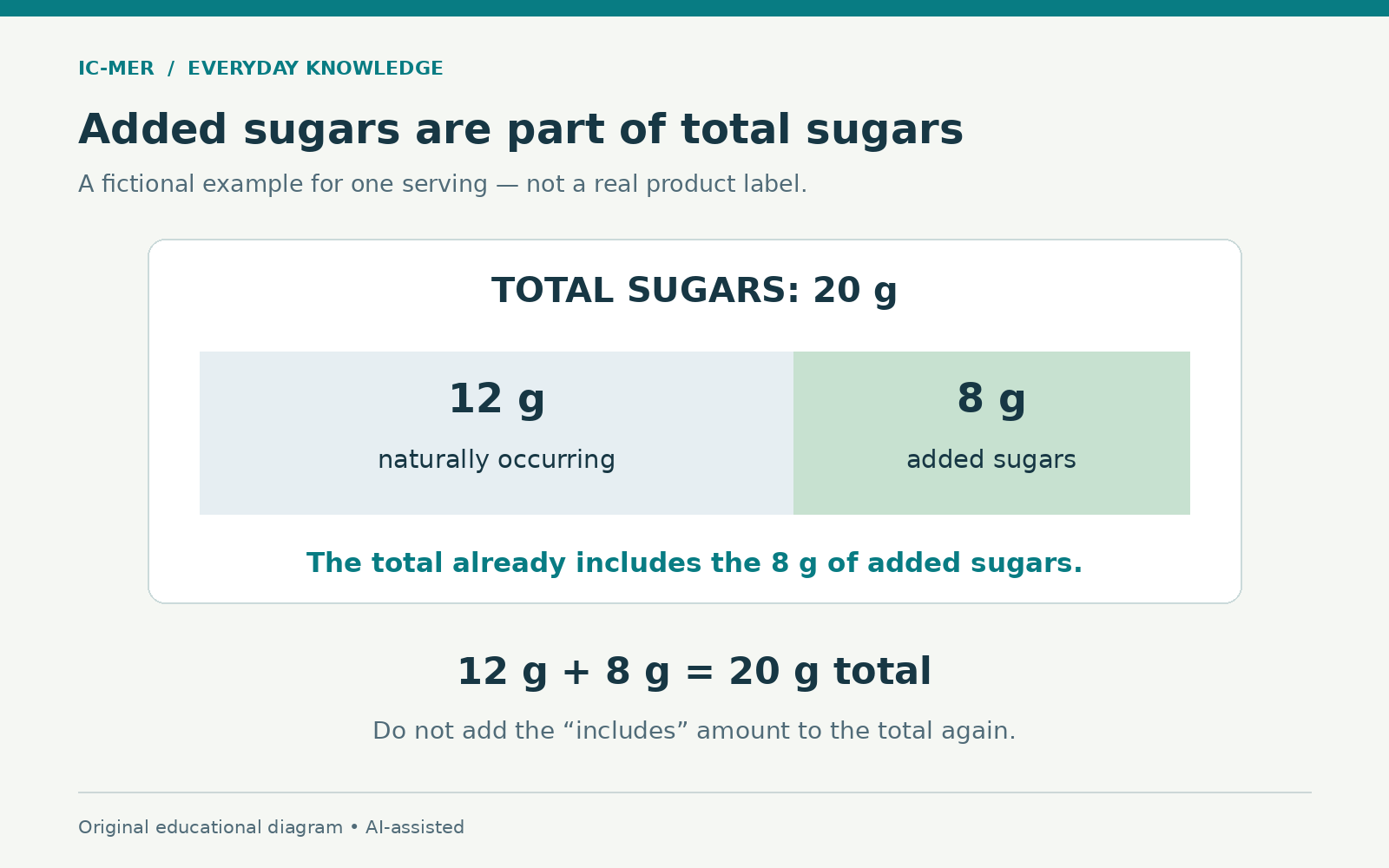
On a U.S. Nutrition Facts label, total sugars include sugars naturally present in the food and sugars added during processing or preparation. Added sugars are part of that total. They are not an extra amount to add on top. Naturally occurring sugars in plain milk or whole fruit do not become added sugars simply because the food tastes sweet.
Here is a fictional example, also shown in the illustration. A serving has 20 grams of total sugars and includes 8 grams of added sugars. The 8 grams sit inside the 20-gram total; the remaining 12 grams are sugars that are not added. The serving does not contain 28 grams. These invented numbers teach the relationship between the lines; they do not describe a particular product or a recommended serving.
That distinction can explain why two yogurts have similar total sugars but different amounts of added sugars. Read both lines before deciding what the difference means. Then consider the rest of the food and whether you like it. The aim is to understand the choice, not to award or remove permission to eat it based on one number.
Sources: [2]
Compare the amount you actually use
The label's serving size is a reference for its numbers, not a personal instruction about how much to eat. Check servings per container too. A package that looks like one convenient drink or snack may contain more than one labeled serving. Comparing unequal serving sizes can make the lower number misleading.
For example, imagine one drink lists 6 grams of added sugars for half a bottle. If you drink the whole bottle, that is 12 grams. Another bottle lists 9 grams for the whole bottle. These are fictional arithmetic examples, not actual brands. Put both choices on the same basis before drawing a conclusion, and do not assume that either bottle size is right for everyone.
The percent Daily Value provides another standardized label reference. It is not a personalized allowance or a goal to fill. For everyday shopping, simply checking the serving basis and added-sugars grams may answer the question you came with. You do not have to translate every item into a daily score before making lunch.
Sources: [3]
Make drinks easier to change
CDC suggests replacing sugary drinks with water and making water more appealing with ingredients such as lemon or cucumber. At a coffee counter, ordering without sweetened syrup or asking for less added sweetener may be another workable change. Plain milk is different from a sugar-sweetened drink; its naturally occurring sugar should not be confused with added sugar.
Try changing the routine that makes your usual choice automatic. Fill a bottle before leaving home. Keep a cold alternative where you normally reach for a sweetened drink. When ordering, decide on the size and sweetening before the cashier asks. These are practical suggestions, not a promise that a single swap will change your weight or prevent a disease.
If an unsweetened version tastes unfamiliar, experiment without demanding an immediate all-or-nothing switch. You might choose a smaller usual drink on some days or reduce what you add yourself. Notice what is satisfying enough to repeat. Avoid compensating for an unwanted change by turning the rest of the day into a contest about being good or bad at eating.
Sources: [1]
Put snacks back into the context of a meal
A plain food and a sweetened version can serve different purposes in your day. For example, you might enjoy plain yogurt with fruit, or you might prefer a flavored yogurt. The added-sugars line helps you compare them, but the final choice can also reflect affordability, appetite, available storage and what you will actually eat.
Build an ordinary snack around foods you already keep. An apple with an appropriate nut or seed butter, a small sandwich, or leftovers may be more convenient for one household than a specialty snack marketed as healthy. These are menu ideas, not nutrient-equivalent substitutions or instructions for people with food allergies. Check ingredients where allergies or another dietary restriction matters.
There is also room to enjoy a sweet food deliberately. Buying a dessert because you like it is different from assuming a sweetened everyday product has no added sugars because its front label features fruit. Reading the package gives you more information; it need not turn an enjoyable occasion into a calculation exercise.
Sources: [2]
Honey, juice and natural-sounding claims
Honey and syrups still contribute added sugars when used to sweeten foods. WHO's category of free sugars is broader than the U.S. label category: it includes sugars in fruit juices as well as added sugars, honey and syrups. As a result, a juice can have no added sugars without being equivalent to water or whole fruit.
This is a reason to be precise about words, not to memorize competing labels. When a package says no added sugar, check what the product actually is and how you use it. The claim does not mean no sugar, and it does not answer every question about the food. A fruit-flavored drink and a piece of fruit also need not have the same ingredients or place in a meal.
At home, replacing table sugar with honey does not make the sweetening disappear. If your intention is to reduce added sweetness, consider how much you add and whether a different flavor would work. Cinnamon, citrus zest or fruit may change the taste of a dish, but none is a mandatory substitute and none makes the rest of the recipe irrelevant.
Sources: [4]
A manageable plan for the next shopping trip
Choose one recurring purchase and take a moment to check its serving size, total sugars and added sugars. Compare one alternative on the same serving basis. Decide whether you want to buy the alternative, use a different amount, or keep the original and change another routine instead. Put the choice on your shopping list so the decision does not have to be remade in a busy aisle.
After a few days, ask a practical question: was this easy enough to continue? You may discover that the new drink works at home but is awkward at work, or that a plain snack needs an ingredient you forgot to buy. Adjust the setup rather than calling the whole attempt a failure. Small food decisions are part of a larger eating pattern, not a test of character.
If you follow a prescribed eating plan, use it as your starting point. The added-sugars line alone is not enough to plan meals for a medical condition, and this article does not replace advice tailored to your health, medicines or nutritional needs. Bring the actual label and your usual serving to a qualified professional if you need help interpreting a particular choice.
Sources & further reading
- Rethink Your DrinkChecked 2026-10-22
- Added Sugars on the Nutrition Facts LabelChecked 2026-10-22
- How to Understand and Use the Nutrition Facts LabelChecked 2026-10-22
- Healthy dietChecked 2026-10-22
About this article
Prepared with AI assistance and an AI fact-checking pass against the sources listed above. No human clinical review is claimed. Evidence may change; consult appropriate qualified professionals for decisions about your circumstances.
Spotted a problem? Suggest a correction.