Medicine · 7 min read
Alcohol and health: understanding risks and making informed choices
A practical guide to counting alcohol accurately, making informed everyday choices and recognizing when medical support is needed.
AI-assisted general health education, not personalized medical advice or human clinical review. Do not stop prescribed medicines. Heavy prolonged drinking or withdrawal symptoms require medical advice before abrupt changes; suspected alcohol overdose is an emergency.
Information may contain errors, omissions or outdated guidance. This article is general education, not individual medical or other professional advice. Verify important information before acting and consult an appropriately qualified professional. Never disregard medical advice, delay care or change treatment because of this article. See our accuracy disclaimer and terms.
Start with a useful question, not a label
Perhaps a glass with dinner has become several refills, or every social event seems to revolve around drinking. You do not have to decide whether a label fits before looking at your habits. A useful starting question is: what role is alcohol playing in my day, and is that the role I want it to have? This article is for adults making everyday choices, not a test of character or a substitute for medical assessment.
Drinking less, or choosing not to drink, can reduce alcohol-related health risks. The amount matters, but so do the circumstances: a drink before driving is a different decision from a drink with no safety-sensitive activity ahead. Health conditions, medicines and difficulty controlling alcohol use also change the discussion. A population guideline cannot tell you that a particular amount is safe for you.
Important safety exception: if you have been drinking heavily for a prolonged period, or develop shaking, sweating or other withdrawal symptoms when alcohol wears off, seek medical advice before abruptly stopping or making a major reduction. Withdrawal can be dangerous. A self-directed alcohol-free challenge is not an appropriate substitute for a medically planned withdrawal.
Count the alcohol, not just the glasses
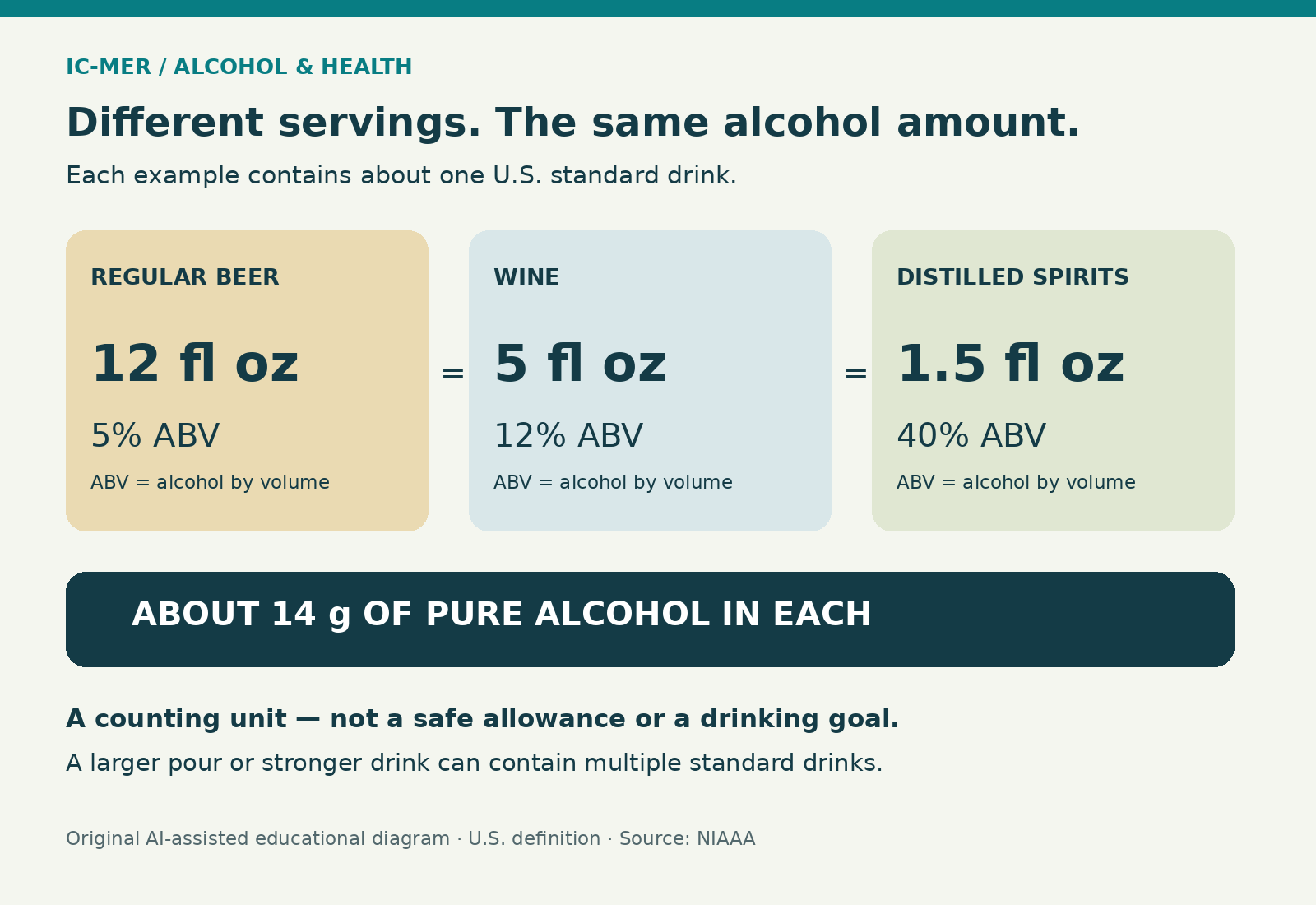
A U.S. standard drink contains about 14 grams of pure alcohol. Examples are 12 fluid ounces of beer at 5% alcohol by volume, 5 fluid ounces of wine at 12%, or 1.5 fluid ounces of spirits at 40%. These are measuring equivalents, not recommended servings or a promise of safety. Other countries use different definitions, so check which unit an app or leaflet uses.
A large container or strong beer may contain several standard drinks. For a worked example, a 16-fluid-ounce beer at 8% contains approximately 2.1 U.S. standard drinks: 16 multiplied by 0.08 gives 1.28 fluid ounces of alcohol, divided by about 0.6 per standard drink. That is an estimate based on the label, not a blood-alcohol calculation.
At home, measure a usual pour once rather than guessing from glass shape. At a restaurant, ask about the serving size and strength when these are unclear. A cocktail can contain more than one measure of spirits, and a refill makes counting harder. The practical lesson is to record volume and strength when possible, instead of assuming that one glass always means one drink.
Sources: [3]
Understand the risks without treating them as destiny
Alcohol increases the risk of several cancers, including cancers of the mouth, throat, voice box, esophagus, liver, colon and rectum, and breast in women. Beer and wine are not exempt. Risk is not an all-or-nothing switch: drinking does not mean a person will inevitably develop cancer, and avoiding alcohol does not eliminate every cancer risk. It does remove an avoidable exposure.
Excessive drinking can also contribute to high blood pressure, liver disease, stroke and other health problems. Drinking heavily on a single occasion creates immediate risks, including falls, crashes and alcohol poisoning. Someone who drinks only at weekends can still face serious harm if those occasions involve large amounts.
It is more useful to ask what you can change than to search for a reassuring description such as natural, premium or organic. Those words do not tell you the alcohol dose. Nor should another person’s apparent tolerance set your limit. The fact that a friend looks less affected is not a reliable guide to your health or safety.
Check medicines and situations before counting limits
Alcohol can interact with prescription medicines, over-the-counter products and some herbal remedies. Possible consequences include excessive drowsiness, falls, bleeding or breathing problems, depending on the combination. Opioids and sedating medicines are particularly concerning. An interaction can occur even when the medicine and alcohol are taken at different times.
Bring your actual medication list to a pharmacist or clinician, including occasional sleep aids, painkillers, allergy products and supplements. Ask specifically whether alcohol should be avoided and why. Do not skip or stop prescribed treatment to make room for drinking. If you do not know whether a medicine interacts, avoid alcohol while you obtain advice.
Pregnancy is a reason to avoid alcohol, and people younger than 21 should not drink under U.S. public-health guidance. Driving, operating machinery and activities requiring coordination or attention call for an alcohol-free plan. Decide on transport before a gathering rather than relying on how sober you feel afterward. A standard-drink calculator cannot establish fitness to drive.
Make the plan concrete enough to use
For people who can safely change their drinking without withdrawal management, NIAAA suggests tracking intake, identifying triggers, setting goals and planning alternatives. Begin with an honest record of what you actually drink and when. You can discuss that record with a clinician without first having to solve the problem yourself. If you are unsure whether withdrawal is a concern, ask before changing abruptly.
Consider this hypothetical example: an adult notices that opening a bottle has become the automatic end to every workday. A more useful plan than “be healthier” might identify the decision point: finish work, put away the laptop, make a nonalcoholic drink and take a short walk before dinner. This is an example of changing a routine, not a treatment prescription or a guaranteed result.
For a social occasion, decide what you will order and how you will respond to offers. A simple refusal does not require a personal medical explanation. Hosts can help by making appealing alcohol-free choices easy to find and not pressing guests to drink. If an activity repeatedly undermines your plan, consider a different setting or a companion who supports your choice.
Keep the plan visible and review what happened without rewriting the record to look better. Note the situation in which it became difficult: an unplanned refill, pressure from a friend or an evening spent alone. That detail can make the next conversation with a professional more useful. Difficulty sticking to a plan is a reason to seek support, not evidence that you should hide the problem.
Sources: [5]
Recognize when support should replace self-experimenting
Repeatedly drinking more than intended, unsuccessful attempts to cut back, cravings and continuing despite problems at home or work are reasons to speak with a health professional. Alcohol use disorder is a medical condition; appearance, occupation or income does not rule it out. A clinician can assess symptoms and help decide the appropriate level of care.
Treatment may include behavioral therapy, medication and peer support. There is no single approach that suits everyone. Ask about the available options, practical access and follow-up rather than assuming that help means only one type of program. You do not need to wait for a crisis to arrange an appointment.
Withdrawal symptoms can include shaking, sweating, nausea, a racing heart or disturbed sleep. Severe symptoms such as seizures, hallucinations or marked confusion require urgent medical help. Do not follow an internet taper schedule or use someone else’s sedatives. Explain your drinking pattern and any previous withdrawal clearly so a clinician can plan care.
Sources: [4]
Know what an alcohol emergency looks like
Suspect alcohol overdose when someone is difficult to wake, cannot remain conscious, has seizures, breathes slowly or irregularly, or becomes very confused after drinking. Vomiting and cold or clammy skin can also occur. Call 911 in the United States immediately if you suspect overdose; do not wait for every sign to appear.
Stay with the person and follow the dispatcher’s instructions. If unconscious or lying down, roll them onto their side to reduce choking risk. Tell responders what alcohol, medicines or other drugs may have been taken if known. Coffee, a cold shower and walking do not reverse an overdose. Do not leave someone alone to sleep it off.
Sources: [7]
Prepare a short, honest conversation
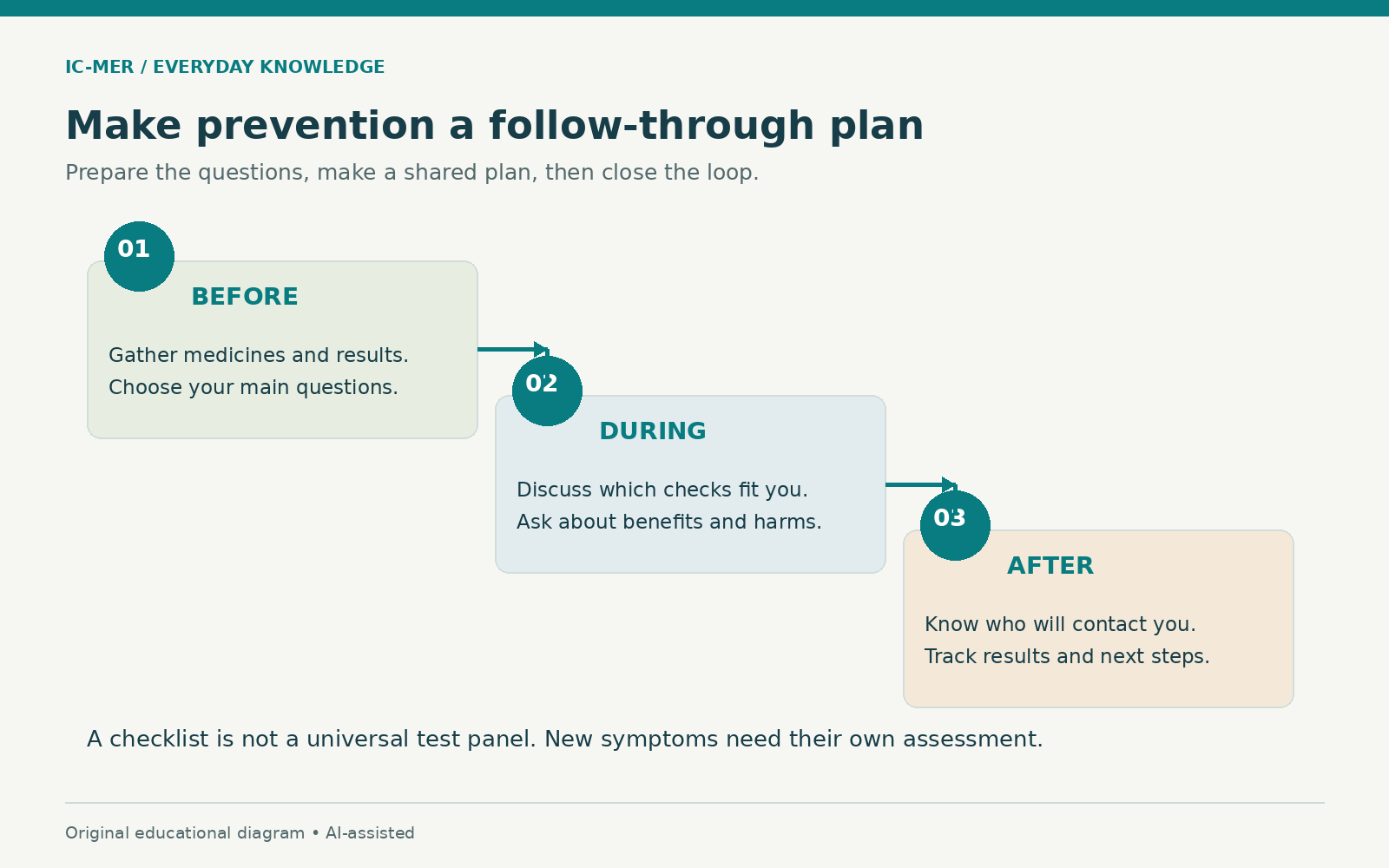
Before a routine appointment, write down your usual drinks, their sizes, the days you drink and what happens when you do not. Add your medicines, the concerns that prompted you to ask and any past attempts to change. A question such as “Could stopping suddenly be unsafe for me?” may matter more than asking for a universal number.
You can also identify one practical goal: fewer alcohol-centered evenings, a safer social plan or getting help with loss of control. Keep that goal separate from promises about weight, cancer risk or how quickly you will feel different. The next step should fit your circumstances and, where needed, be planned with a qualified professional.
Sources & further reading
- CDC: Alcohol Use and Your HealthChecked 2026-10-26
- CDC: Alcohol and CancerChecked 2026-10-26
- NIAAA: What Is a Standard Drink?Checked 2026-10-26
- NIAAA: Understanding Alcohol Use DisorderChecked 2026-10-26
- NIAAA: Rethinking DrinkingChecked 2026-10-26
- NIAAA: Harmful InteractionsChecked 2026-10-26
- NIAAA: Understanding the Dangers of Alcohol OverdoseChecked 2026-10-26
About this article
Prepared with AI assistance and an AI fact-checking pass against the sources listed above. No human clinical review is claimed. Evidence may change; consult appropriate qualified professionals for decisions about your circumstances.
Spotted a problem? Suggest a correction.