Medicine · 7 min read
Preventive health visits: making a useful personal checklist
A useful prevention visit starts with your questions and ends with a plan you can carry out. Here is a simple way to prepare.
Prepared with AI assistance for general education, not individualized medical advice or human clinical review. Discuss screening, vaccines, symptoms, medicines and follow-up with your healthcare professional. Do not delay urgent care for a routine appointment. Coverage information refers to the United States and must be confirmed for your plan.
Information may contain errors, omissions or outdated guidance. This article is general education, not individual medical or other professional advice. Verify important information before acting and consult an appropriately qualified professional. Never disregard medical advice, delay care or change treatment because of this article. See our accuracy disclaimer and terms.
Make the visit about the decisions you need
A preventive appointment can be useful even when you feel well. It is a chance to discuss appropriate screening, vaccines and ways to protect your health. The most useful outcome is a plan that fits your circumstances, rather than a long list of tests collected simply because another person had them.
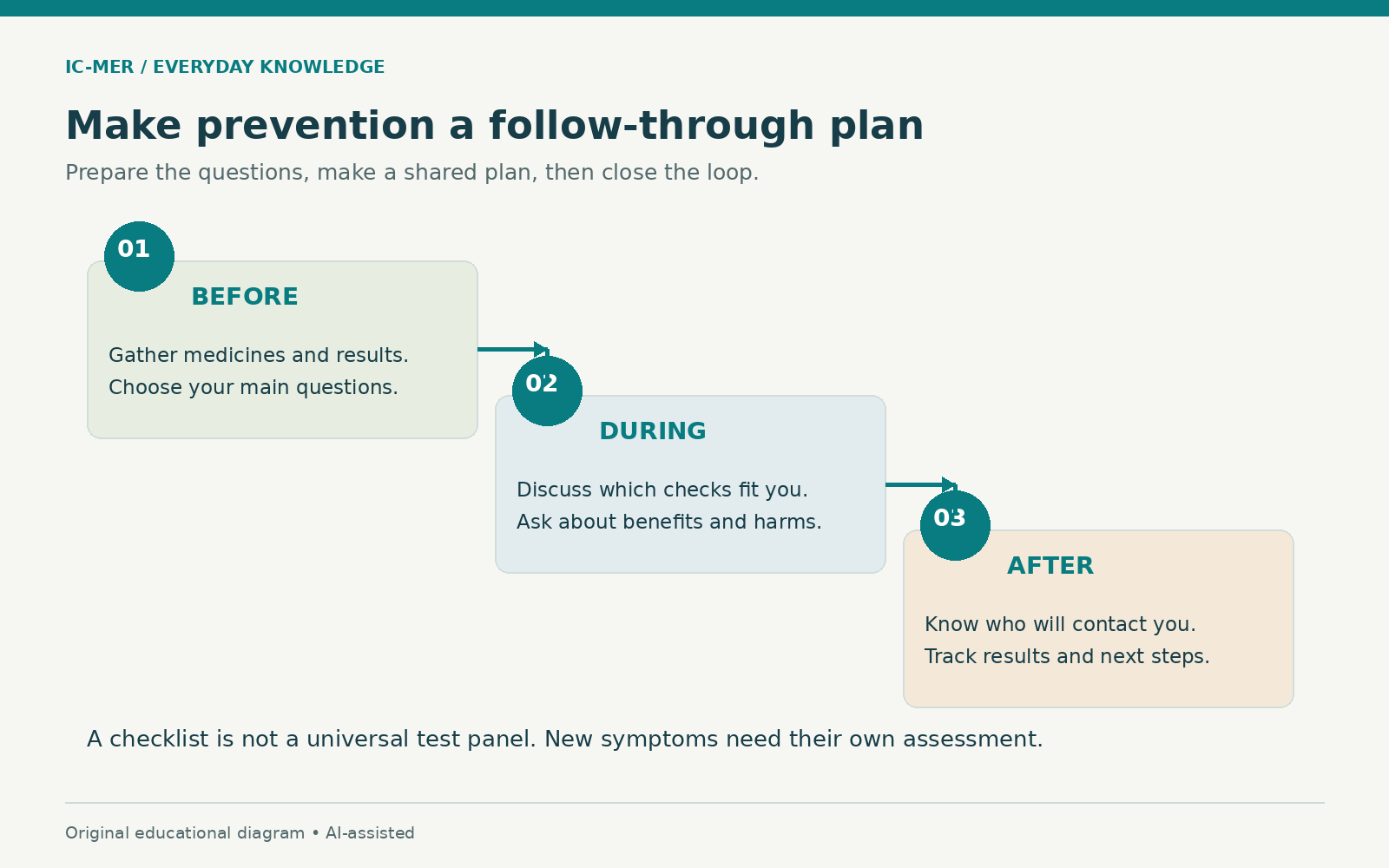
Prepare a short note with three spaces: what has changed, what you want to understand, and what needs a next step. You can use a folded sheet of paper or a note on your phone. The purpose is to make the conversation easier, not to create a perfect medical record before you are allowed to seek care.
For example, your note might say: 'A relative recently received a diagnosis; I am unsure when my last screening was; I need help arranging a follow-up appointment.' Those are useful starting points even if you do not know which service will be recommended. Your clinician can help turn the questions into decisions.
Sources: [2]
Choose the right appointment when you book
Tell the office whether you want prevention planning, help with a symptom, follow-up for a known condition, or more than one of these. Ask how the practice schedules those needs. Do not hide a new problem to keep an appointment labeled preventive, and do not postpone urgent care while waiting for a routine visit.
In the United States, a Medicare yearly Wellness visit focuses on developing or updating a prevention plan; it is not a routine physical examination. Eligibility and timing rules apply. Medicare says additional services may create costs even when the preventive benefit itself has no patient charge under its conditions. Confirm details with the office and your plan.
A practical booking note might read: 'I want a prevention review and also have a separate concern. Which appointment or appointments should I schedule?' Keep the answer with the date, location and any instructions. This simple step helps avoid arriving with a different expectation from the team seeing you.
Sources: [3]
Bring a useful snapshot, not a stack of mysteries
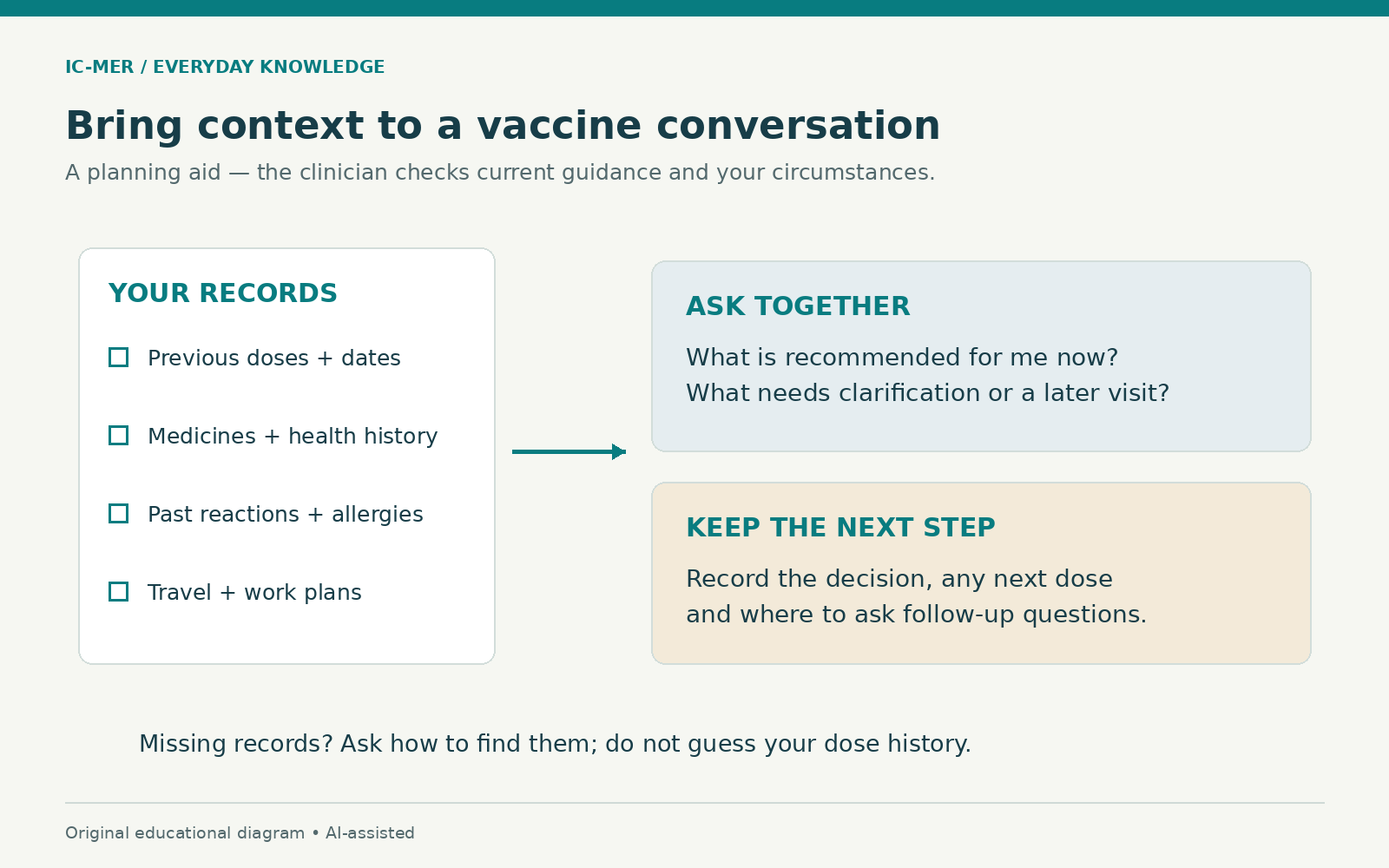
Make a current list of prescription medicines, nonprescription products, vitamins and supplements. Include allergies and previous medication problems. Bring relevant history, including important conditions and operations. If you are unsure how to describe a medicine, ask the office whether bringing its container would help.
You can organize the information in a small folder with three labels: medicines, previous results and questions. If a specialist or another clinic holds a report, note where it came from and ask how to share it securely. An empty space marked 'date unknown' is more useful than a guessed date that later looks certain.
Imagine arriving with five laboratory printouts. Instead of expecting to interpret them yourself, add a cover note: 'These were ordered by another office. Which belong in my record, and do any need follow-up?' The goal is to help your healthcare team see the context, not to decide that every flagged number needs a new test.
Sources: [1]
Describe changes in everyday language
Mention symptoms and explain when they began, how often they happen and whether they are changing. Share relevant family history and changes in your health or daily life. The clinician needs the actual experience, not a diagnosis you feel obliged to arrive with.
For your own notes, compare a vague description with a concrete one. 'I have not been myself' may be difficult to discuss; 'I keep canceling my usual afternoon activity because I feel exhausted, and this started recently' gives the conversation a starting point. This example is a way to organize information, not a diagnosis or a rule about how long to wait.
You can also name what matters most: staying comfortable at work, remaining independent at home, caring for someone else, or understanding a confusing result. Ask which concerns can be handled today and which need another appointment. A written return plan is better than silently dropping an important question because time is short.
Sources: [4]
Turn prevention into a personal list
Ask which preventive services are appropriate for you now and which can wait. Screening tests, vaccines and counseling address different needs. Your healthcare professional can help select services and answer questions about your circumstances. A neighbor's appointment list is not a substitute for that discussion.
A simple personal table can have four columns: topic, decision, next action and responsible person. An entry might say 'screening history; previous date unclear; request the old report; I will contact the former clinic.' Another might say 'vaccine record; discuss after records arrive; arrange follow-up; office will explain booking.' These examples are organizational tools, not recommendations for particular procedures.
Leave room for 'not needed now' and 'decision still pending.' A completed checklist does not have to mean that every possible test was ordered. Ask why a service is or is not recommended, what information could change the decision, and when the topic should be revisited. Write the explanation in words you can use later.
Sources: [2]
Ask what a recommended test involves
When a test is proposed, ask about its purpose, benefits and risks, preparation and how results will reach you. Ask what happens afterward, including whether another appointment may be needed. Understanding the next step matters as much as knowing where the test takes place.
Use a concrete planning question: 'If I arrange this test next month, what will I need to do beforehand, and who should I contact with questions?' Do not assume fasting, change a medicine or add a supplement on your own. Get instructions that apply to the actual test and your treatment plan.
If the explanation is difficult to follow, say what you understood and ask the clinician to correct it. For example: 'My understanding is that I should book the test, follow the preparation instructions and call this office if I do not receive the result. Is that right?' This is a communication check, not a challenge to the clinician.
Make room for the practical obstacles
Tell the team if following the plan may be difficult. Cost, transport, work hours, language, caregiving and access to records can all affect what you can arrange. Ask for an explanation you can use and bring a trusted support person if that would help you remember the discussion.
Before agreeing to a date, look at the practical sequence: travel to the appointment, time away from responsibilities, preparation, and any help needed afterward. A plan can look simple on a clinic printout while being hard to carry out at home. Naming the obstacle gives the team an opportunity to discuss possible options.
Check expected charges with your provider and insurer; preventive care is not a promise that every service will be free. If you lack coverage or cannot afford care, ask about community health centers, local health departments or other affordable services. Availability and eligibility vary, so confirm them with the organization offering care.
Leave with a next-step note you can use
Before the conversation ends, identify the next appointment, test or referral, who will arrange it, and how to obtain results. Ask for written directions. If you do not understand the plan once home, contact the office. Discuss medication changes with your clinician or pharmacist rather than stopping prescribed treatment independently.
Give each action a place in your calendar or folder. You might put an appointment card beside a transport reminder, save the office number next to your question list, or keep a blank line for the result discussion. Choose a system you already use instead of creating a complicated tracker you will abandon.
Afterward, update the checklist with what actually happened. A referral requested is different from an appointment booked; a test completed is different from a result explained. Close those gaps with the appropriate office. The value of a preventive visit is not an impressive pile of paperwork. It is a clearer, workable plan and a way to return when something needs attention.
Keep the checklist short enough to find the unfinished item quickly. For instance, circle the one call you still need to make instead of copying the entire visit summary onto another page. When you return to the clinic, bring the updated note so the conversation can begin with what is still unresolved, rather than reconstructing every step from memory.
Sources: [1]
Sources & further reading
- AHRQ: Be More Engaged in Your HealthcareChecked 2026-10-25
- HHS MyHealthfinder: Find and Access Preventive ServicesChecked 2026-10-25
- Medicare: Yearly Wellness VisitsChecked 2026-10-25
- MedlinePlus: Make the Most of Your Doctor VisitChecked 2026-10-25
About this article
Prepared with AI assistance and an AI fact-checking pass against the sources listed above. No human clinical review is claimed. Evidence may change; consult appropriate qualified professionals for decisions about your circumstances.
Spotted a problem? Suggest a correction.