Medicine · 4 min read
Better sleep: building a realistic nightly routine
Make room for sleep with a workable evening routine, practical bedroom changes and clear signs that habits alone are not enough.
Educational information from the IC-MER Editorial Team, prepared with AI assistance. This is not personalized medical advice or human clinical review. Discuss ongoing sleep problems and treatment choices with a qualified healthcare professional.
Information may contain errors, omissions or outdated guidance. This article is general education, not individual medical or other professional advice. Verify important information before acting and consult an appropriately qualified professional. Never disregard medical advice, delay care or change treatment because of this article. See our accuracy disclaimer and terms.
Start with the evening you actually have
A useful sleep routine should fit an ordinary Tuesday, not an imaginary evening with no work, children, noise or unfinished chores. Before buying another sleep product, look at the period between your last essential responsibility and the time you need to get up. Where is sleep being squeezed out? What could move earlier, become simpler or wait until tomorrow?
Write a short list of the obstacles you can influence. Examples might be answering nonurgent messages in bed, leaving tomorrow’s lunch until midnight or watching one more episode after you already feel sleepy. Choose one change to try first. This is a planning exercise, not a promise that better organization cures a sleep disorder.
Sources: [2]
Protect time without chasing a perfect number
CDC recommends at least seven hours daily for adults aged 18–60, seven to nine for ages 61–64, and seven to eight for those 65 and older. These are general age-based recommendations, not a test you pass by spending that many hours in bed. Difficulty falling asleep, repeated waking or feeling unrefreshed despite sufficient sleep deserves attention.
Try to keep your bedtime and waking time reasonably consistent. When choosing a schedule, include the time needed for evening tasks instead of assuming they will disappear. A person who must leave early for work might prepare clothes and food before beginning their wind-down. The point is to make space for sleep, not to force it on command.
Make the transition simple
CDC suggests turning off electronic devices at least 30 minutes before bedtime. One practical way to support that choice is to decide where the phone will charge and which alerts genuinely need to reach you. If you have caregiving or emergency responsibilities, preserve the access you need while reducing optional interruptions.
NHLBI recommends a quieter period before bed and less bright artificial light. Reading something undemanding or listening to calm music are options, not required rituals. You do not need an elaborate sequence of products. Choose activities that are easy to repeat without turning bedtime into another demanding project.
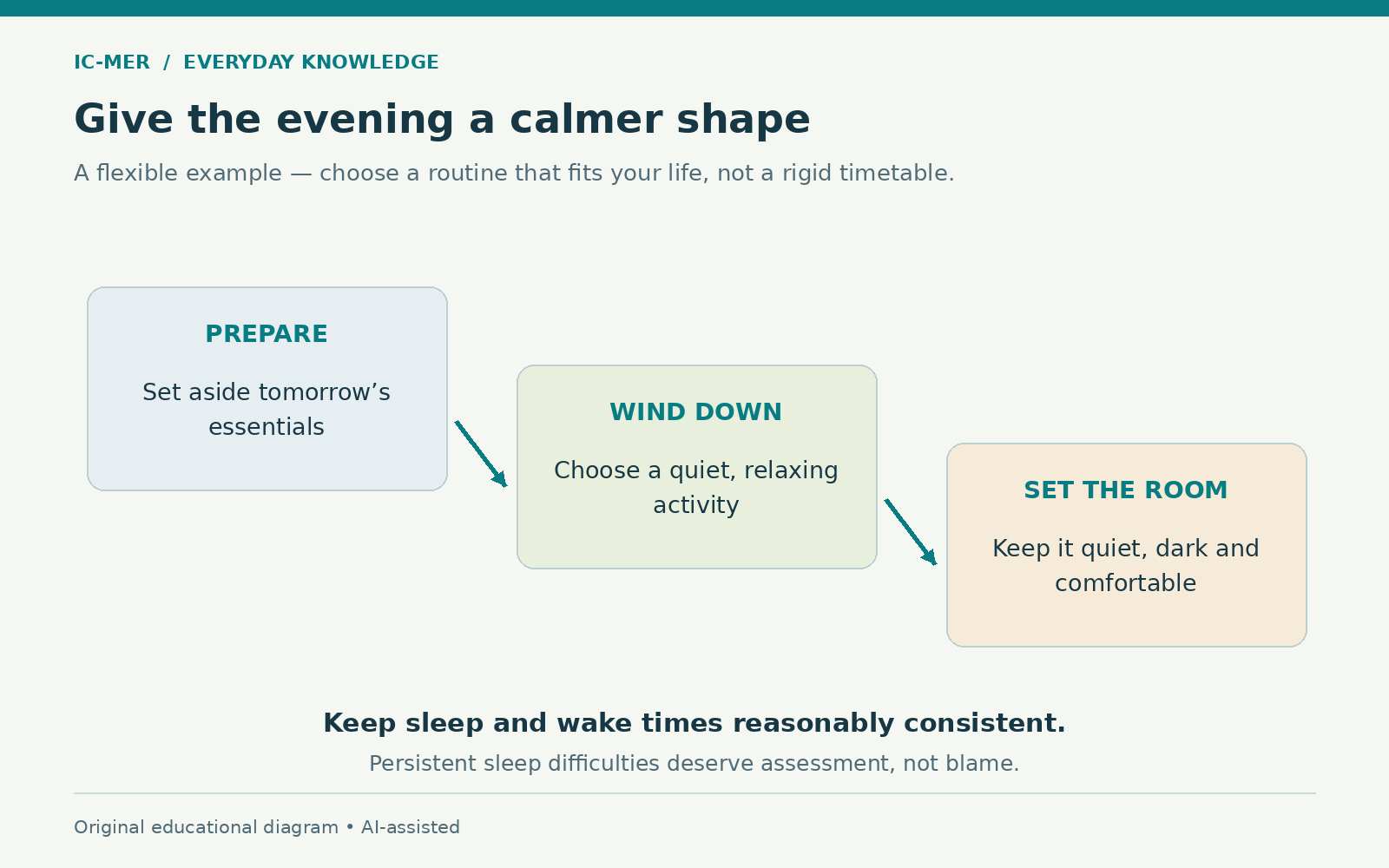
For example, a fictional household might finish tomorrow’s preparation first, turn off the television, brush teeth and read a few pages. On a difficult night, they could keep only the essential steps. This example supplies an organizational idea; its order and duration are not a medically validated treatment schedule.
Check the room and the timing of everyday habits
Aim for a bedroom that is quiet, comfortably cool and dark enough for sleep. Keep any lighting needed for safe movement. Look for one manageable disturbance, such as television sound from another room or light from a device, and discuss an adjustment with the people sharing your home.
Avoid using alcohol as a sleep aid. NHLBI explains that it can make falling asleep easier while contributing to lighter, disrupted sleep later. Consider caffeine timing too: afternoon or evening caffeine can interfere with sleep. Large late meals may also be unhelpful. These are reasons to review habits, not instructions to skip necessary food or change a prescribed nutrition plan.
If you work nights or rotating shifts, a standard evening timetable may be unrealistic. NHLBI suggests reducing bedroom light and noise for daytime sleep and discussing ongoing difficulty adapting with a clinician. Ask household members to help protect your intended sleep period where possible.
Notice patterns and know when to get help
Review whether the plan is practical after trying it on several ordinary days. Did the preparation actually move earlier? Was the bedroom quieter? Did you have enough opportunity to sleep? These questions can guide adjustments without demanding a perfect result every morning.
Persistent trouble sleeping or daytime impairment warrants a healthcare conversation. Do not assume you have failed because a routine did not solve the problem. NHLBI describes cognitive behavioral therapy for insomnia, or CBT-I, as the usual first treatment option for long-term insomnia. It is a structured treatment, beyond a general bedtime checklist.
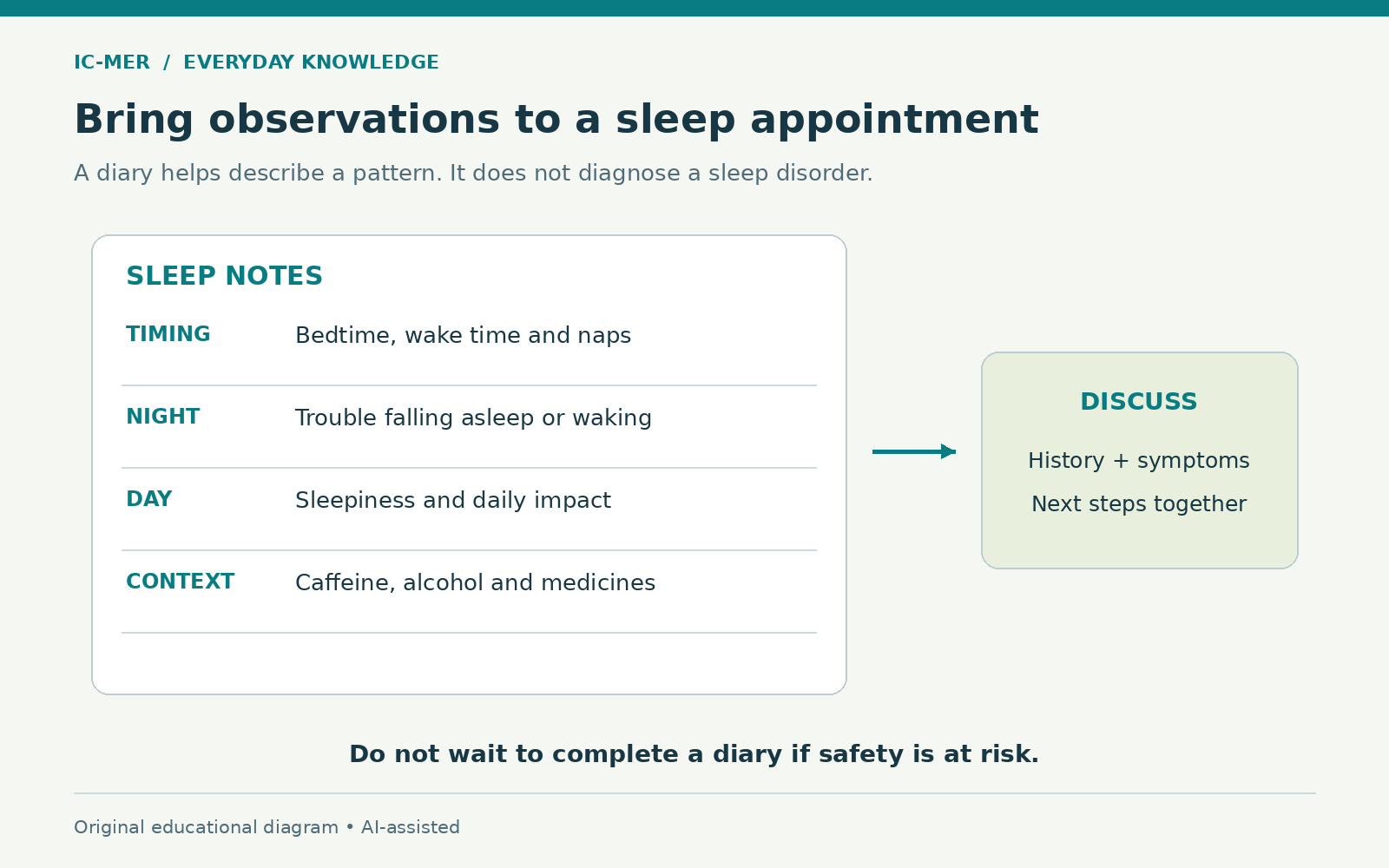
Bring a clear account of what is happening and any medicines or sleep products you use. Do not stop prescribed medicine or start a sleep aid because of this article. A useful routine supports sleep; professional assessment helps identify when another approach is needed.
Sources & further reading
- CDC: About SleepChecked 2026-10-24
- NHLBI: Healthy Sleep HabitsChecked 2026-10-24
- NHLBI: Insomnia DiagnosisChecked 2026-10-24
- NHLBI: Insomnia TreatmentChecked 2026-10-24
About this article
Prepared with AI assistance and an AI fact-checking pass against the sources listed above. No human clinical review is claimed. Evidence may change; consult appropriate qualified professionals for decisions about your circumstances.
Spotted a problem? Suggest a correction.