Medicine · 10 min read
Eating less salt without losing flavor
Reduce sodium with realistic shopping, seasoning and restaurant choices. Understand label comparisons and why potassium-based salt substitutes need caution.
General adult nutrition education, not individualized treatment. Follow your prescribed sodium, potassium and fluid plan; check salt substitutes with a clinician or pharmacist when medical conditions or medicines may affect potassium.
Information may contain errors, omissions or outdated guidance. This article is general education, not individual medical or other professional advice. Verify important information before acting and consult an appropriately qualified professional. Never disregard medical advice, delay care or change treatment because of this article. See our accuracy disclaimer and terms.
Start with one meal that tastes good
Eating less salt does not have to mean serving plain, joyless food. It can mean changing one sauce, using a different seasoning combination or noticing how several salty ingredients arrive in the same meal. Begin with a dish you enjoy and a question you can answer: where is most of its sodium coming from, and what change would preserve the parts you like?
Imagine a familiar bowl of rice, vegetables and chicken. The sodium may come from a seasoning packet, a prepared sauce, the chicken’s added solution or a combination. Removing a pinch at the table may be a smaller change than replacing the sauce. You do not have to guess from taste alone; labels and preparation information help locate the useful opportunity.
The practical ideas below are for general adult eating. They do not set a personal sodium prescription, replace blood-pressure treatment or promise a particular change in a reading. If a clinician has given you a sodium or fluid target, use that advice when applying the examples.
Know what the sodium number means
Salt and sodium are related but are not the same substance. Table salt is sodium chloride; sodium also occurs in other food ingredients. CDC notes that much of the sodium people eat comes from processed and restaurant foods. A food does not need to taste intensely salty to contribute to the total.
The Dietary Guidelines for Americans, 2025–2030 recommend less than 2,300 milligrams of sodium daily for the general population aged 14 and older. That is a general reference, not an instruction for every person with a medical condition. Too much sodium can raise blood pressure and increase the risk of heart disease and stroke. Individual responses and clinical needs differ.
Use the milligram amount on the food label rather than trying to estimate sodium from the appearance of salt crystals. The amount matters across the day, including breads, sauces, snacks and restaurant meals. There is no need to eliminate all sodium: the body needs some. The useful task is to reduce excess while continuing to eat adequately and enjoyably.
Make the serving-size calculation once
Before comparing products, check how much food the label describes and how much you expect to eat. FDA’s label guidance explains that nutrient amounts generally refer to the stated serving. The serving is a comparison basis, not a command to eat that exact amount.
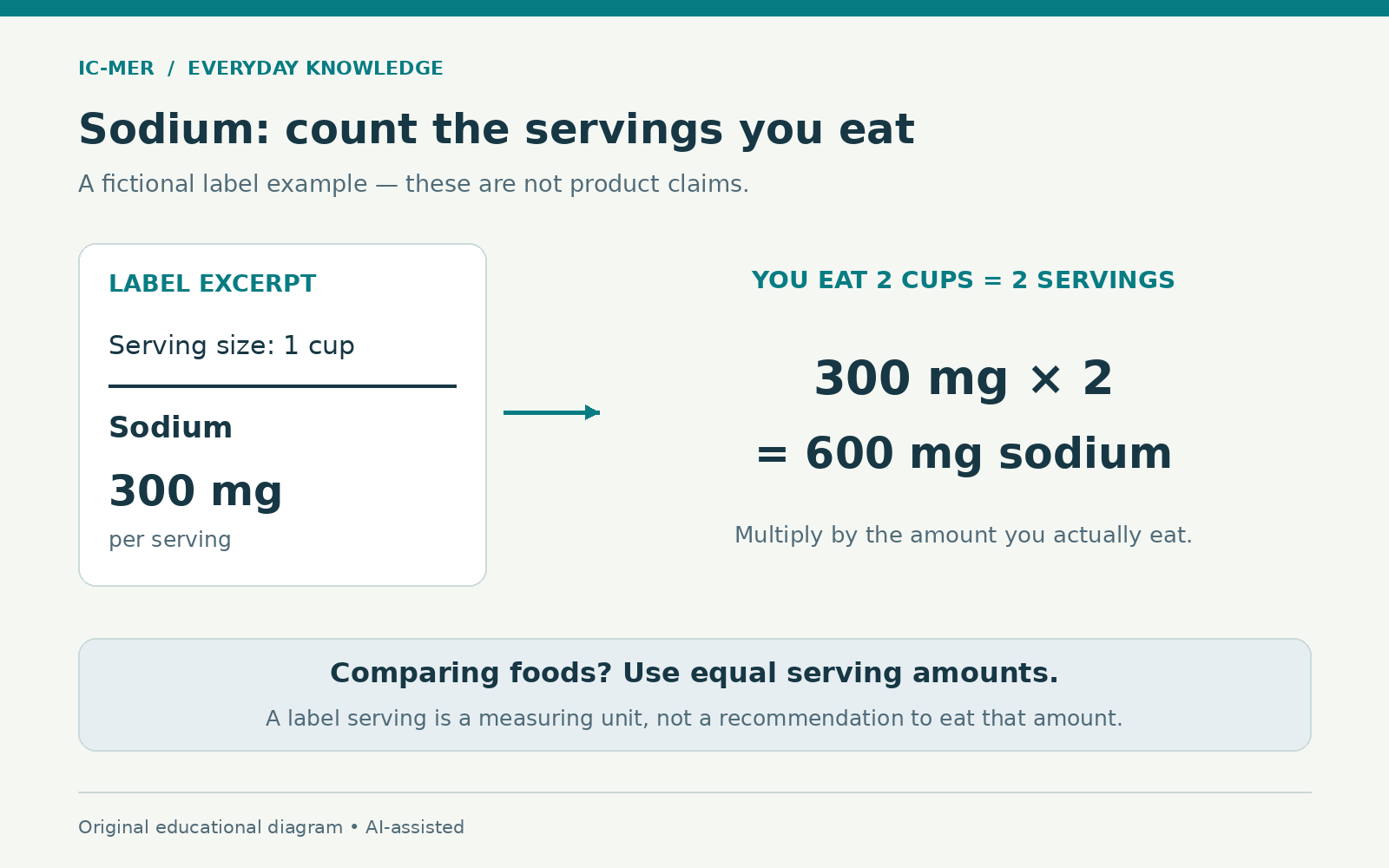
Here is a fictional soup label: 300 milligrams of sodium per one-cup serving, with two cups (two servings) in the container. Eating the whole container provides 600 milligrams. If another fictional soup has 200 milligrams per serving of the same size and also contains two servings, its full container provides 400 milligrams. The difference is 200 milligrams for the amount eaten, not merely 100 milligrams. Neither soup is a real product recommendation.
The diagram accompanying this article illustrates serving arithmetic. It does not divide the daily allowance into a prescribed meal budget. Your meal may contain bread, a topping or another dish that contributes sodium too. Compare the complete amount you plan to eat when the decision depends on the total.
Once you understand a regularly purchased item, the check becomes quicker. Recheck when the package size, recipe or serving information changes. A familiar brand name does not ensure that two versions use the same recipe.
Sources: [2]
Read front-of-package claims carefully
FDA describes reduced sodium as at least 25 percent less than the regular product. That comparison does not necessarily make the food low in sodium. No-salt-added means salt was not added during processing; it does not necessarily mean the product contains no sodium. The Nutrition Facts panel still matters.
For a fictional comparison, reducing a serving from 800 to 600 milligrams is a 25 percent reduction. The lower figure may be useful, but it is still 600 milligrams. A claim describes a comparison, not an automatic verdict that the item fits everyone’s diet. Compare with other available products as well as the original version.
FDA’s general label guide considers 5 percent Daily Value or less per serving low and 20 percent or more high. These percentages help with shopping; they do not replace a personal plan. If a medical target differs from the label’s reference, ask your clinician or dietitian how to interpret it.
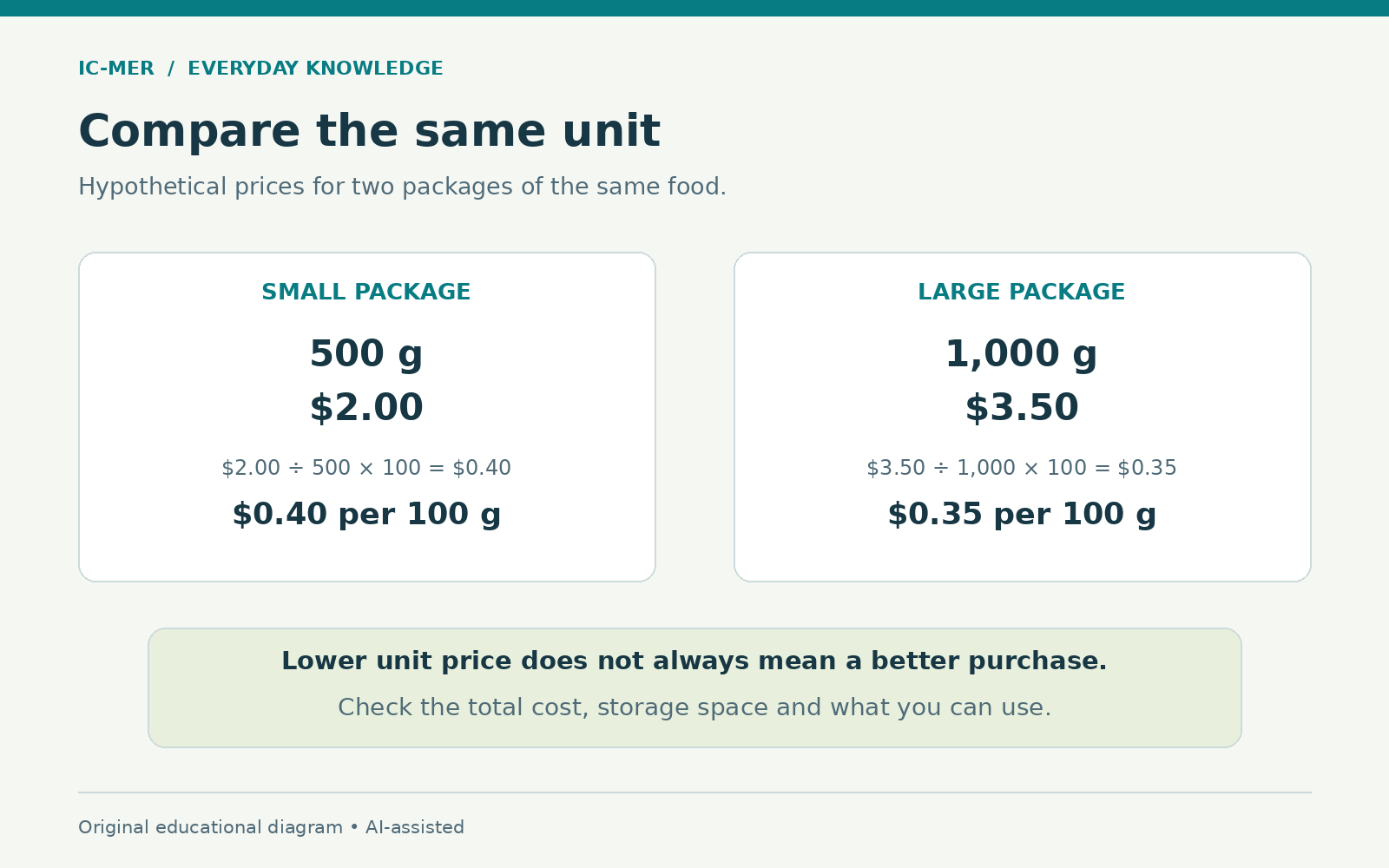
Keep the comparison fair. Compare the same food and an equivalent amount, then consider cost, flavor and ingredients. A lower-sodium item that your household will use can be more helpful than a supposedly perfect purchase left untouched in the cupboard.
Sources: [3]
Build flavor from several directions
Think of a dish as having more than one source of interest. Herbs can add aroma, spices can add warmth, vegetables can provide sweetness or freshness, and a suitable splash of lemon or vinegar can add brightness. Choose ingredients you like and can tolerate. You do not need a crowded spice rack to begin.
For an original example, try a small portion of cooked vegetables with olive oil, lemon and an herb you already own. Taste before deciding whether more seasoning is needed. Another household might prefer garlic, a spice and a different vegetable. These are kitchen experiments, not tested recipes with a specified nutrient composition.
CDC recommends using alternatives such as herbs and spices instead of salt when preparing food. Check seasoning blends, however: a container described as a spice mix may also include salt. Plain garlic and garlic salt are different products. Look at the ingredients and sodium information rather than relying on the name’s healthy sound.
Introduce one change at a time when sharing meals. If you change the main ingredient, cooking method and seasoning together, it can be hard to know which change people disliked. A gradual approach lets you keep a familiar meal while finding a version that suits the household.
Sources: [4]
Look at the whole recipe before adding salt
Write down the sodium-containing components of a repeated meal. For a sandwich, these could include the bread, filling, cheese, pickles and condiment. For a casserole, consider the broth, sauce, seasoning packet and toppings. This is a way to identify choices; it is not a reason to declare the entire meal forbidden.
Choose the component with the easiest practical alternative. You might use a smaller amount of a strongly flavored topping, compare two broths, or replace one processed filling with a suitable home-prepared option. Keep enough food in the meal to meet your needs. Reducing sodium should not become a reason to eat an inadequate lunch.
Suppose a fictional pasta dinner uses a prepared sauce and a salty topping. One experiment is to compare sauces on an equal-serving basis while keeping the rest of dinner familiar. Another is to serve the topping separately so people can choose how much they use. You can judge taste and convenience before deciding whether the change belongs in the routine.
Avoid changing preservation recipes casually. Salt can have functions beyond flavor in food processing. This article’s suggestions concern ordinary meal preparation; they are not instructions for altering canning, curing or other preservation procedures. Use a tested recipe from an appropriate food-preservation authority for those tasks.
Sources: [3]
Make convenience foods work for you
Cooking everything from scratch is not realistic for every household. A microwave, limited time, disability, shift work or a small budget may shape what is possible. Start with products available where you already shop. Compare two familiar items instead of assuming you must visit a specialty store.
Plain frozen vegetables and suitable canned options can help assemble a meal. CDC’s sodium-reduction advice includes looking for lower-sodium choices and checking labels. If using canned foods that can be rinsed, rinsing may remove some sodium, but do not assume a fixed percentage or treat the food as sodium-free afterward.
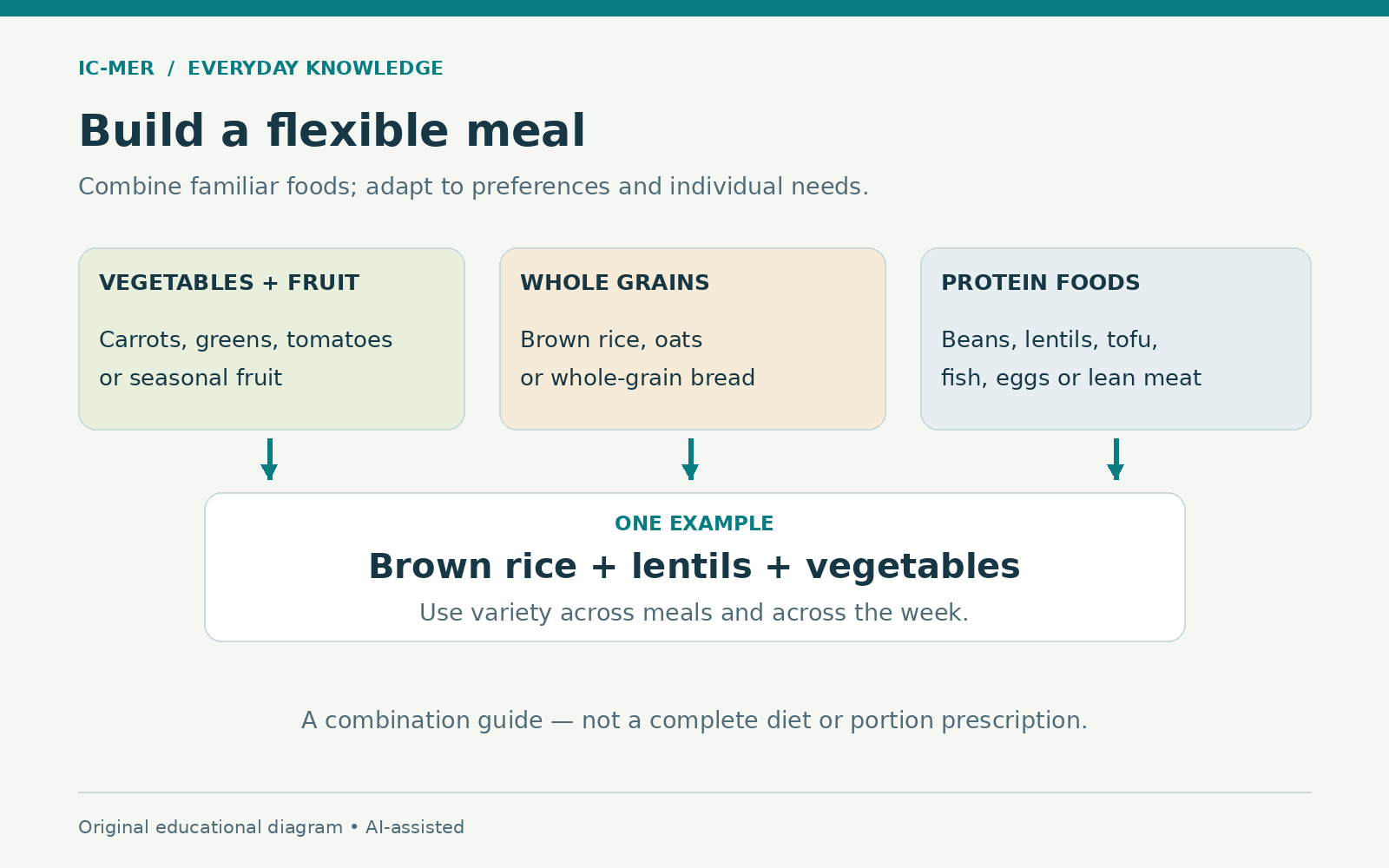
Build a backup meal from a few compatible ingredients. For example, a plain grain, a vegetable and a protein food can be seasoned to suit your circumstances. The example is a planning structure, not a complete diet. Allergies, kidney-related restrictions and other medical needs may change which ingredients are suitable.
Price and waste still count. If the lower-sodium version costs more than you can afford, look for another manageable change elsewhere in the meal. Progress does not require purchasing every item marketed for wellness or replacing the contents of the kitchen at once.
Ask useful questions when eating out
A restaurant meal offers fewer opportunities to inspect ingredients, but a few specific questions may help. Ask whether sauces or dressings can be served separately, whether a dish can be prepared without added salt, or whether nutrition information is available. A request to omit salt during cooking cannot remove sodium already present in a prepared ingredient.
Choose a question that fits the setting. At a counter, checking published nutrition information may be easier than asking staff to redesign a recipe. At a table-service restaurant, a straightforward request about the sauce may be workable. Staff may not know every ingredient, so do not treat an uncertain answer as a precise nutrient measurement.
When a meal is shared, decide whether extra sauces and salty toppings are needed before automatically adding them. Taste the food first. If you take part home, follow safe cooling and storage practices; reducing waste should not mean leaving perishable food unrefrigerated.
One meal does not define your usual pattern. Return to ordinary choices afterward instead of compensating with a restrictive fast. If you need strict dietary control for a medical condition, ask your care team for a more specific plan for restaurant meals and travel.
Sources: [4]
Treat salt substitutes as a separate decision
Some products replace part of the sodium chloride with potassium chloride. That makes them different from a blend of herbs and spices. Do not assume that lower sodium means suitable for everyone, or that a substitute can be used without limit.
NIDDK warns that salt substitutes can be high in potassium and may be unsuitable when potassium needs limiting in chronic kidney disease. Medicines can also affect potassium balance. If you have kidney disease, have been told your potassium is high, or take medicines affecting potassium, discuss a product with your clinician or pharmacist before using it. Bring the actual label rather than just its marketing name.
This article does not recommend switching every household member to a potassium-based salt. Children, pregnancy and other medical circumstances deserve advice appropriate to the person. Ordinary herbs or other suitable flavorings may be an easier starting point while questions are clarified. Do not discontinue prescribed medicines to make room for a dietary product.
A clinician’s recommendation to change sodium intake is also not a reason to adjust fluid intake on your own. Sodium, fluids and medicines may be managed together in some conditions. Keep those decisions within the care plan.
Sources: [5]
Make a small plan that survives a busy week
Choose one shopping comparison and one cooking experiment. Write down the exact food you will compare and the meal where you will use it. For example, compare two sauces on the same serving basis, then try an herb-and-lemon combination with a familiar side dish. Decide what you will use if the preferred item is unavailable.
After a few meals, review the practical result. Was the food enjoyable? Was the cost manageable? Did preparation take too long? Did anyone add a large amount of a different salty condiment because the new version was unsatisfying? Use those observations to revise the approach, without treating them as a medical trial.
If you monitor blood pressure as part of a treatment plan, continue the measurement and follow-up instructions you were given. A food change does not establish why a reading changed, and a better reading does not authorize stopping medication. Discuss patterns with the clinician responsible for your care.
The next useful step is a repeatable choice, not a perfect sodium total guessed from memory. Keep meals varied, use labels where they answer a question and seek individualized help when medical restrictions make the choices complicated.
Sources & further reading
- About Sodium and Health — June 2026Checked 2026-10-22
- How to Understand and Use the Nutrition Facts LabelChecked 2026-10-22
- Sodium in Your DietChecked 2026-10-22
- Tips for Reducing Sodium IntakeChecked 2026-10-22
- Healthy Eating for Adults with Chronic Kidney DiseaseChecked 2026-10-22
- Dietary Guidelines for Americans, 2025–2030 — sodium guidance, page 5Checked 2026-10-22
About this article
Prepared with AI assistance and an AI fact-checking pass against the sources listed above. No human clinical review is claimed. Evidence may change; consult appropriate qualified professionals for decisions about your circumstances.
Spotted a problem? Suggest a correction.