Medicine · 7 min read
Getting more fiber from everyday foods
Add fiber with familiar foods, simple label comparisons and gradual changes. Learn when digestive symptoms need more than a dietary adjustment.
General adult nutrition education, not an individualized diet or treatment plan. Follow prescribed dietary and fluid restrictions and seek care for persistent or concerning digestive symptoms.
Information may contain errors, omissions or outdated guidance. This article is general education, not individual medical or other professional advice. Verify important information before acting and consult an appropriately qualified professional. Never disregard medical advice, delay care or change treatment because of this article. See our accuracy disclaimer and terms.
Find the missing ingredient in a familiar meal
Getting more fiber can begin with an ordinary breakfast or lunch. You do not need to replace every food in the kitchen, purchase a cleanse or build a menu around an unfamiliar powder. Look at a meal you already repeat and ask whether it includes a whole grain, beans, vegetables, fruit, nuts or seeds. Choose one addition that fits your taste and budget.
For example, someone who likes toast could try a whole-grain version, while someone who regularly eats soup could add a suitable portion of beans. These are different routes to the same practical goal: bringing more fiber-containing foods into an everyday pattern. The examples in this article are meal ideas, not a calculated diet or a prescription for treating a medical condition. A change that is comfortable and affordable is easier to repeat.
What fiber does, without the miracle claims
Dietary fiber is carbohydrate that is not readily digested in the small intestine. Different fibers behave differently: some dissolve in water, while others remain relatively intact. Foods often contain a mixture. NIH explains that fiber can help with bowel regularity, and that different kinds have different effects. You do not need to sort every ingredient into a single category before eating a varied meal.
Fiber is not a scrub brush that removes every harmful substance from the body. It is also not a guarantee against constipation, diabetes or heart disease. The useful takeaway is modest: fiber-containing foods can be part of a healthy eating pattern, but symptoms and medical treatment still deserve attention. Avoid products promising to detoxify your body or cure an illness simply by supplying a large dose.
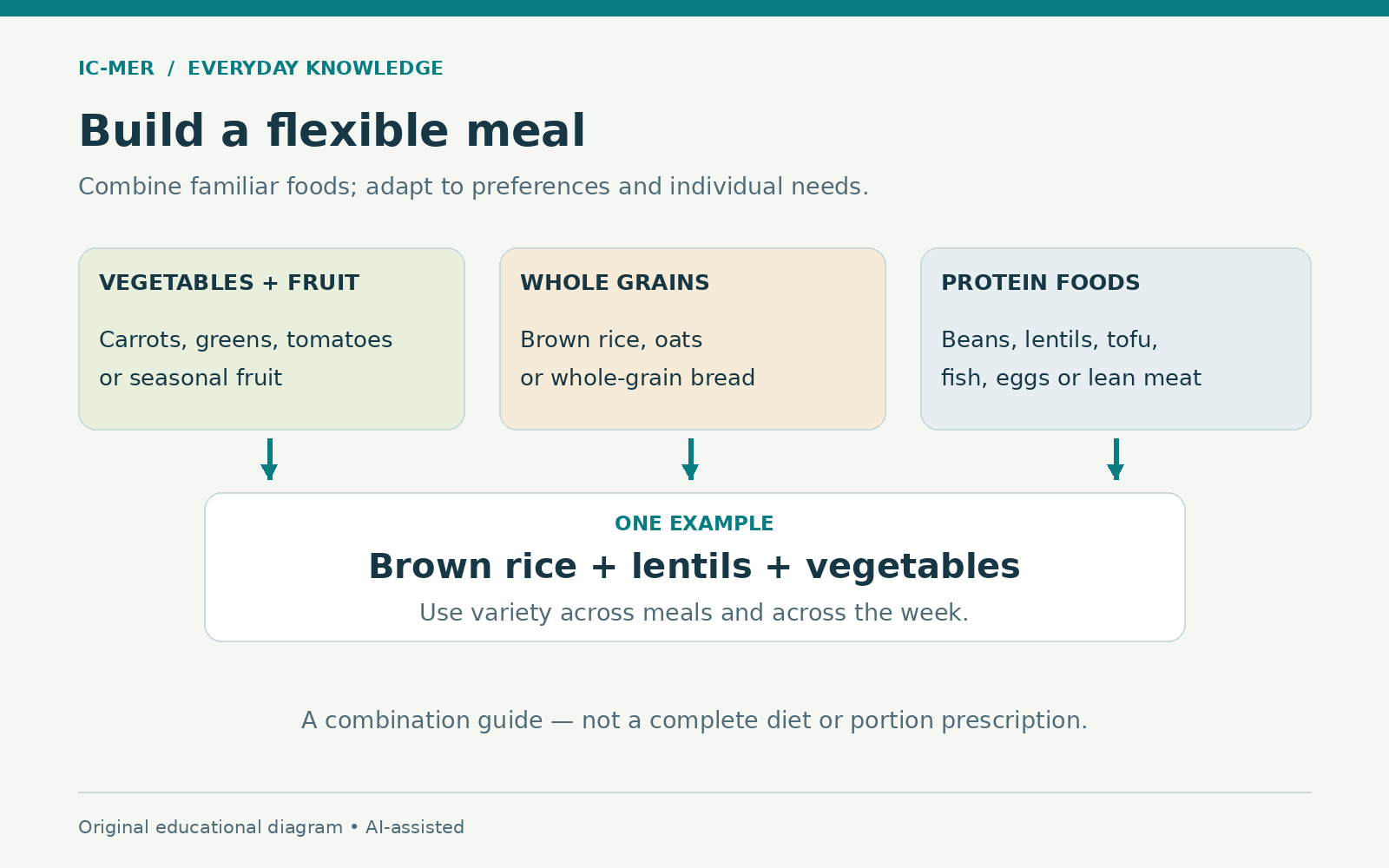
Think in terms of foods you can use together. A grain, a vegetable and a legume can belong in one dish; fruit can fit another eating occasion. The accompanying diagram organizes ordinary food groups as possibilities, rather than ranking foods by a precise fiber amount or declaring a complete daily menu.
Make breakfast a dependable starting point
Choose a breakfast you can prepare on a normal weekday. Oats with fruit, whole-grain toast with a topping you enjoy, or a familiar savory dish containing beans are possible starting points. If you prefer your existing breakfast, adjust one component instead of designing a completely new routine. The change might be a different bread or the addition of fruit.
Suppose a fictional household has five minutes for breakfast and already keeps bread in the freezer. Its first experiment could be buying one whole-grain loaf and using it the usual way. If the texture is unpopular, another grain product may work better. There is no reason to buy several unfamiliar products at once and then feel obliged to finish foods nobody likes.
Keep the rest of the meal in view. A food can provide fiber while also containing substantial sodium or added sugars. Compare similar products for the features that matter to you, rather than assuming the word fiber makes every other ingredient irrelevant. Enjoyment, allergies, cost and convenience remain legitimate parts of the choice.
Give beans and vegetables a small, specific job
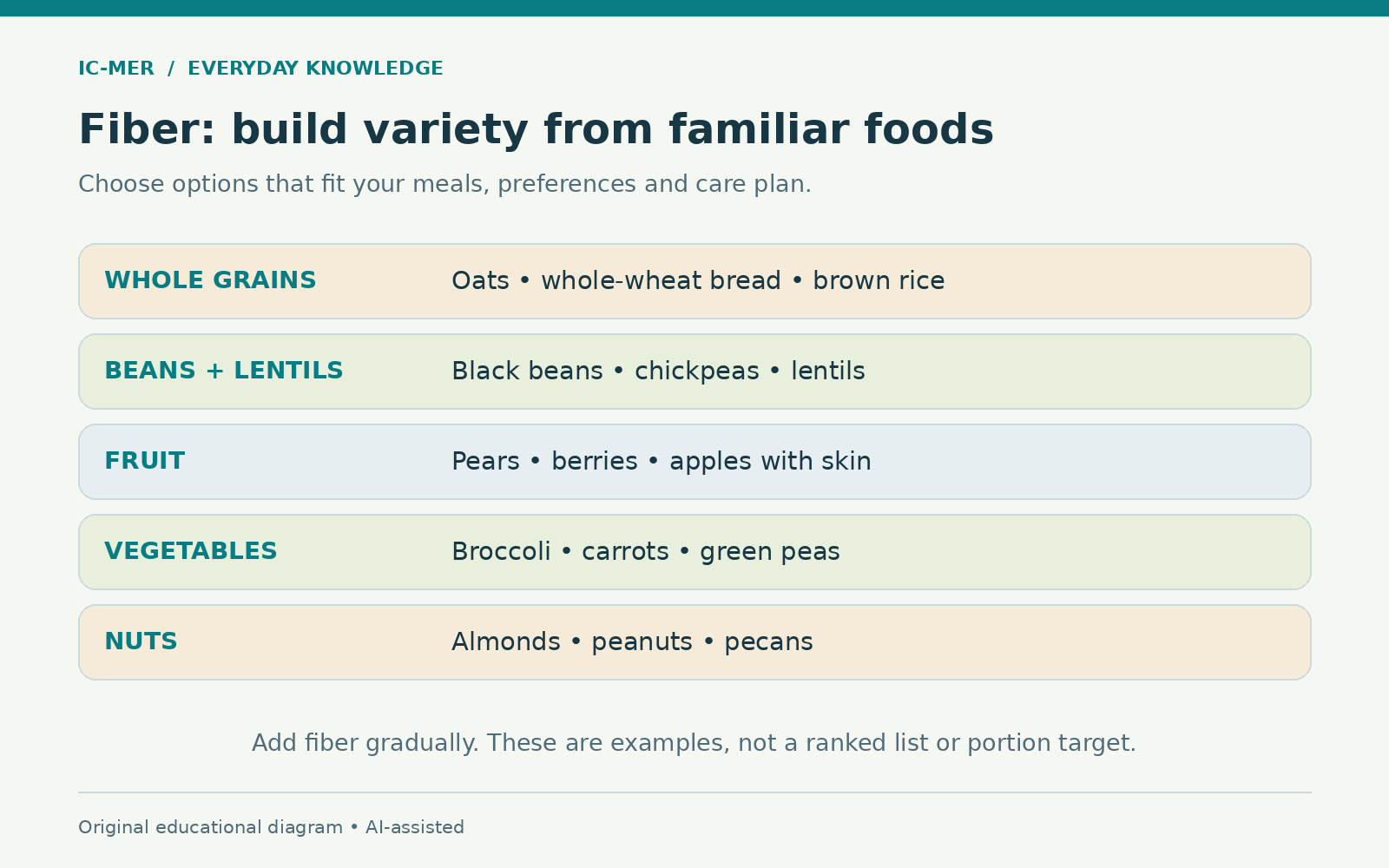
Beans, peas and lentils are among the familiar sources of fiber listed by NIDDK. So are whole grains, fruits, vegetables and nuts. Choose forms that suit your equipment and storage: an ingredient that never gets cooked will not improve a meal. Ready-to-use options can be practical when time or fuel is limited.
An original lunch idea is to mix some beans into a grain salad you already make, rather than immediately replacing the entire dish. At dinner, vegetables can join a pasta sauce, stew or side dish. If nuts or seeds are suitable for you, use them in a way that fits the meal and your ability to chew and swallow safely. Food allergies and medical restrictions take priority over a generic suggestion.
Make the purchase purposeful. Before adding a bag or can to the cart, name the meal it will complete and when you will use it. If a large quantity is likely to go to waste, start smaller. Adding fiber does not require buying a premium ingredient or accepting a particular brand’s definition of healthy eating.
Sources: [3]
Compare labels on the same basis
The Nutrition Facts label lists dietary fiber in grams for the stated serving. FDA explains that serving size reflects typical consumption, rather than the amount an individual is instructed to eat. Check that basis before comparing two products. A larger serving can make one number look better even when the foods are similar.
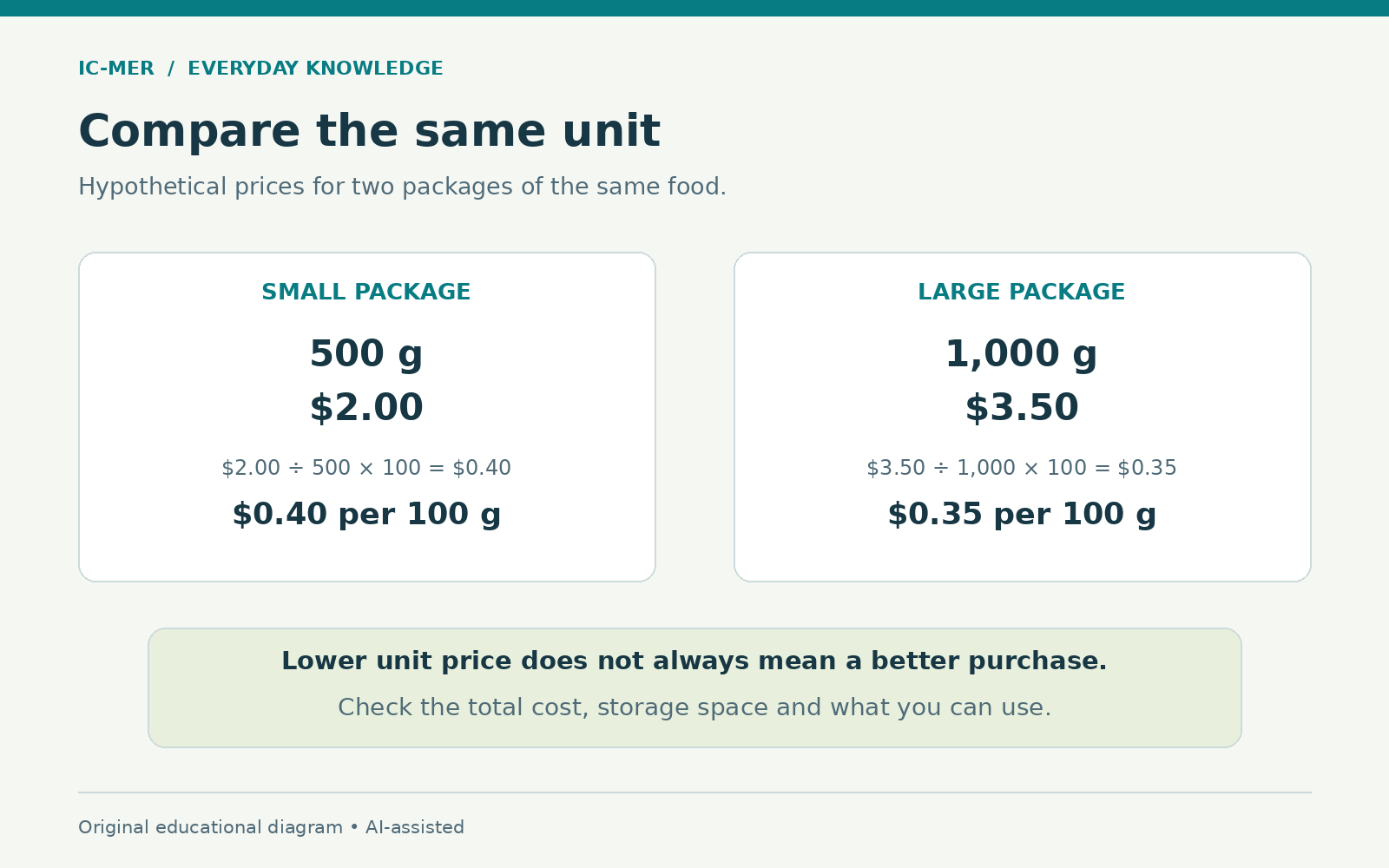
For an invented example, cereal A lists 4 grams of fiber per 40 grams of cereal, while cereal B lists 6 grams per 60 grams. Both supply 1 gram of fiber per 10 grams of cereal. The larger printed number alone does not show that B is more fiber-dense. These figures are fictional and do not recommend either cereal or a particular portion.
Use the comparison to answer a real shopping question, then stop. You might want a bread you enjoy with more fiber than your usual choice. You do not need a spreadsheet for every meal, and a higher number does not automatically make the product suitable for a medical diet. If you track intake for a clinician, use the amount actually eaten and the guidance provided for you.
Sources: [4]
Increase gradually and consider fluids
NIDDK advises adding fiber a little at a time and getting appropriate fluids to help it work. A sudden overhaul can be uncomfortable. Rather than adding several large new portions at once, try one manageable change and see how you tolerate it before adding another. This is a practical approach, not a schedule that everyone must follow.
Do not interpret hydration advice as an instruction to force large amounts of water. Fluid needs differ, and people with a prescribed restriction should follow their care plan. Ask a clinician or dietitian about the amount that fits your health, activity and circumstances. There is no universal bottle count in this article.
Keep a brief note if useful: what changed, whether the meal was enjoyable and whether discomfort followed. A note can help explain a problem to a professional; it cannot diagnose an intolerance. If a particular ingredient causes trouble, pause the experiment rather than increasing it because a package promises better digestion.
Sources: [3]
When more fiber is not the next step
Persistent constipation is not automatically proof that you need a bigger serving of bran. Medicines, illnesses and other factors can contribute. NIDDK advises medical assessment when symptoms do not improve with self-care, and prompt care when constipation occurs with warning signs such as blood in the stool, constant abdominal pain, inability to pass gas, vomiting or unintentional weight loss. Do not try to manage those signs by repeatedly increasing fiber.
If you have been prescribed a low-fiber eating plan, have a bowel narrowing, have recently had bowel surgery, or have another condition affecting digestion, check before changing your diet. Supplements also deserve an individual discussion when medicines or swallowing problems are involved. Do not stop a medicine because you think it causes constipation without discussing it with the prescriber.
General food suggestions are intended for everyday planning. They do not tell you whether a symptom is harmless, establish a supplement dose or replace a treatment plan. It is reasonable to ask for help if eating has become painful, difficult or worrying.
Sources: [5]
Choose one change you can keep
For the next shopping trip, write down one meal, one fiber-containing ingredient and one realistic way to prepare it. Check what is already at home first. The plan might be as small as adding a vegetable to a familiar lunch or choosing a whole-grain option that the household will actually eat.
After trying it, ask whether it was useful: did you like it, tolerate it and use the amount purchased? Keep the change if it fits, or choose another route. A varied pattern built from ordinary foods is more practical than chasing the highest fiber number on the shelf.
Sources & further reading
- Dietary Fiber — FDA Nutrition Facts resourceChecked 2026-10-22
- Rough Up Your DietChecked 2026-10-22
- Eating, Diet, and Nutrition for ConstipationChecked 2026-10-22
- How to Understand and Use the Nutrition Facts LabelChecked 2026-10-22
- Symptoms and Causes of ConstipationChecked 2026-10-22
About this article
Prepared with AI assistance and an AI fact-checking pass against the sources listed above. No human clinical review is claimed. Evidence may change; consult appropriate qualified professionals for decisions about your circumstances.
Spotted a problem? Suggest a correction.