Business · 7 min read
Local marketing that helps customers find you
Start with the customer journey: a useful local message needs accurate details and a working next step.
General U.S. small-business education prepared with AI assistance and independently checked by an AI reviewer. Platform eligibility and policies can change. Examples are fictional planning suggestions, not claims about IC-MER marketing results or legal advice.
Information may contain errors, omissions or outdated guidance. This article is general education, not individual medical or other professional advice. Verify important information before acting and consult an appropriately qualified professional. Never disregard medical advice, delay care or change treatment because of this article. See our accuracy disclaimer and terms.
Start with one customer and one useful question
Local marketing works best as a practical communication task: help a nearby person understand whether you offer what they need and how to take the next step. Before choosing a channel, write down the kind of inquiry you want. A repair appointment, a visit to a shop and a request for a service estimate require different information.
Imagine a fictional bicycle repair business. A potential customer may want to know whether it handles their type of bicycle, where to bring it and whether an appointment is necessary. A beautiful post that omits those details creates another task for the customer. Begin with a clear description of the service and the actual next step, then decide where that information belongs.
Choose a scope you can maintain. One accurate profile and one useful local channel may be a more manageable experiment than opening several accounts at once. That is a planning suggestion, not a claim that any particular number of channels produces better results. The right arrangement depends on your customers and your ability to respond.
Make the basic details agree
Google advises businesses to keep profile information complete and accurate, including applicable address, hours, category and useful attributes. Special hours deserve attention too. A customer who finds a closed door after checking an outdated listing has not been helped by the fact that the business was easy to discover.
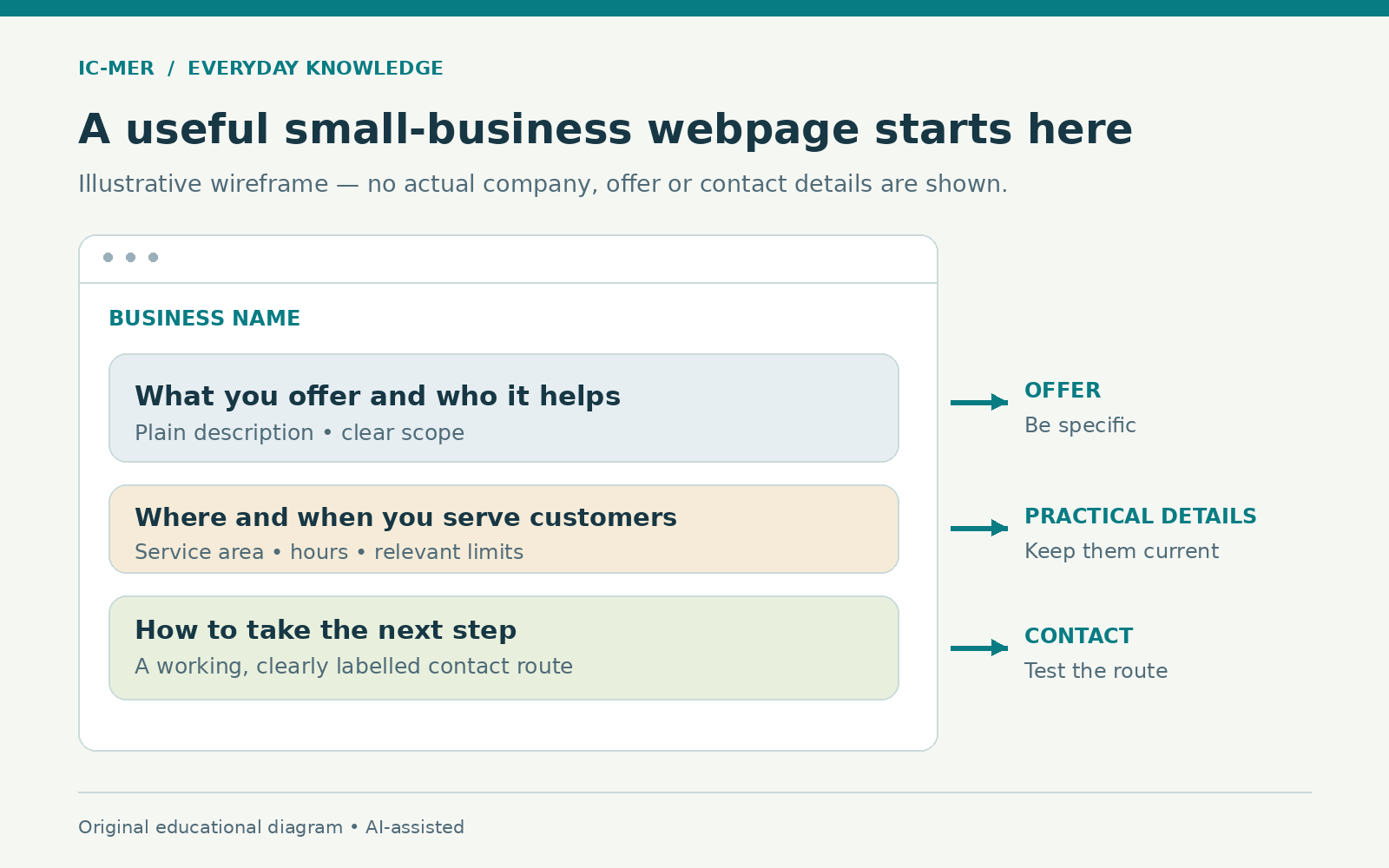
Create a short reference record for your own use: the real business name, customer-facing contact method, current service area or visiting location, opening arrangements and the destination for inquiries. Use it when reviewing your website, profile and printed material. The goal is consistency of meaning, not forcing every channel to display information it is not designed to contain.
Test details that are easy to overlook. Does a map link lead to the right entrance? Does an appointment button reach a working page? Is a phone number readable on a small screen? Ask someone unfamiliar with the business to explain what they would do next. Their hesitation can reveal an information gap that another promotional slogan will not solve.
Sources: [1]
Use business profiles within their rules
Google Business Profiles are intended for eligible businesses with a location customers can visit or that travel to customers. Its guidelines require an accurate real-world identity and address or service area. Do not invent a storefront, add unsupported keywords to the name or use a remote mailbox as though it were a customer location.
Check the rules for your actual operating model before creating or changing a profile. A business serving customers at their premises has different information needs from a shop that welcomes walk-ins. The relevant guidance, including address visibility and eligibility, is more useful than copying a nearby competitor's setup and assuming it must be correct.
For other directories or community listings, make the same distinction between a place you operate and an area you serve. Review their submission criteria and use only listings relevant to the business. Being present in a long list of unrelated directories is not the same as giving a local customer a credible route to your service.
Sources: [2]
Choose a channel that fits the situation
Think about where a customer might encounter the question you answer. A community noticeboard could suit a genuinely local activity. A relevant neighborhood group may allow a business post under stated rules. A service directory may be useful when people are already looking for a provider. These are possibilities to investigate, not endorsements or evidence that the channel will deliver inquiries.
Read the channel's rules before posting. Find out whether commercial material is allowed, what information is required and how often a business may participate. A useful contribution should respect the setting. Repeating the same advertisement across unrelated groups can consume time without helping people understand the service.
Plan the response as well as the post. Who will answer questions, during which hours, and where should a customer go if the message is missed? If the channel cannot be monitored, use a clear contact destination you can maintain. Do not promise immediate replies merely because a platform makes it easy to add that phrase.
Give people a specific reason to act
Write the message around an accurate offer or service, then remove anything you cannot support. For the fictional repair business, that might mean explaining the kinds of appointments available and linking to a booking request. Avoid invented scarcity, unsupported superlatives or an implication that every inquiry is guaranteed a same-day service.
Make limitations easy to find. If an estimate requires inspecting an item, say so. If a displayed price covers only a defined service, make that scope clear. These are practical clarity suggestions; industry-specific advertising rules may require additional information. A short message should still let the reader understand what is being offered.
Use photographs or examples you have permission to show and that represent the actual business accurately. Keep customer information private. A simple, current image of an entrance or an example of the service may answer a useful question, but do not imply that a stock or generated image depicts completed work, a real customer or facilities you do not have.
Ask for honest reviews without steering the answer
The FTC advises asking people who actually used the service, avoiding requests only to customers expected to be positive, and checking platform rules. Do not buy fake reviews or ask for a particular rating. Incentives raise additional disclosure and platform-policy issues; they must not be conditioned on positive sentiment. A straightforward approach is to request honest feedback without an incentive.
For example, after a completed service you could provide the platform's permitted review route and invite a candid account of the experience. Do not write the review for the customer or make a benefit depend on praise. The purpose is useful feedback from a real experience, not a collection of identical promotional phrases.
When replying to a concern, keep the response focused and respectful. Avoid publishing private transaction details in an attempt to win an argument. If a review appears to violate a platform rule, use its reporting process appropriately; do not treat an honest negative review as something that must disappear. Feedback can also identify an operational problem worth fixing.
Sources: [3]
Test discovery all the way to contact
Google says local results depend mainly on relevance, distance and prominence, and that businesses cannot request or pay for a better organic local ranking. Accurate information supports discovery, but it does not guarantee a particular position. Treat promises of a guaranteed top local placement with skepticism.
Run a practical test from the customer's perspective. Start at the profile or post, read the offer, follow the link and try the permitted contact method. Check that the destination still matches the original message. A functioning chain matters more than a screenshot of a high position for one search on one device.
If you track outcomes, use modest, clearly defined records: inquiries received, how people say they found you, and whether the inquiries matched the service offered. Keep only information you need and handle it appropriately. Do not turn a small number of responses into a claim of proven growth or assume that every inquiry came from the latest post.
Sources: [1]
Make one improvement you can maintain
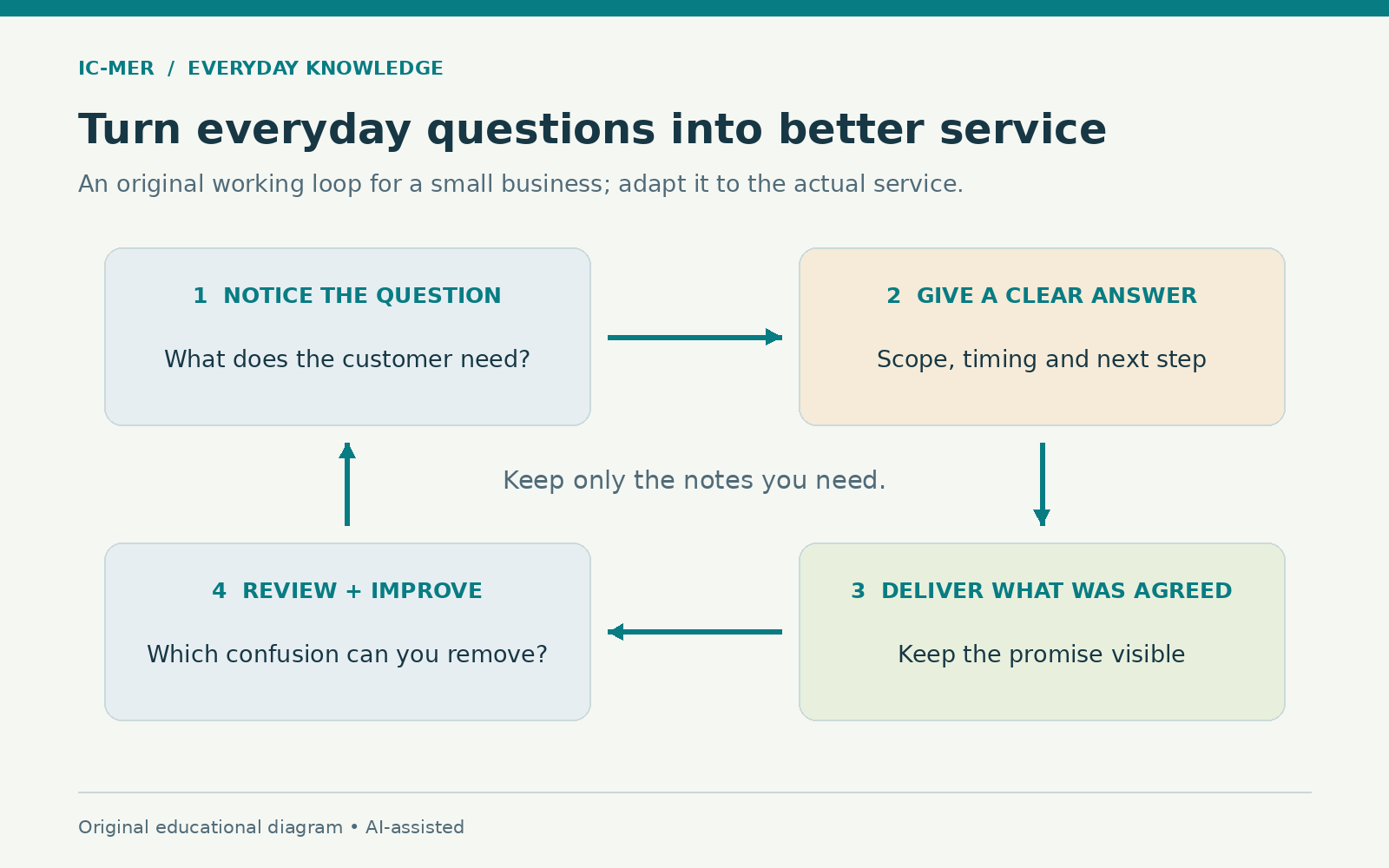
Set aside a short review of the places where your business already appears. Correct a wrong hour, replace an outdated contact link or clarify a confusing service description. Then choose one relevant channel experiment and define what you hope to learn. Keep the effort proportionate to the business's capacity.
After trying it, examine the practical result. Did customers ask fewer basic questions? Did the inquiries fit the service area? Could you respond reliably? These observations can guide the next edit even when they do not establish a precise marketing return. If the channel creates work without useful contact, change the approach rather than multiplying the same message.
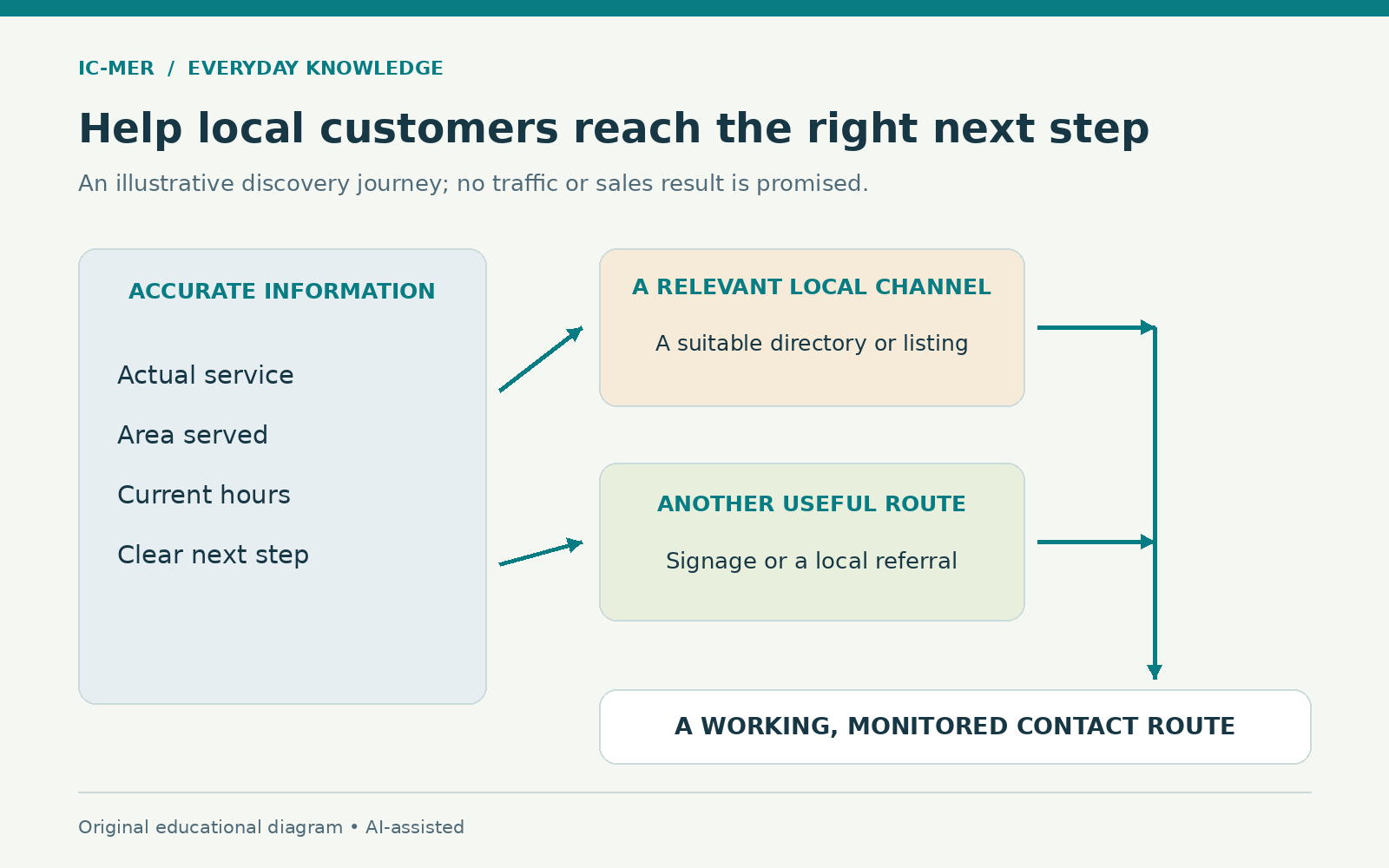
The illustration shows a simple route: accurate information, a relevant place to find it and a working way to make contact. Each step needs care. Local marketing becomes more useful when the customer can complete that journey without guessing what the business does or whether anyone will answer.
Sources & further reading
- Tips to improve your local ranking on GoogleChecked 2026-10-23
- Guidelines for representing your business on GoogleChecked 2026-10-23
- Soliciting and Paying for Online Reviews: A Guide for MarketersChecked 2026-10-23
About this article
Prepared with AI assistance and an AI fact-checking pass against the sources listed above. No human clinical review is claimed. Evidence may change; consult appropriate qualified professionals for decisions about your circumstances.
Spotted a problem? Suggest a correction.