Medicine · 4 min read
Persistent sleep problems: when to seek help
Learn which sleep patterns deserve a healthcare conversation, what to bring to an appointment and why daytime sleepiness needs prompt attention.
Educational information from the IC-MER Editorial Team, prepared with AI assistance. This is not personalized medical advice or human clinical review. Discuss ongoing sleep problems and treatment choices with a qualified healthcare professional.
Information may contain errors, omissions or outdated guidance. This article is general education, not individual medical or other professional advice. Verify important information before acting and consult an appropriately qualified professional. Never disregard medical advice, delay care or change treatment because of this article. See our accuracy disclaimer and terms.
The effect on your day matters
One difficult night and an ongoing sleep problem are different situations. When poor sleep repeatedly interferes with work, concentration, family life or safe travel, it is reasonable to ask for help. You do not need to prove that you have tried every pillow, app or bedtime tip before discussing the problem with a healthcare professional.
Describe the difficulty plainly: trouble falling asleep, waking repeatedly, waking earlier than intended, or feeling sleepy despite an adequate opportunity to sleep. A useful opening might be, “I keep waking during the night, and I am struggling to stay alert at work.” Specific observations give the conversation a clearer starting point than simply saying you are a bad sleeper.
Do not use a diagnostic threshold as a waiting period
NHLBI describes chronic insomnia as sleep difficulty occurring at least three nights a week for three months or longer. That description helps clinicians classify a condition; it is not a rule that you should wait three months before seeking help. Ask sooner if sleep problems affect daily activities, are worsening or create a safety concern.
An appointment is also an opportunity to discuss what changed around the time the problem began. Prepare a timeline of new work hours, health concerns or medication changes. You are gathering clues for assessment, not deciding in advance which factor caused the problem. Keep taking prescribed medicines as directed unless your clinician advises otherwise.
Sources: [2]
Mention breathing changes during sleep
Frequent loud snoring, breathing that repeatedly stops and starts, or gasping during sleep are possible sleep-apnea symptoms. A person sharing your room may notice them before you do. Daytime sleepiness or tiredness can also occur. These observations merit a healthcare discussion; they do not establish a diagnosis by themselves.
If someone has noticed these events, ask what they actually observed and how often. Tell the clinician even if your own impression is that you sleep through the night. NHLBI notes that a sleep study may be needed to help diagnose sleep apnea. Whether testing is appropriate depends on the clinical assessment, not merely on the existence of a snoring complaint.
Sources: [3]
Treat drowsy driving as a safety problem now
Do not begin or continue a drive when you cannot stay alert. If sleepiness develops while driving, pull over safely rather than trying to finish the trip. Arrange another safe way to travel or rest before continuing. A planned ride from someone else is preferable to discovering the problem halfway home.
NHTSA warns that coffee or energy drinks alone may not make a severely sleep-deprived driver safe. Check medication warnings about drowsiness as well, and discuss concerns with a pharmacist or clinician. Repeatedly fighting sleep behind the wheel belongs in your healthcare conversation, not only in a plan to buy stronger coffee.
Sources: [4]
Bring a short, useful record
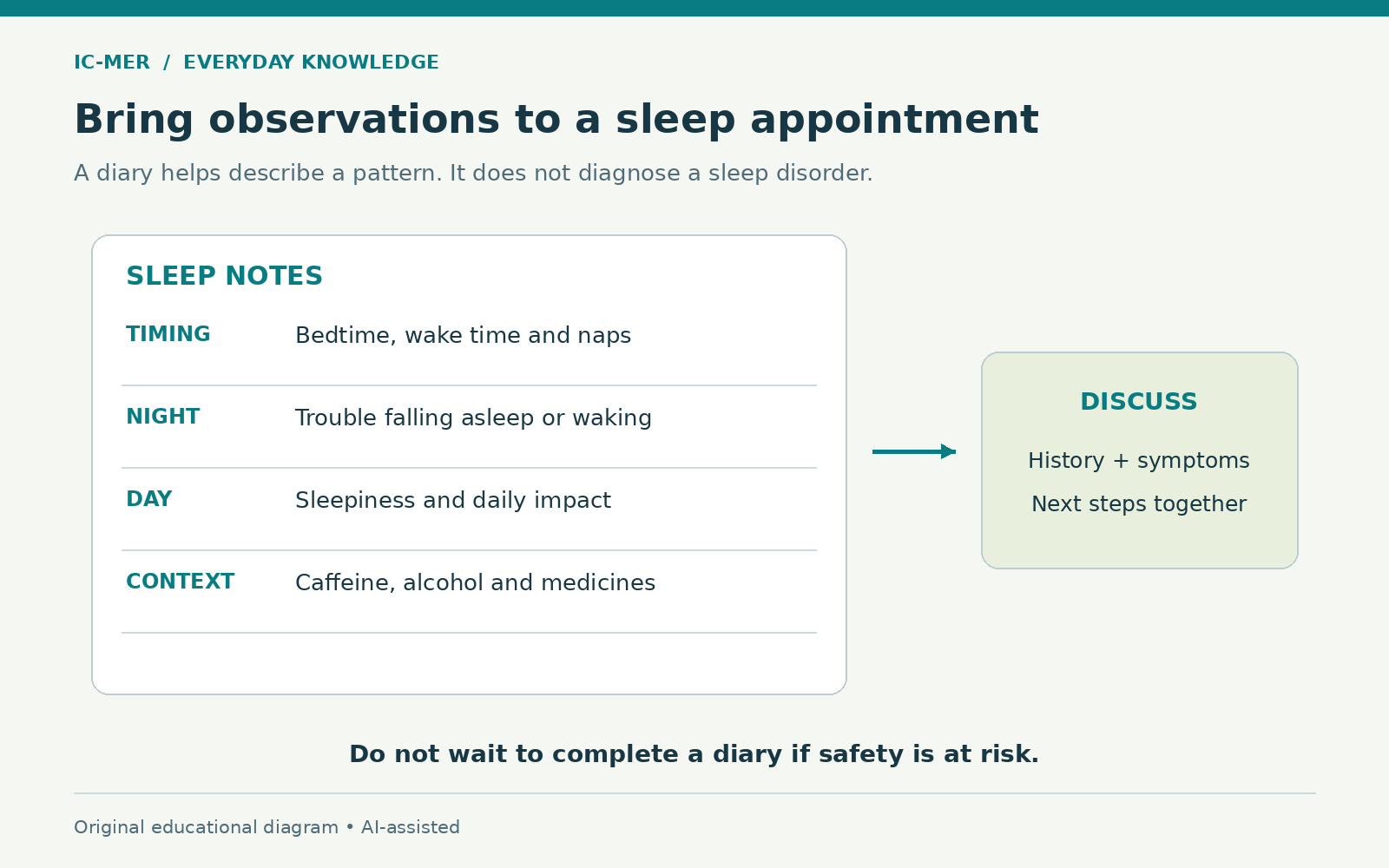
A sleep diary can help describe the pattern. NHLBI suggests keeping one for one to two weeks before an appointment when practical. Record sleep and waking times, naps, daytime sleepiness, caffeine or alcohol use, and activity. Do not delay needed care while trying to complete a perfect diary.
Make a separate list of prescription medicines, over-the-counter products and supplements, including anything marketed for sleep. Note your most important question at the top of the page. For example: “What could explain my daytime sleepiness?” or “Would treatment for insomnia be appropriate?” This preparation is meant to make limited appointment time useful, not to create homework you must finish before being heard.
Ask about a plan and follow-up
Long-term insomnia has treatment options beyond repeating general sleep-habit advice. NHLBI identifies cognitive behavioral therapy for insomnia, or CBT-I, as the usual first treatment choice. Ask how to access it and whether the proposed approach fits your health, work schedule and other circumstances. Do not independently impose an aggressive sleep-restriction schedule after reading a description online.
Medicines and supplements require individual discussion. Over-the-counter availability does not mean a product is suitable for everyone; NHLBI specifically cautions that antihistamine sleep aids can be unsafe for some people. Ask about expected benefits, possible adverse effects and what to do if problems continue.
Before leaving, clarify the next step, who will arrange any test or referral, and when to follow up. Keep a copy of the plan. The aim is not to win an argument with your sleep or secure a diagnosis yourself, but to turn a recurring problem into an assessment and a practical, supervised plan.
Sources: [5]
Sources & further reading
- CDC: About SleepChecked 2026-10-24
- NHLBI: Insomnia DiagnosisChecked 2026-10-24
- NHLBI: Sleep Apnea SymptomsChecked 2026-10-24
- NHTSA: Drowsy DrivingChecked 2026-10-24
- NHLBI: Insomnia TreatmentChecked 2026-10-24
About this article
Prepared with AI assistance and an AI fact-checking pass against the sources listed above. No human clinical review is claimed. Evidence may change; consult appropriate qualified professionals for decisions about your circumstances.
Spotted a problem? Suggest a correction.