Medicine · 9 min read
Protein through the life stages: food choices and common misconceptions
Start with ordinary meals and the person eating them: protein needs and practical barriers change across life.
General nutrition education prepared with AI assistance and independently checked by an AI reviewer. This is not a personalized protein prescription, infant-feeding plan or clinical review. Follow advice tailored to your health, allergies and life stage.
Information may contain errors, omissions or outdated guidance. This article is general education, not individual medical or other professional advice. Verify important information before acting and consult an appropriately qualified professional. Never disregard medical advice, delay care or change treatment because of this article. See our accuracy disclaimer and terms.
Protein starts with food you can actually eat
Protein is often advertised as a product to buy: a powder, a bar, a shake or an upgraded version of an ordinary snack. A more useful place to start is the food already appearing at breakfast, lunch and dinner. Which choices do you enjoy? Which fit your budget? Are there times when work, appetite, chewing difficulties or shopping access make eating a proper meal difficult?
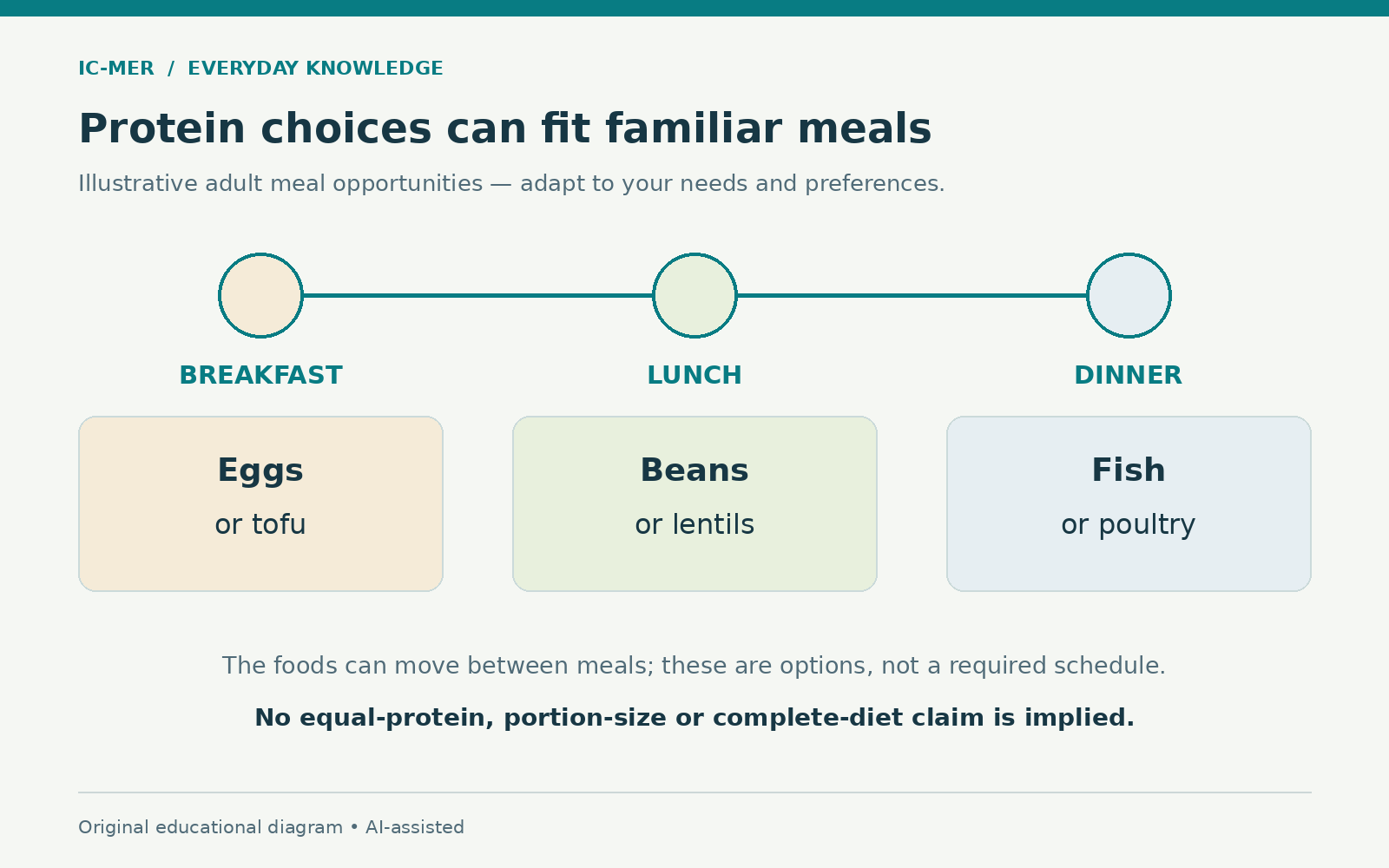
The current Dietary Guidelines for Americans includes both animal and plant protein foods: eggs, poultry, seafood, meat, beans, peas, lentils, nuts, seeds and soy foods. There is no need to make every meal look the same. The useful everyday task is to find a workable variety, while remembering that the rest of the meal matters too.
This article offers food and planning ideas across life stages. It does not calculate an individual gram target. A child's feeding needs, an adult's exercise routine and an older person's medical diet cannot be reduced to one number printed on a package. Start with an ordinary day, then identify any question that needs advice from a qualified professional.
Sources: [1]
Understand the role without making protein the whole diet
Protein helps build and maintain tissues and supports functions including healing and immune defense. That does not mean more is automatically better for every person. NIDDK explains that the kidneys remove waste produced when the body breaks down protein; people with chronic kidney disease may need an individualized amount rather than a generic high-protein plan.
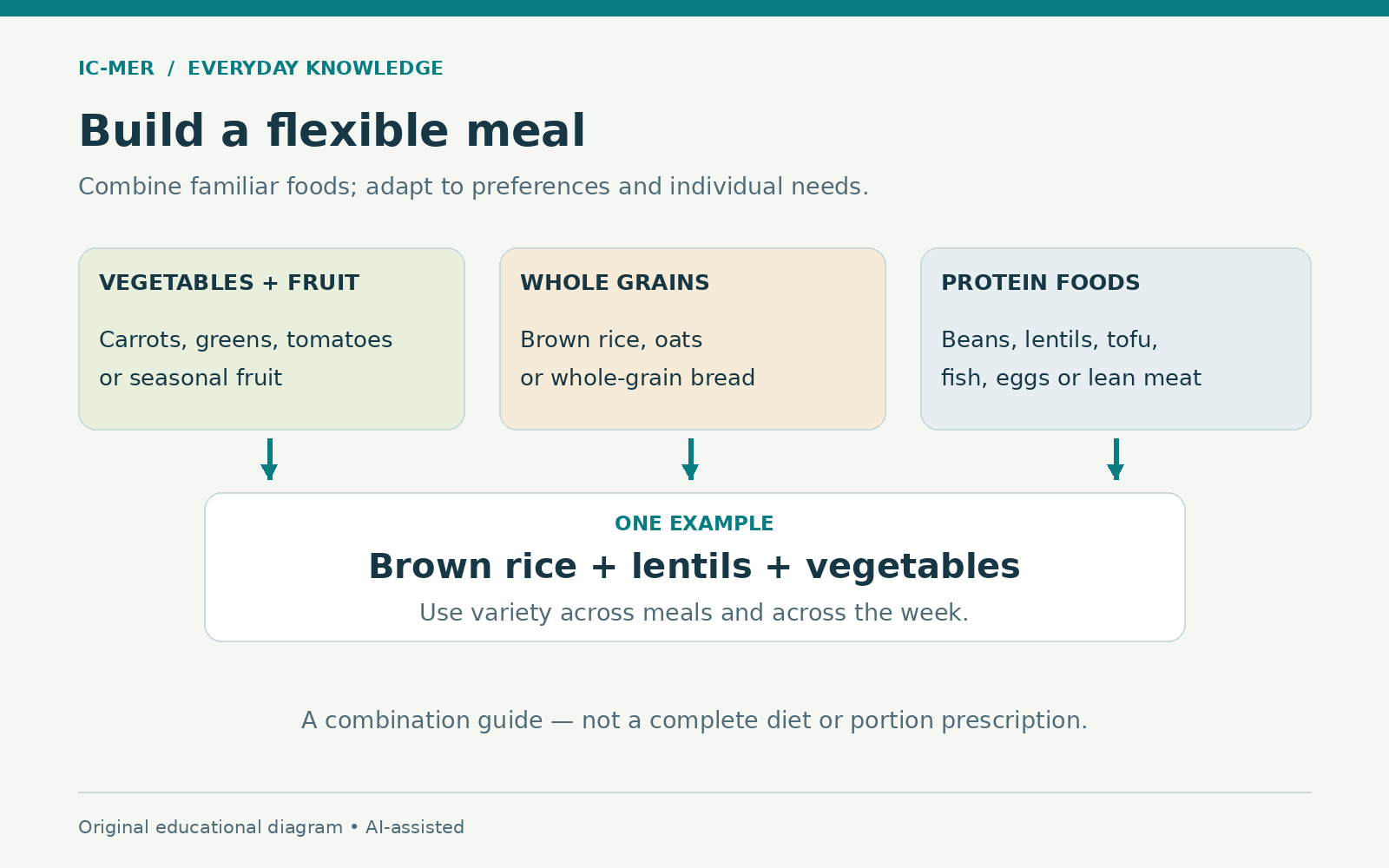
At home, try asking what belongs alongside the protein food. A meal might include vegetables, a grain or another starchy food, fruit, and something you enjoy for flavor. These are menu-building suggestions, not a formula for equal portions or a medical diet. Looking at the whole plate can be more practical than choosing a food solely because its package advertises one nutrient.
A familiar meal also gives you a starting point for change. If you already make rice and vegetables, consider a protein food that suits that dish. If breakfast is rushed, choose an option you can prepare or portion in advance. Work with the meal's purpose and your actual kitchen, instead of trying to add a new product to every eating occasion.
Sources: [2]
Make a short list of flexible options
Write down two or three protein foods your household already eats, then one you would like to try. The point is to create choices when a planned meal becomes inconvenient. You might keep canned beans for a quick bowl, eggs for a simple cooked meal, or tofu for a vegetable dish. Someone else may prefer chicken, fish or yogurt. These foods are not nutritionally identical substitutes.
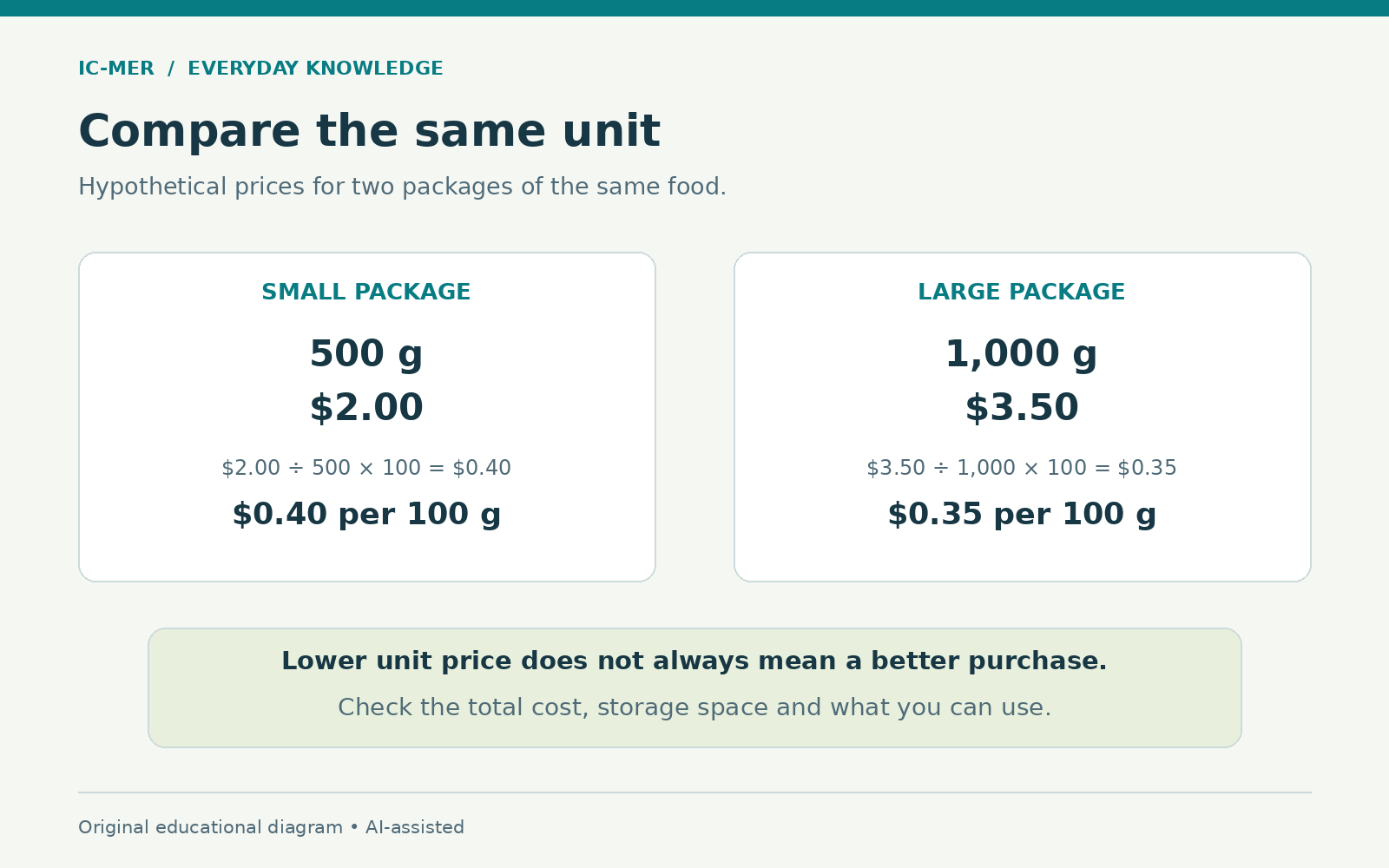
Before buying a large amount, think through preparation, storage and waste. A lower shelf price is less helpful if most of the food will go unused. Compare the cost of the portion you expect to eat and the ingredients required to turn it into a meal. A food that is inexpensive on its own can become an expensive plan if it requires several unfamiliar extras.
Try a small experiment rather than a complete pantry makeover. For example, add a familiar seasoning to a lentil dish and serve it with something your household already likes. Ask what would make it easier next time: a different texture, a smaller batch or a quicker recipe. Those answers are more useful for future shopping than a verdict that you are either good or bad at healthy eating.
Young children need appropriate food forms
For babies beginning complementary foods, CDC emphasizes developmentally appropriate textures while breast milk or infant formula continues during the first year. Protein foods can include suitably prepared meat, fish, eggs and tofu. An adult protein shake is not a replacement feeding plan. Discuss feeding readiness, allergies or growth concerns with the child's healthcare professional.
How food is served matters. CDC lists whole or chopped nuts, spoonfuls or chunks of nut butter, tough meat, bones, whole beans and large cheese pieces among potential choking hazards for young children. Simply offering the same meal as an adult is not enough; preparation must match the child's development. Children should sit while eating and be watched, rather than eating while walking or riding in a vehicle.
For family planning, separate the shared ingredient from the way each person receives it. A household may cook one base meal but prepare a child's portion differently according to feeding guidance. Do not use this article's adult meal illustration as a toddler serving guide. If you are uncertain about a food's safe form, check the linked age-appropriate guidance before serving it rather than improvising from a package photograph.
School years and adolescence: solve the missed-meal problem
Adolescence is a period of rapid growth with increased energy and nutrient needs. The Dietary Guidelines encourages adolescents to participate in shopping and cooking. A practical conversation can begin with the school day: is there time to eat, a place to keep lunch, and a food the young person is willing to take?
Invite the child or teenager to help choose a realistic breakfast or lunch option. One might prefer a packed sandwich; another may eat a school meal and need an easy evening option after an activity. Avoid treating an interest in sport as an automatic reason to buy protein powder. If there are concerns about growth, restricted eating or athletic nutrition, seek advice that considers the whole diet and the individual.
A useful household task is to rehearse the busiest day. Put the lunch container, bag and available ingredients together the night before. Check whether the proposed meal is actually allowed and practical at school, including allergy rules and storage. This is a logistics exercise, not a test of discipline. If a plan repeatedly comes home uneaten, find out why before buying more of the same food.
Sources: [1]
Busy adulthood: build meals around the day you have
A workday meal plan should account for where you will be, not just what is in the refrigerator. If lunch involves a long commute, the choices and safe storage arrangements may differ from those available in a home kitchen. If you work shifts, the meal you call breakfast may happen at a time when shops are closed. Write down the practical obstacle first.
Choose one meal to make easier. A person who has access to a microwave might prepare a bean-and-grain bowl with vegetables. Someone who prefers a cold meal could plan a suitable sandwich or yogurt-based option with other foods. These are examples to adapt, not complete menus or protein-equivalent exchanges. Dietary restrictions, food safety and personal preferences still apply.
Keep an alternative for the day the original plan fails. That might mean knowing which nearby meal is affordable or keeping a simple ingredient you use regularly. It need not mean stocking an expensive emergency snack collection. The aim is to reduce the number of decisions you must make when tired, so that an ordinary meal remains possible even when the day's schedule changes.
Pregnancy and breastfeeding deserve a whole-diet conversation
Pregnancy and lactation change nutritional needs. The Dietary Guidelines recommends varied nutrient-dense foods and discussion with a healthcare professional about prenatal vitamins or other supplementation as appropriate. Protein is only one part of that conversation. A product advertised for fitness does not answer questions about pregnancy nutrition, food safety or individual medical needs.
When preparing for an appointment, bring practical questions as well as product names. Explain which foods you can manage, what a typical day looks like, and whether cost or preparation is a barrier. If you are considering a powder, bar or supplement, bring its full label rather than relying on the front claim. The clinician can consider it alongside the rest of your care.
A household member can help by taking over a specific food task: shopping from an agreed list, preparing a familiar meal or making the kitchen easier to use. Offer options rather than policing another person's intake. A meal plan is more likely to be usable when it reflects what the person can tolerate and access, rather than an idealized menu someone else has chosen for them.
Sources: [1]
Later life: make eating manageable
Some older adults need fewer calories while still needing as much or more of certain nutrients, including protein. The Dietary Guidelines highlights nutrient-dense choices and medical supervision when intake or absorption is inadequate. A smaller appetite should prompt attention to the whole eating pattern, rather than an assumption that every need has become smaller.
Look for the specific barrier. Is a package difficult to open? Is cooking for one discouraging? Does shopping require transport? Is a familiar food uncomfortable to chew? These questions lead to different solutions. A relative might help portion ingredients, arrange a shopping trip or find a convenient meal option. Persistent chewing, swallowing, appetite or unexplained weight concerns belong in a healthcare conversation.
Keep preferences central. Replacing every familiar food with a product labeled for older adults may create an expensive cupboard that nobody wants to use. Begin with a meal the person enjoys and ask what would make it easier. If a clinician recommends a nutritional product, clarify how it fits with meals and when to review the plan; do not assume the same product suits everyone of a similar age.
Sources: [1]
Read labels as information, not a score
On a U.S. Nutrition Facts label, the serving size is the basis for the listed amounts, not a personal recommendation. Check how many servings you actually use before comparing protein grams. A larger number may reflect a larger serving rather than a more useful choice for your meal.
Imagine a fictional food listing 7 grams of protein per serving. Two of those servings contain 14 grams. Another product listing 14 grams per serving is not necessarily better value or more suitable: you still need to compare the serving amount, price, ingredients and the rest of the meal. These numbers illustrate arithmetic only; they are not an intake goal or figures for a real product.
The same practical questions apply to bars and shakes. What problem is the product solving? Would an ordinary food be easier or less expensive? Does it contain an ingredient you need to avoid? A label claim alone cannot show whether you need the product. Where a professional has prescribed a nutrition plan, use that plan to evaluate the choice instead of substituting a general article's example.
Sources: [5]
Know when a personal plan takes priority
With chronic kidney disease, too little protein can contribute to malnutrition, while too much may be inappropriate for the person's condition. NIDDK recommends working with a healthcare professional or dietitian to decide the amount. This is a reason to avoid both self-imposed severe restriction and an automatic high-protein diet based on advertising.
Bring a simple account of your usual meals to the appointment. Include foods, drinks, supplements and the amounts you tend to use. Ask what should change, what can stay, and which signs or follow-up checks matter for your situation. An explanation you can use at the grocery store is more helpful than a number you cannot translate into meals.
For a first household step, choose one manageable improvement: a dependable breakfast, a lunch option that travels well, or a protein food you can prepare comfortably. Review whether it worked after a few days. Keep the change if it helped; adjust it if it created extra cost or waste. Eating across life stages is an ongoing practical task, and a useful plan should fit the person as well as the nutrient.
Sources: [2]
Sources & further reading
- Dietary Guidelines for Americans, 2025–2030Checked 2026-10-23
- Healthy Eating for Adults with Chronic Kidney DiseaseChecked 2026-10-23
- Foods and Drinks to EncourageChecked 2026-10-23
- Choking HazardsChecked 2026-10-23
- How to Understand and Use the Nutrition Facts LabelChecked 2026-10-23
About this article
Prepared with AI assistance and an AI fact-checking pass against the sources listed above. No human clinical review is claimed. Evidence may change; consult appropriate qualified professionals for decisions about your circumstances.
Spotted a problem? Suggest a correction.