Environment · 7 min read
Reducing household food waste while keeping food safe
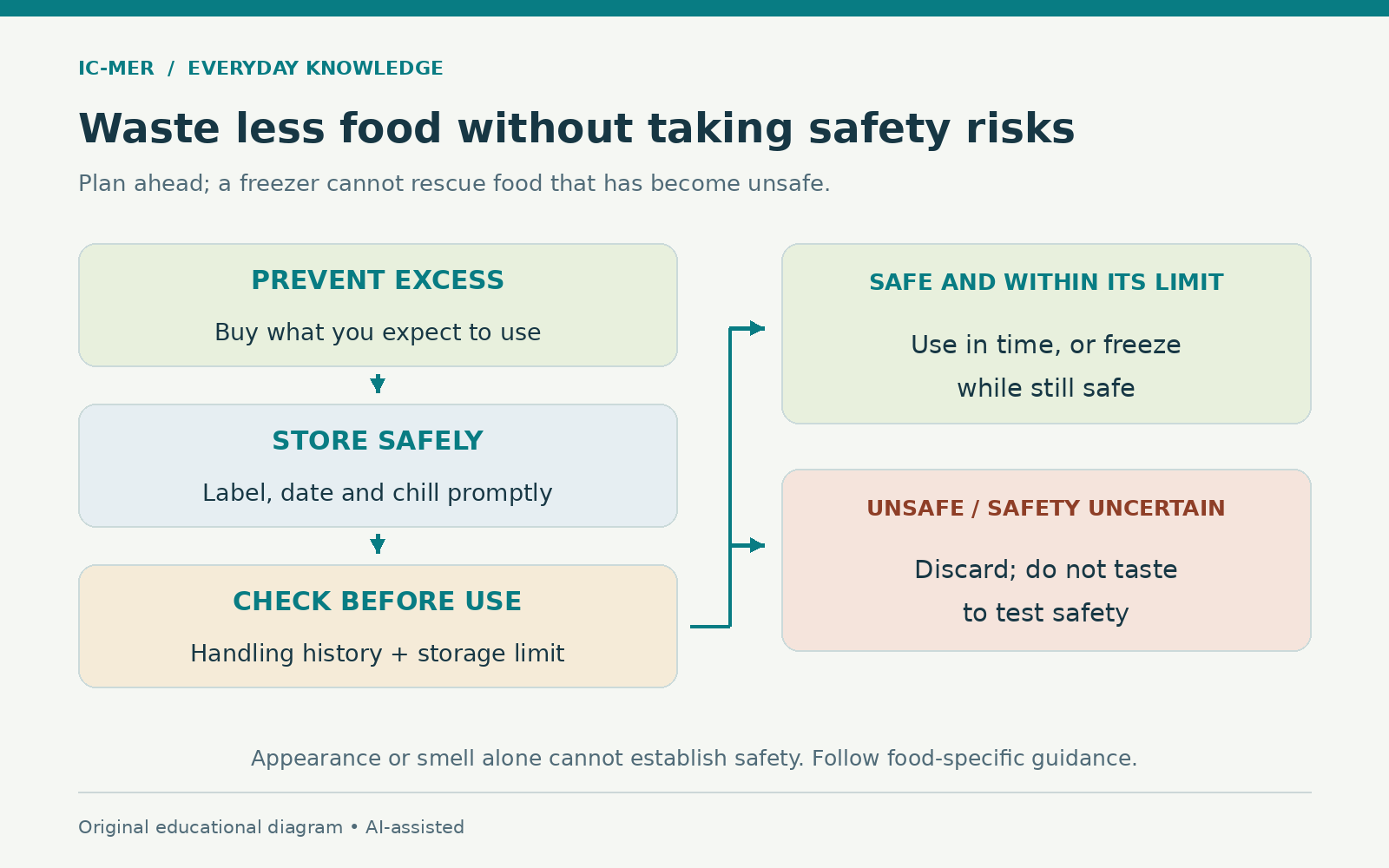
Buy for real meals, label leftovers and freeze suitable portions early. Saving food should never mean eating something with an unsafe history.
General U.S. household food-safety and waste-prevention education, prepared with AI assistance and reviewed by AI. Follow current product, recall and local guidance. If a food’s safe handling cannot be established, do not eat or donate it.
Information may contain errors, omissions or outdated guidance. This article is general education, not individual medical or other professional advice. Verify important information before acting and consult an appropriately qualified professional. Never disregard medical advice, delay care or change treatment because of this article. See our accuracy disclaimer and terms.
Prevent the waste before it reaches the bin
A half-used bag of greens, an oversized pot of soup and a forgotten container can all end the week in the trash for different reasons. Reducing waste works better when you identify the reason than when you simply promise to throw away less.
EPA explains that discarded food also represents wasted resources used to produce, process and transport it. Household prevention starts with what you buy and use. It does not require eating every scrap or treating an uncertain food-safety history as an acceptable risk.
The practical examples here are suggestions for ordinary home kitchens. They are not measured IC-MER results or a prediction of how much money or emissions your household will save. A small routine that prevents one recurring problem can be a useful start.
Sources: [1]
Watch one recurring pattern
For a week, notice what you discard and why. Keep it simple: too much purchased, forgotten, disliked, cooked in excess, or no longer safe. You do not need to weigh every peel or record anyone's eating behavior.
If the same fresh vegetable repeatedly goes unused, buy a smaller quantity or choose a form that fits your cooking habits. If leftovers are forgotten, the problem may be visibility rather than the amount you cook. If a recipe makes more than the household wants, plan fewer portions or a safe freezing step.
Do not turn the observation into a competition to keep questionable food. The purpose is to change the next purchase or preparation decision. Once food is unsafe, the opportunity to prevent that particular waste has already passed.
Buy for meals that will actually happen
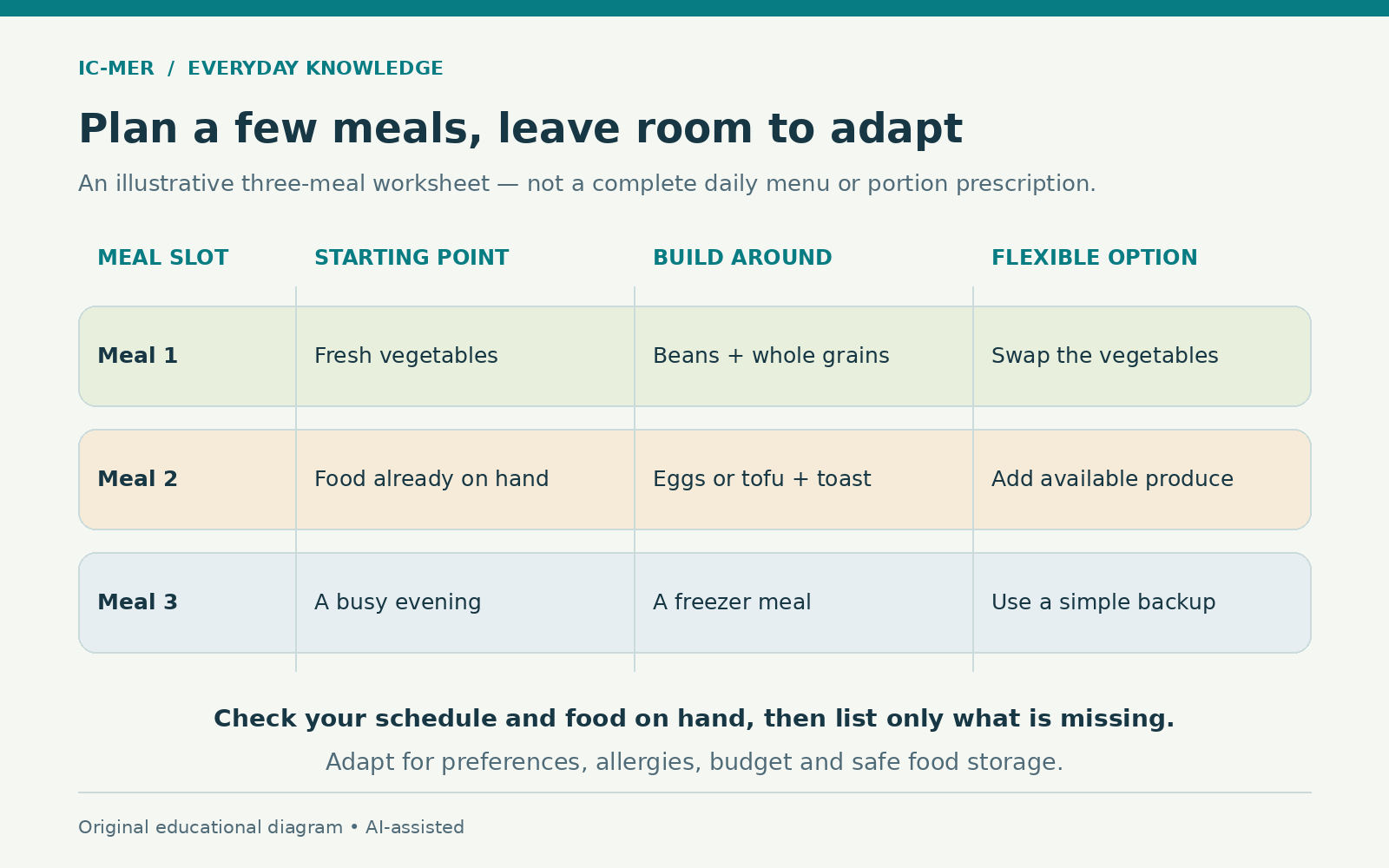
Before shopping, count the meals you expect to eat at home and check existing supplies. Build the list around those meals, with quantities, rather than buying for an imagined week in which everyone cooks from scratch every evening.
A hypothetical two-person household might plan two meals using a bag of carrots and a third using a frozen vegetable already in the freezer. If one dinner changes, the carrots still have another planned use. This is an organizational example, not a nutritionally complete menu.
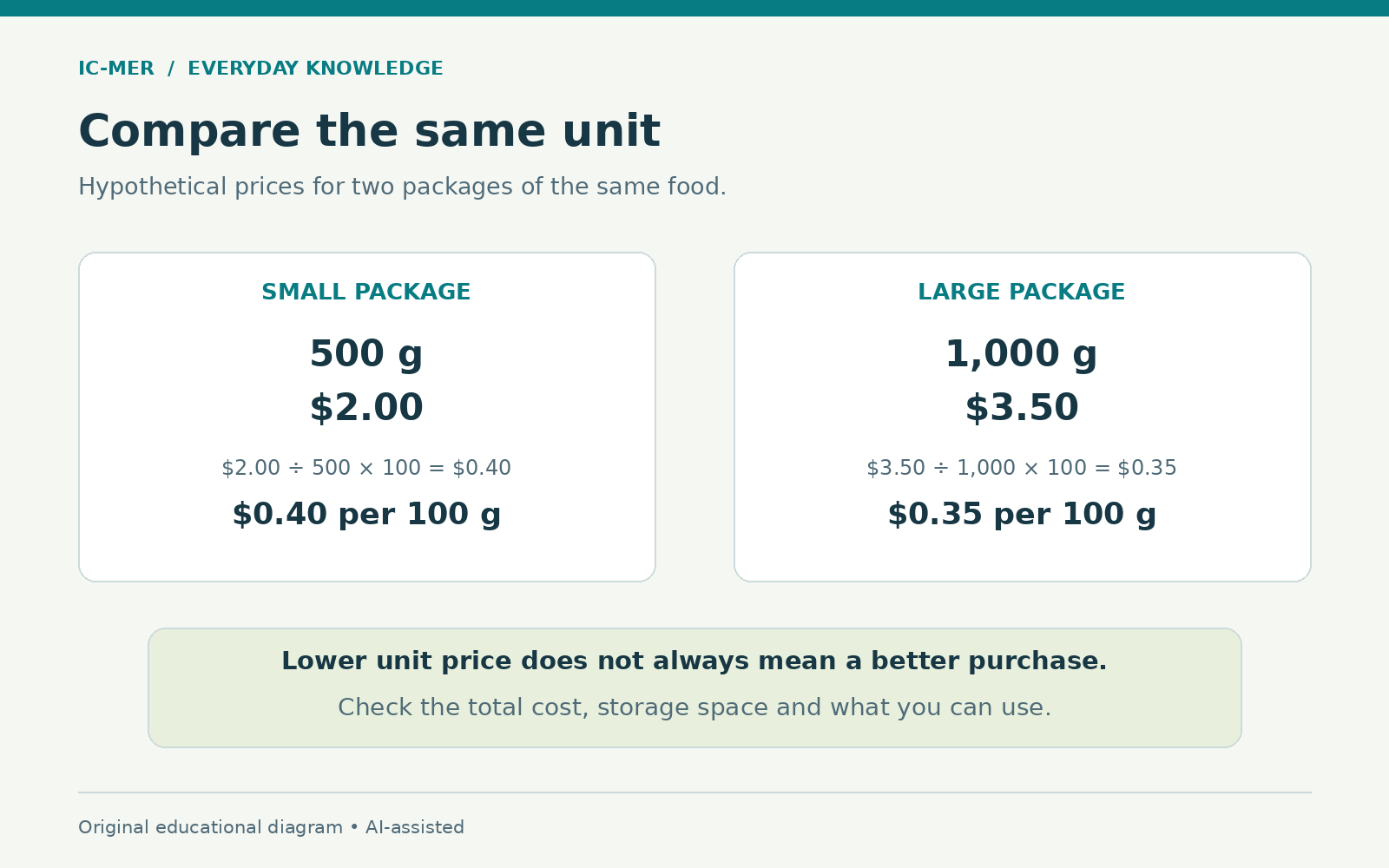
Bulk prices deserve the same check. A lower price per pound is not a saving if much of the purchase spoils. Include freezer space, preparation time and whether the food is genuinely wanted in the decision. A smaller pack can be the more practical choice.
Sources: [1]
Make safe food easier to see
Use a visible area for food that needs attention soon, while keeping raw meat and its juices separate from ready-to-eat items. Label leftovers with the contents and preparation date. Avoid a system that depends on remembering which identical container was filled first.
Check storage guidance for the particular food rather than putting everything in the same drawer. Whole produce, cut produce, raw poultry and a cooked casserole do not share one storage rule. FoodSafety.gov's cold-storage chart and FoodKeeper information can help with specific items.
An organized refrigerator is useful only if it remains cold enough. Keep it at 40°F or below and the freezer at 0°F or below, checking with an appliance thermometer. Do not pack containers so tightly that maintaining appropriate cooling becomes difficult.
Know what a date can and cannot tell you
FDA describes Best if Used By wording as a quality indicator. Passing such a quality date does not, by itself, establish that food is unsafe, and being before a printed date does not prove that food was handled safely.
Date language and requirements vary. Do not assume every use-by or expiration instruction is merely about flavor. Follow product-specific handling and safety instructions; infant formula is a particular exception to casual date-extension advice. When the meaning is unclear, ask the manufacturer or consult the relevant official guidance.
Keep three questions separate: what the label says, how the food has actually been stored, and whether its condition raises a concern. A date cannot erase time spent warm in a car or a refrigerator that stopped working. This article does not provide a blanket permission to eat food after any printed date.
Sources: [2]
Cool and use leftovers within their limits
Refrigerate perishable food within two hours, or within one hour if exposed to temperatures above 90°F. Divide a large quantity into shallow containers for prompt cooling. Do not leave it out for the whole evening because the kitchen is busy or because the container still feels warm.
The federal cold-storage chart lists three to four refrigerated days for cooked meat or poultry leftovers and soups or stews. Other foods have their own limits. Labeling the container and deciding its next use when you put it away is easier than reconstructing its history later.
When reheating leftovers, check that they reach 165°F with a food thermometer. Stir or rotate as appropriate and follow microwave standing instructions. Reheating is not a rescue procedure for food that was stored unsafely; do not rely on smell, appearance or a taste test to prove safety.
Use the freezer before the decision becomes urgent
Freeze suitable portions while they are still safe, rather than treating the freezer as a last-minute destination for anything doubtful. Put food in amounts the household can reasonably use, identify it and add the date.
FoodSafety.gov distinguishes frozen-storage quality guidance from safety: food kept continuously at 0°F or below can remain safe indefinitely, but quality can deteriorate. That statement assumes the food was safe when frozen and stayed properly frozen. Freezing does not reverse prior unsafe handling.
Choose a thawing method appropriate to the food; refrigerator thawing is the straightforward default for perishable portions. Check the specific instructions rather than leaving dinner on the counter all day. Put a reminder in the meal plan if something needs to move from freezer to refrigerator.
Repurpose safe ingredients, not spoiled food
A planned second use can be appealing rather than a reluctant repeat. Suitable cooked vegetables can become part of a different meal, and a safely stored portion can be paired with a new side. Keep the original preparation date and storage window in mind when combining foods.
Consider a fictional pot of soup prepared for two dinners. The household refrigerates the next-day portions promptly and freezes the rest in shallow, suitable containers. The freezer portions have a clear purpose and label. This is more manageable than repeatedly reheating the entire pot while hoping someone finishes it.
Use established food-specific guidance for spoilage and preservation questions. Making jam, canning, fermenting or drying food requires an appropriate safe method; improvising a preservation recipe is not a general waste-reduction shortcut. If safety is uncertain, discard the food instead of serving it to someone else.
Handle unavoidable scraps appropriately
Some scraps are not suitable to eat, and not every household has access to compost collection. Where composting is available, follow the program's accepted-material list. Do not assume packaging marked compostable belongs in a home compost pile or that every collection service accepts the same materials.
Donation can be useful for suitable surplus food, but check the receiving organization's requirements before setting items aside. Do not donate food that you would reject because its storage history is unsafe. Avoid leaving perishable donations unattended without an agreed safe handling arrangement.
These options come after preventing unnecessary purchases and using safe food. A compost bin is helpful for appropriate scraps; it does not recover the food, time and money that could have been saved by buying an amount the household would use.
Choose one change and keep it manageable
Pick the most common problem from your observation week. For forgotten leftovers, create one visible shelf position and use dated labels. For excessive portions, cook less or plan safe freezer portions at the outset. For unused ingredients, write their second use on the shopping list.
Review whether the change made meals easier, not whether the household achieved an impossible zero-waste record. Illness, unexpected travel and changing appetites can disrupt even a careful plan. Make the next adjustment without pressure to eat food past a safety boundary.
Children younger than five, adults 65 and older, pregnant people and people with weakened immune systems can be more vulnerable to foodborne illness. Their needs reinforce the same principle for everyone: use prevention and timely storage to reduce waste, while keeping safety decisions separate from guilt about throwing food away.
Sources: [6]
Sources & further reading
- EPA: Preventing Wasted Food at HomeChecked 2026-10-23
- FDA: Tips to Reduce Food WasteChecked 2026-10-23
- FoodSafety.gov: Four Steps to Food SafetyChecked 2026-10-23
- FoodSafety.gov: Cold Food Storage ChartChecked 2026-10-23
- FoodSafety.gov: Safe Minimum Internal TemperaturesChecked 2026-10-23
- FoodSafety.gov: People at RiskChecked 2026-10-23
- EPA: Composting At HomeChecked 2026-10-23
- FDA: Refrigerator Thermometers — Cold Facts about Food SafetyChecked 2026-10-23
About this article
Prepared with AI assistance and an AI fact-checking pass against the sources listed above. No human clinical review is claimed. Evidence may change; consult appropriate qualified professionals for decisions about your circumstances.
Spotted a problem? Suggest a correction.