Medicine · 7 min read
Meal planning for busy households
Plan a few realistic meals, give ingredients a second use and keep a backup dinner ready for the evenings that change.
General household planning and food-safety education, prepared with AI assistance and reviewed by AI. Examples are illustrative, not personalized meal plans. Seek qualified advice for medical diets, allergies, swallowing difficulties or nutritional concerns.
Information may contain errors, omissions or outdated guidance. This article is general education, not individual medical or other professional advice. Verify important information before acting and consult an appropriately qualified professional. Never disregard medical advice, delay care or change treatment because of this article. See our accuracy disclaimer and terms.
Plan for the week you have
A meal plan can be a short note on the refrigerator. It does not require seven new recipes, identical lunch containers or a large Sunday cooking session. Its purpose is to reduce repeated decisions about what to eat when people are tired, hungry or arriving home at different times.
Begin with the calendar before opening a recipe website. Mark evenings with a late shift, school activity, travel or an appointment. Then identify the nights when cooking is realistic. A complicated dinner placed on the busiest evening is a planning problem, not a failure of motivation.
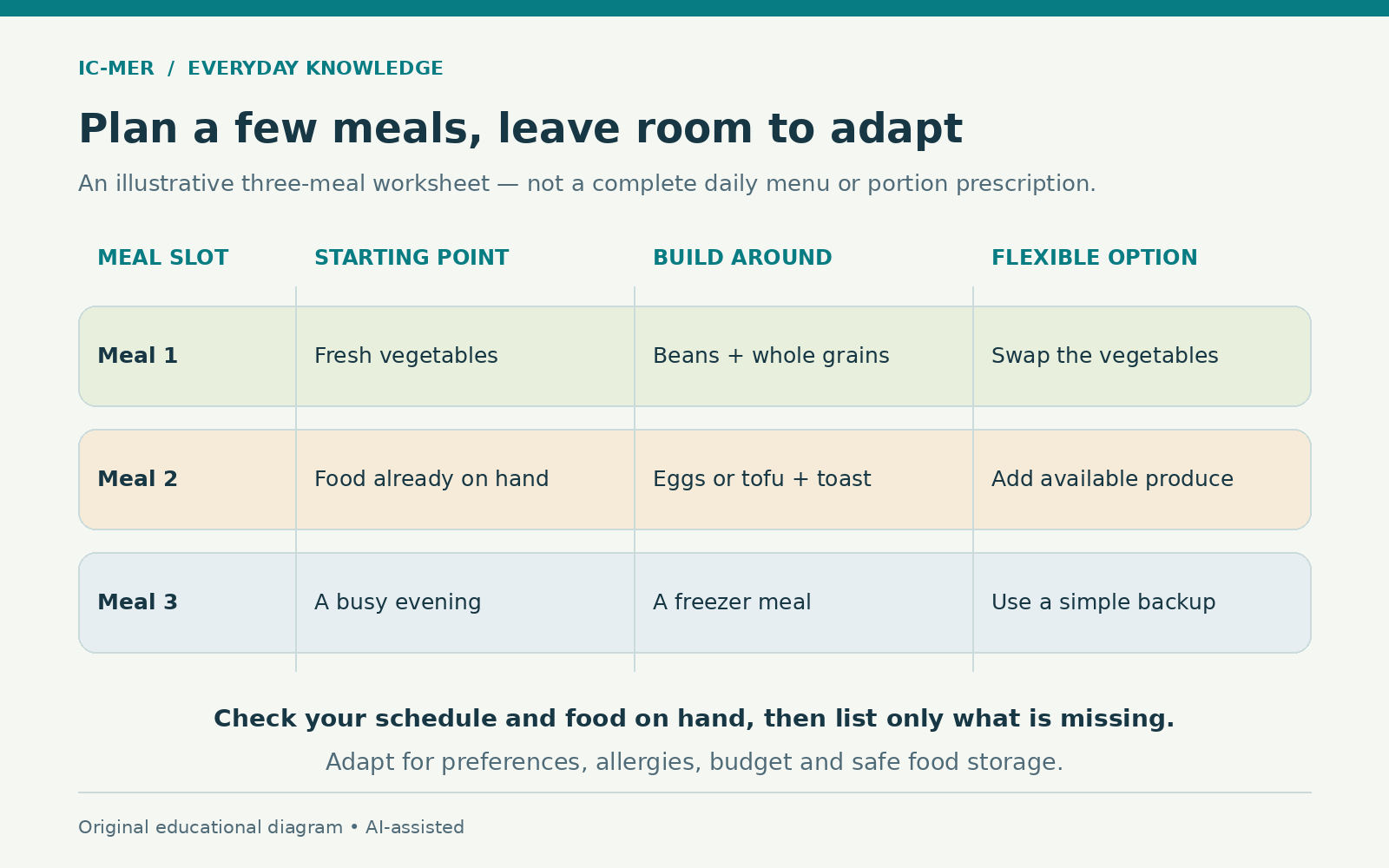
Nutrition.gov brings together planning and shopping resources, including a Veterans Affairs worksheet that links food already available with meals and missing ingredients. The original examples below use that practical idea without prescribing a calorie target or claiming that one menu suits every household.
Make a quick inventory with a purpose
Look at the refrigerator, freezer and cupboard before making a list. Identify food that can safely be used soon, staples that are already plentiful and ingredients needed to complete a meal. Check dates and storage history rather than assuming everything at the back is usable.
For example, a household might have dry pasta, a can of beans and frozen vegetables. Those are potential components, but the plan should still answer who will cook, how much time is available and what everyone can eat. Finding one forgotten ingredient is only helpful if it becomes part of a realistic meal.
Keep the inventory short enough to maintain. A small note listing three items to use first may be more useful than a detailed spreadsheet that nobody updates. Do not buy a duplicate just because an ingredient appears in a recipe; cross-check the quantities you already have.
Sources: [3]
Choose a few meal patterns
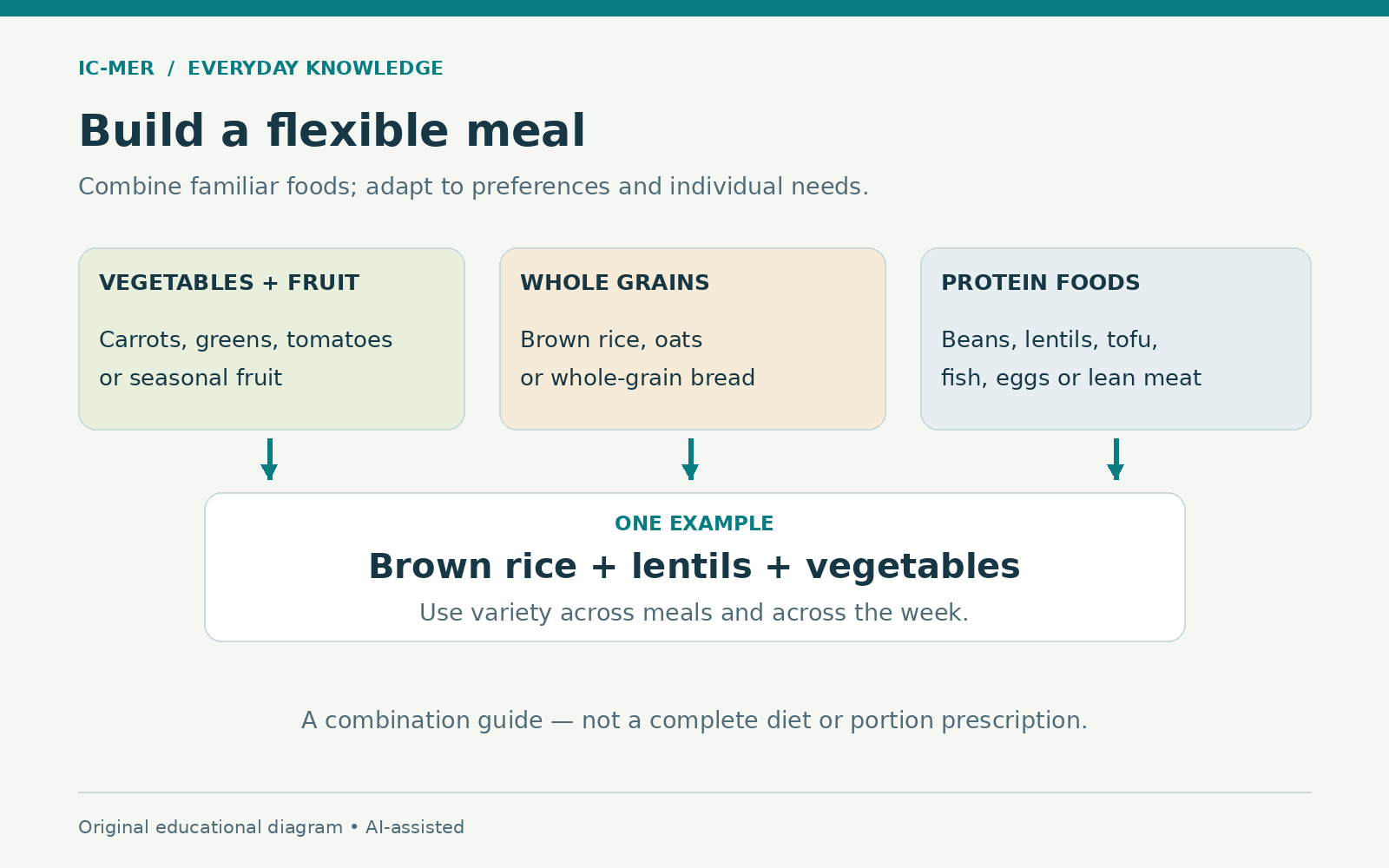
Instead of collecting many unrelated recipes, keep several familiar patterns: a grain or potato with vegetables and a protein food; a bean-based soup with bread; a filled wrap with a side of fruit; or a pasta dish that includes vegetables and an appropriate protein source. These are flexible meal ideas, not complete individualized nutrition plans.
Write the components separately. If one person dislikes the sauce, serve it on the side. If a particular vegetable is expensive, choose another suitable one rather than abandoning the meal. Households managing allergies should check every substitute rather than assuming that similar-looking products have the same ingredients.
Make room for cultural preferences, appetite and available equipment. A rice cooker, microwave or single burner may shape the menu more than a glossy recipe photograph. Frozen or canned ingredients and prepared components can be practical choices; check labels and handling directions for the specific products.
Give busy evenings a deliberate fallback
Choose one backup dinner before the week becomes hectic. It might be a pantry-based bean dish, a frozen meal paired with an appropriate vegetable, or another familiar combination that can be prepared with little attention. The useful feature is that the household knows what it is and has the ingredients.
A backup should not depend on an extra supermarket trip or an ingredient nobody likes. Keep a short list of alternatives in a shared place so the person who usually cooks is not the only one who can assemble dinner.
Consider an illustrative three-evening plan. On an evening with time, cook a vegetable-and-bean dish and prepare a modest amount of grain. On the following evening, use safely stored portions in a different combination. On the late evening, use the backup. The sequence can change; safe storage limits cannot.
Shop for quantities and actual opportunities to eat
Translate each meal into amounts you expect to use, then combine overlapping ingredients. If two dishes need the same vegetable, buy for both rather than treating each recipe as a separate shopping trip. Count meals eaten away from home and account for existing frozen portions.
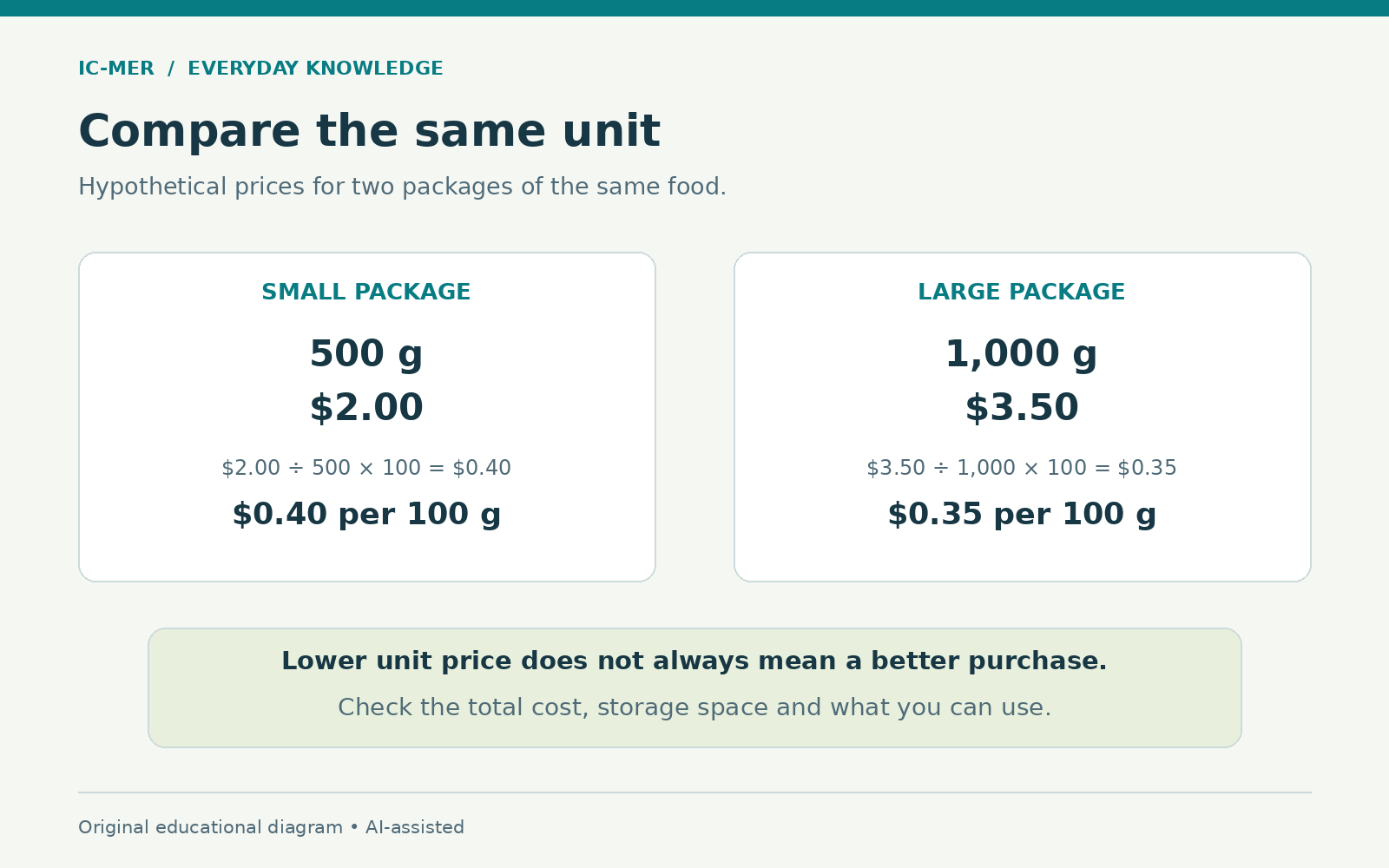
An ingredient that appears in three recipes is not automatically a bargain if only one dinner gets cooked. Leave some room for changes. Buying a smaller pack or choosing a frozen version may be more practical than buying a large fresh quantity that the household cannot finish.
Separate essentials from optional extras on the list. If the shop is out of one ingredient, a planned substitute can prevent an expensive redesign in the aisle. These are organizational suggestions, not promised savings; prices, transport costs and household circumstances differ.
Sources: [4]
Prepare components without making a second job
Choose preparation tasks that remove a genuine obstacle. That might mean measuring dry ingredients, washing suitable produce before use, arranging clean containers, or cooking an extra portion for the next day. There is no requirement to prepare every ingredient in advance.
Consider the cleanup as part of the workload. A plan that uses three pans, a blender and many storage boxes may consume more time than it saves for a small household. Start with one useful task and keep it only if it makes the next meal easier.
Share concrete responsibilities where possible: one person checks supplies, another writes the list, and another handles a specific meal. A child can help choose between suitable options, but adults remain responsible for knife, heat and food-safety tasks appropriate to the child's age.
Build storage into the plan
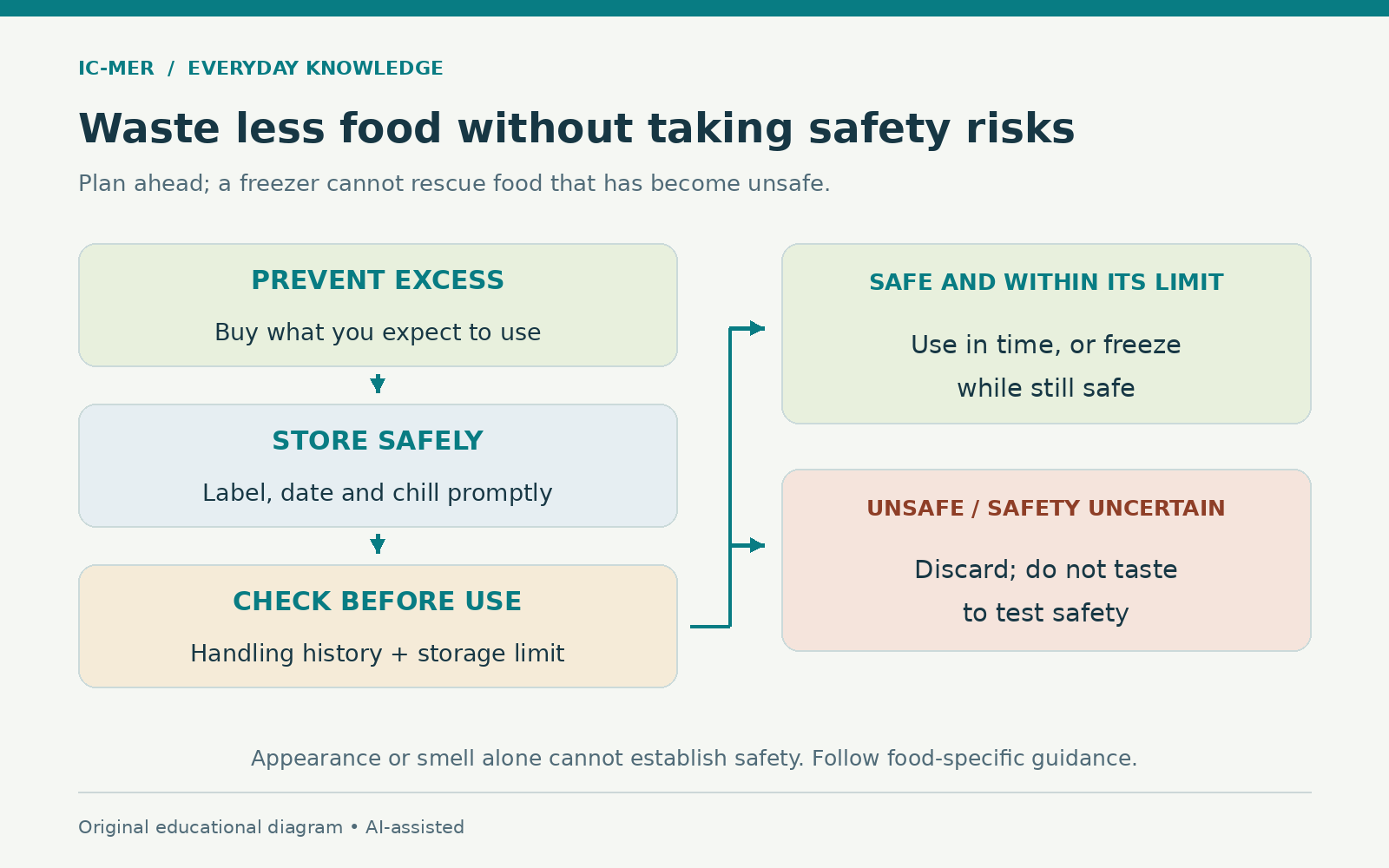
FoodSafety.gov advises keeping the refrigerator at 40°F or below and the freezer at 0°F or below. Refrigerate perishable food within two hours, or within one hour when it is exposed to temperatures above 90°F. Divide leftovers into shallow containers so they cool promptly; do not leave a large pot on the counter waiting for it to reach room temperature.
The federal cold-storage chart gives cooked meat or poultry leftovers and soups or stews a refrigerated window of three to four days. Raw foods can have shorter limits. A plan to cook once and refrigerate every dinner for an entire week therefore needs revision: freeze suitable portions promptly for later use, rather than waiting until their safe storage window has passed.
Label containers with the food and preparation date. Plan refrigerator thawing for frozen perishable portions; do not thaw them on the counter. When reheating leftovers, use a food thermometer to check 165°F. Follow package directions, including stirring or standing time, for prepared foods.
Plan breakfast and lunch at the same time
Dinner planning may not solve the busiest part of the day. Identify the morning when everyone leaves early, or the lunch that must travel without access to a refrigerator. Choose foods and safe transport arrangements that fit those conditions.
Keep a few repeatable options instead of trying to invent variety at every meal. For one household, this might mean an oat-based breakfast with suitable additions; another might prefer a savory meal. The point is to plan the ingredients and preparation time, not to insist on one culturally specific breakfast.
If lunch uses dinner leftovers, set aside the intended portion with clean utensils and refrigerate it promptly. Do not count on food being available merely because the recipe claims to serve four; actual appetites and serving amounts vary. A small backup can keep tomorrow's lunch from becoming an unexpected purchase.
Sources: [5]
Adjust without blame
At the end of the week, ask three simple questions: which meal was easy enough to repeat, which ingredient remained unused, and which evening needed a different approach? Keep the successful meals and change the difficult ones. You do not need to calculate a performance score.
If nobody wanted a planned meal, consider taste, texture, timing and portion size before assuming the solution is stricter rules. If cooking was impossible because of illness, disability or exhausting work hours, simplify the plan or seek practical support. Convenience may be part of a workable eating pattern.
Medical diets, swallowing problems, significant appetite changes and food allergies can require individualized advice. A registered dietitian or clinician can help adapt a plan without removing more foods than necessary. The menu should serve the household's needs, including safety and enjoyment.
A first plan that fits on one page
Write down the next three dinners, one backup, the ingredients already available and a short shopping list. Add the date for using or freezing each cooked perishable component. Decide who will handle the one preparation task most likely to help.
Try that small plan before expanding it. A realistic meal repeated next week is more useful than an ambitious menu that depends on time, money or energy the household does not have. The aim is a manageable routine that can change with everyday life.
Sources & further reading
- Nutrition.gov: Food Shopping and Meal PlanningChecked 2026-10-23
- VA: Weekly Meal Planner, Grocery List, and Recipes (2019 planning example)Checked 2026-10-23
- FDA: Tips to Reduce Food WasteChecked 2026-10-23
- EPA: Preventing Wasted Food at HomeChecked 2026-10-23
- FoodSafety.gov: Four Steps to Food SafetyChecked 2026-10-23
- FoodSafety.gov: Cold Food Storage ChartChecked 2026-10-23
- FoodSafety.gov: Safe Minimum Internal TemperaturesChecked 2026-10-23
- FDA: Have Food Allergies? Read the LabelChecked 2026-10-23
About this article
Prepared with AI assistance and an AI fact-checking pass against the sources listed above. No human clinical review is claimed. Evidence may change; consult appropriate qualified professionals for decisions about your circumstances.
Spotted a problem? Suggest a correction.