Medicine · 10 min read
Staying hydrated in everyday life and hot weather
A useful hydration plan answers three questions: when can you drink, where can you refill, and how will you get out of the heat?
General health education prepared with AI assistance and independently checked by an AI reviewer. This is not an individual fluid prescription or medical diagnosis. Follow any clinician-directed fluid plan. In the United States, call 911 for suspected heat stroke or another emergency.
Information may contain errors, omissions or outdated guidance. This article is general education, not individual medical or other professional advice. Verify important information before acting and consult an appropriately qualified professional. Never disregard medical advice, delay care or change treatment because of this article. See our accuracy disclaimer and terms.
Make water part of an ordinary day
Staying hydrated is easier to think about as a daily arrangement than as a challenge to finish an enormous bottle. Where will you be? Will drinking water be available? Can you take a break? What changes when the weather is hot or the day involves more activity than usual? These questions often reveal a more useful next step than choosing a universal number of glasses.
CDC explains that water helps with normal body functions, including temperature regulation and waste removal. Needs vary with factors such as age, activity, pregnancy and breastfeeding. Foods and beverages both contribute water. A single target printed on a bottle cannot account for every person's day or medical circumstances.
Begin by identifying the part of your routine where drinking becomes inconvenient. Perhaps the bottle stays in the car, a meeting runs through lunch, or the only available drink is one you do not enjoy. Fixing that obstacle can be a practical first step. This article offers planning ideas and warning signs, not a personalized fluid allowance or instructions to override a medical restriction.
Sources: [1]
Start with access, then choose the drink
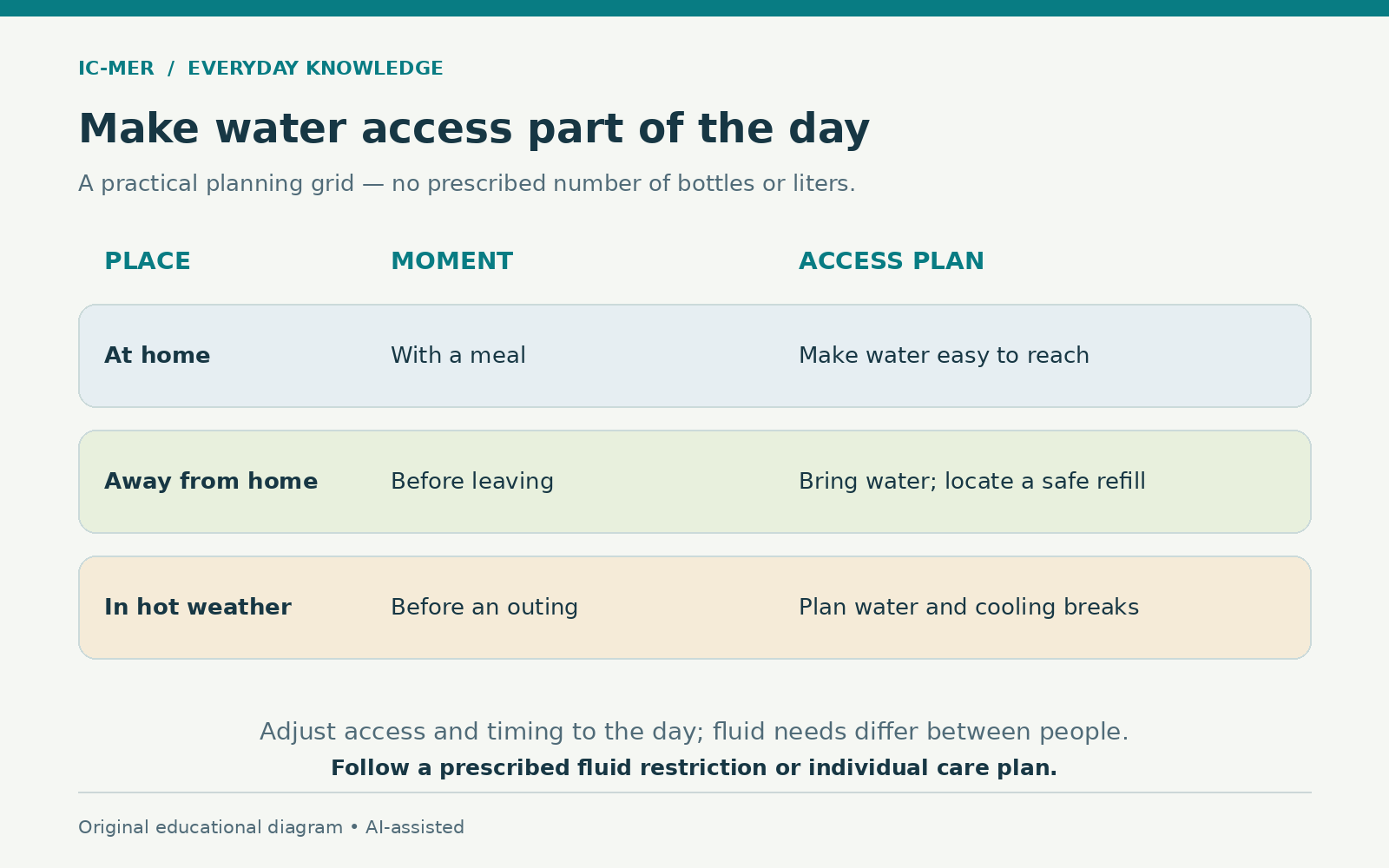
For an ordinary day, decide where your water will come from before you leave home. A reusable bottle may be convenient, but only if you can carry it, use it and refill it. A cup near your usual meal place may suit someone who stays at home. Choose an arrangement that works with your mobility, work setting and available facilities.
Think through the return journey as well as the departure. If you use public transport, a long wait may occur after the place you planned to refill has closed. If your day includes several appointments, check whether you can obtain drinking water along the route. These are planning suggestions; they do not imply that any particular venue provides free refills or that a public fountain is operating.
You do not need a special bottle or an app to begin. Put the item you already use where it will be noticed, and build the refill into a natural pause. If reminders help, use them as prompts to consider your needs, not commands to consume a fixed amount regardless of how you feel or what your clinician has advised.
What counts, and what makes a useful default
CDC notes that plain water has no calories and recommends choosing water instead of sugary drinks. Water in foods also contributes to intake. That means hydration is not limited to glasses of plain water, but it does not make every beverage interchangeable in the rest of your eating pattern.
Consider why you choose a particular drink. You may want it for taste, with a meal, or as part of a familiar break. For routine availability, keep an option you enjoy enough to use consistently. Plain water, for example, can be served cool or at room temperature. A preference about temperature is a practical detail worth accommodating rather than dismissing.
If your usual purchase is a sweetened drink, compare a realistic alternative and its price. You might prefer plain water with lunch while keeping a different drink for another occasion. This is an option, not an instruction to ban every beverage you enjoy. The goal is to make an everyday choice easier without turning drinking into a moral score or a complicated tracking project.
Sources: [1]
Use a three-part plan: time, place and backup
The illustration organizes hydration around everyday opportunities rather than a prescribed volume. Choose a time you can pause, a place where water is available, and a backup if the first arrangement fails. A written note can be as simple as taking a drink container with your lunch and checking the refill point when you arrive.
Consider a fictional morning of errands. You plan to leave with water, pause at a confirmed indoor destination and return before a long outdoor wait. If the destination is closed, the backup is to shorten or rearrange the trip, not to assume another source will appear. No specific route, venue or amount is recommended by this example.
At the end of the day, notice what got in the way. Was the container awkward to open? Did you forget it in another room? Were breaks difficult to take? Adjust the setup around that problem. A practical routine should reduce effort. It should not depend on repeatedly remembering a rule while handling everything else that fills the day.
Hot weather changes the plan
NIOSH's occupational heat guidance recommends drinking regularly during hot work rather than waiting until thirst becomes strong. It also warns that drinking excessive quantities can be dangerous. These workplace instructions should not be converted into a universal hourly drinking target for everyone sitting at home, exercising briefly or following a medical fluid restriction.
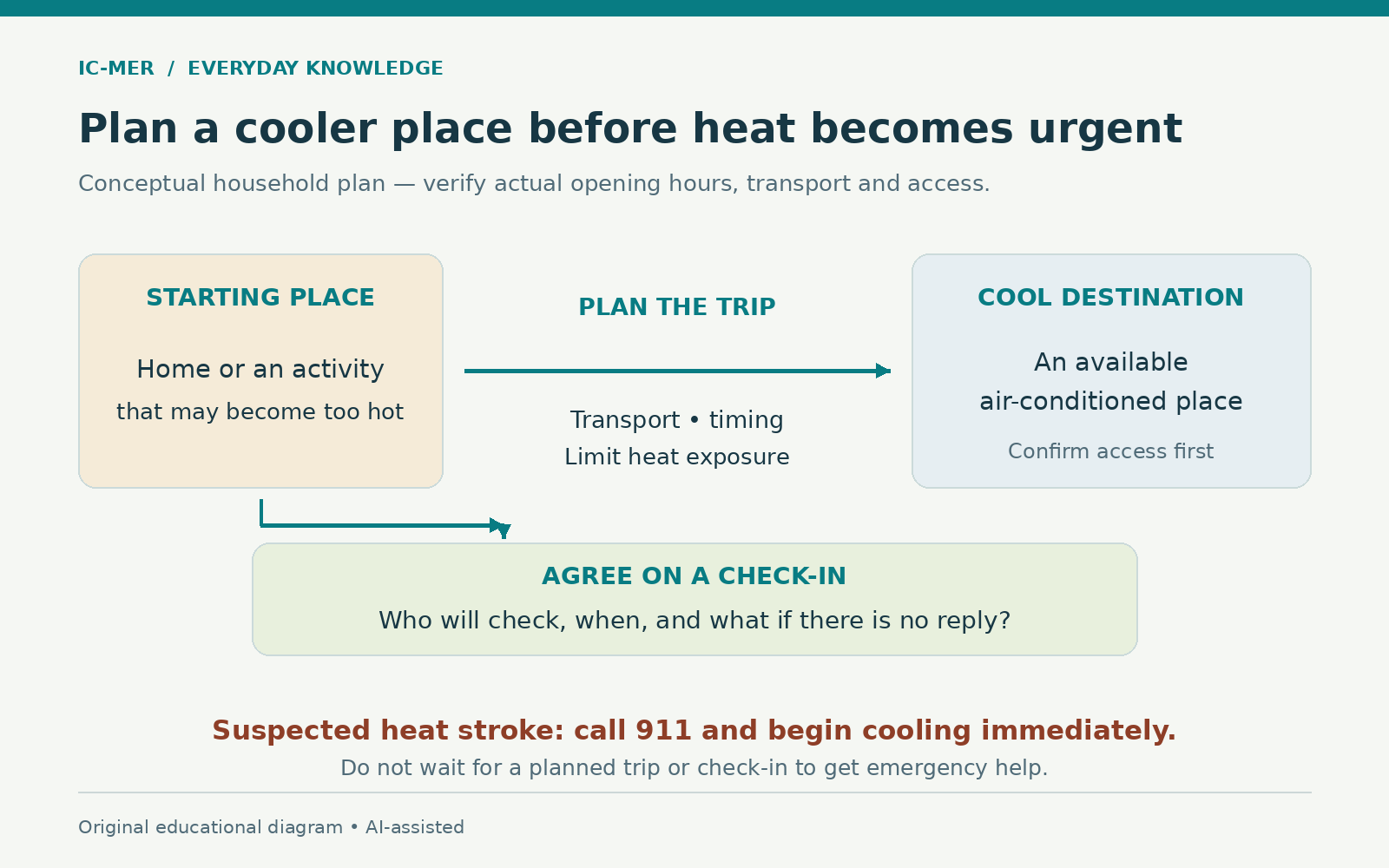
For a hot outing, plan water access together with a way to reduce heat exposure. Identify where you can stop, what activity can be postponed and how to get to a cooler place. Carrying a drink is not a reason to continue an activity that is making you unwell. The environment and the work or exercise itself still matter.
If you supervise an activity, make the arrangement visible to others. Tell participants where the break area is and how to ask for help. Avoid a setup where someone must choose between keeping up with the group and taking a needed pause. A personal bottle can support a plan, but it cannot replace a workable schedule or responsibility for people who need assistance.
Sources: [2]
Sports drinks and electrolyte products need context
NIOSH says ordinary meals and adequate water generally maintain water and electrolyte balance during work in the heat. For prolonged sweating over several hours, a balanced electrolyte drink can be an option. This is different from assuming every short walk requires a sports drink or that adding more electrolyte powder always improves hydration.
Compare the purpose of a product with the activity you actually plan. Read its preparation directions and ingredients rather than treating a sporty label as proof that it is necessary. If a clinician has advised limits on fluid, sodium or another nutrient, that advice should guide any choice. Do not create a salt-replacement regimen from a general article.
The same NIOSH guidance advises against salt tablets and cautions about high caffeine levels from energy drinks during heat exposure. A product marketed for energy is not the same thing as a cooling plan. For a routine outing, start with the basics you can arrange reliably: an appropriate drink, a reasonable activity plan and somewhere to get out of the heat.
Sources: [2]
Notice symptoms without relying on one clue
NIH describes thirst, headache, dry mouth and darker urine as possible signs of dehydration. More severe signs can include confusion, fainting, little or no urination, and rapid heartbeat or breathing. Severe symptoms need urgent medical attention. Do not assume that an ill person simply needs to finish a bottle and carry on.
A single clue does not explain the whole situation. If you feel unwell, consider what you were doing and seek help appropriate to the symptoms rather than using a drink routine as a diagnosis. Persistent or unusual symptoms are a reason to contact a healthcare professional. An article cannot establish their cause or tell you that continuing an activity is safe.
For practical observation, pay attention to changes from your ordinary day. A friend may notice that you have become unusually weak or are not responding normally before you recognize a problem yourself. Make it acceptable to stop and check on someone. The purpose is to act on concern, not to require a perfect label for the illness before offering help.
Sources: [3]
Know the emergency boundary
In a hot setting, confusion, slurred speech, collapse or seizures can signal heat stroke. Skin may be dry or very sweaty. Call 911 in the United States, begin rapid cooling and stay with the person. Move them to a cooler place if safe, wet the skin and use cold wet cloths while help is coming. Do not wait to see whether a drink solves the problem.
NOAA's heat-illness guidance says not to give fluids for heat stroke. An unconscious or confused person should not be handed a drink. Follow emergency dispatcher instructions and keep attention on getting medical help and cooling. A planned ride home or a later check-in is not an emergency response.
Discuss this distinction before a group outing, especially if people may be apart for periods of time. Know how to describe the location to emergency services. For a park or large venue, a recognizable entrance or marked location may be more useful than saying you are somewhere outside. Preparation makes it easier to act promptly if a person becomes seriously ill.
Medical fluid plans take priority
Some people with chronic kidney disease need limits on fluid. NIDDK explains that damaged kidneys may not remove extra fluid effectively and recommends discussing the appropriate amount with a healthcare professional. A general instruction to drink more should not replace that person's prescribed plan.
If hot weather or an illness changes your usual routine, ask your care team how to handle the change. Bring the actual advice you have been given and describe your circumstances. Useful questions include what counts toward a fluid limit, how to respond to unusual thirst, and when symptoms require care. Do not independently stop medicines or revise a therapeutic plan based on a hydration trend.
For caregivers, keep the person's instructions accessible and consistent. A well-intentioned visitor may otherwise encourage drinks that conflict with the plan. A short, agreed note about who to contact can be more useful than several people giving different advice. Respect the person's privacy and preferences while making sure anyone responsible for care knows the relevant instructions.
Sources: [6]
Make the routine easier for someone else
When helping a child, an older adult or someone with limited mobility, check the practical details instead of simply saying to drink more. Can the person reach the cup? Can they open the lid? Is a drink available when the caregiver is elsewhere? Are there specific clinical instructions? The answer may be a different container or a clearer routine rather than more reminders.
Do not apply adult drinking advice to infants. Infant feeding and fluid questions belong with age-appropriate guidance and the child's healthcare professional. Likewise, a person with swallowing difficulties may need a specific plan for liquids. A generic suggestion to leave a bottle nearby does not address whether drinking from it is suitable or safe for that individual.
For a shared outing, agree on who brings supplies and who confirms access to a cooler destination. Avoid assuming that another person has done it. If somebody needs assistance, ask what would help and build that into the plan. Practical support works best when it is specific, respectful and compatible with the person's own care instructions.
Review the plan after a real day
Try the arrangement on an ordinary day before relying on it for a long or unfamiliar trip. Check whether your chosen container fits the bag, whether the refill location is convenient and whether your intended pause actually happens. There is little value in a carefully written routine that cannot survive the first change in schedule.
For hot weather, add a separate decision about when to shorten, move or cancel the activity. Decide that before you are tired or committed to reaching a destination. A companion can help by agreeing that either person may call for a break. This is a planning convention, not a guarantee against heat illness, and symptoms should always take priority over the original timetable.
Keep what works and simplify what does not. You may need only one change, such as preparing a drink with lunch or confirming a refill before a trip. Hydration is part of caring for yourself throughout the day. It belongs alongside food, rest, access to cooling and individualized medical advice, rather than becoming a competition to consume the largest possible amount.
Sources & further reading
- About Water and Healthier DrinksChecked 2026-10-23
- Heat Stress: HydrationChecked 2026-10-23
- Hydrating for HealthChecked 2026-10-23
- Heat-related IllnessesChecked 2026-10-23
- Heat exhaustion or heat stroke? Know the signs of heat illnessChecked 2026-10-23
- Healthy Eating for Adults with Chronic Kidney DiseaseChecked 2026-10-23
About this article
Prepared with AI assistance and an AI fact-checking pass against the sources listed above. No human clinical review is claimed. Evidence may change; consult appropriate qualified professionals for decisions about your circumstances.
Spotted a problem? Suggest a correction.