Medicine · 7 min read
Sun protection for everyday outdoor life
A few practical choices before you leave can make sun protection easier to maintain throughout an ordinary day outside.
AI-assisted general education, not personalized medical advice or human clinical review. Follow product instructions and ask a qualified healthcare professional about infants, medicine-related sun sensitivity or individual skin concerns. Do not change prescribed medicines on your own.
Information may contain errors, omissions or outdated guidance. This article is general education, not individual medical or other professional advice. Verify important information before acting and consult an appropriately qualified professional. Never disregard medical advice, delay care or change treatment because of this article. See our accuracy disclaimer and terms.
Plan for the outing you actually have
Sun protection belongs beside your keys and shoes, not only in a beach bag. A walk, an outdoor lunch or an afternoon watching children play can involve more time outside than you expected. A useful routine starts by asking where you will be, what will cover your skin and how you will refresh protection while you are there.
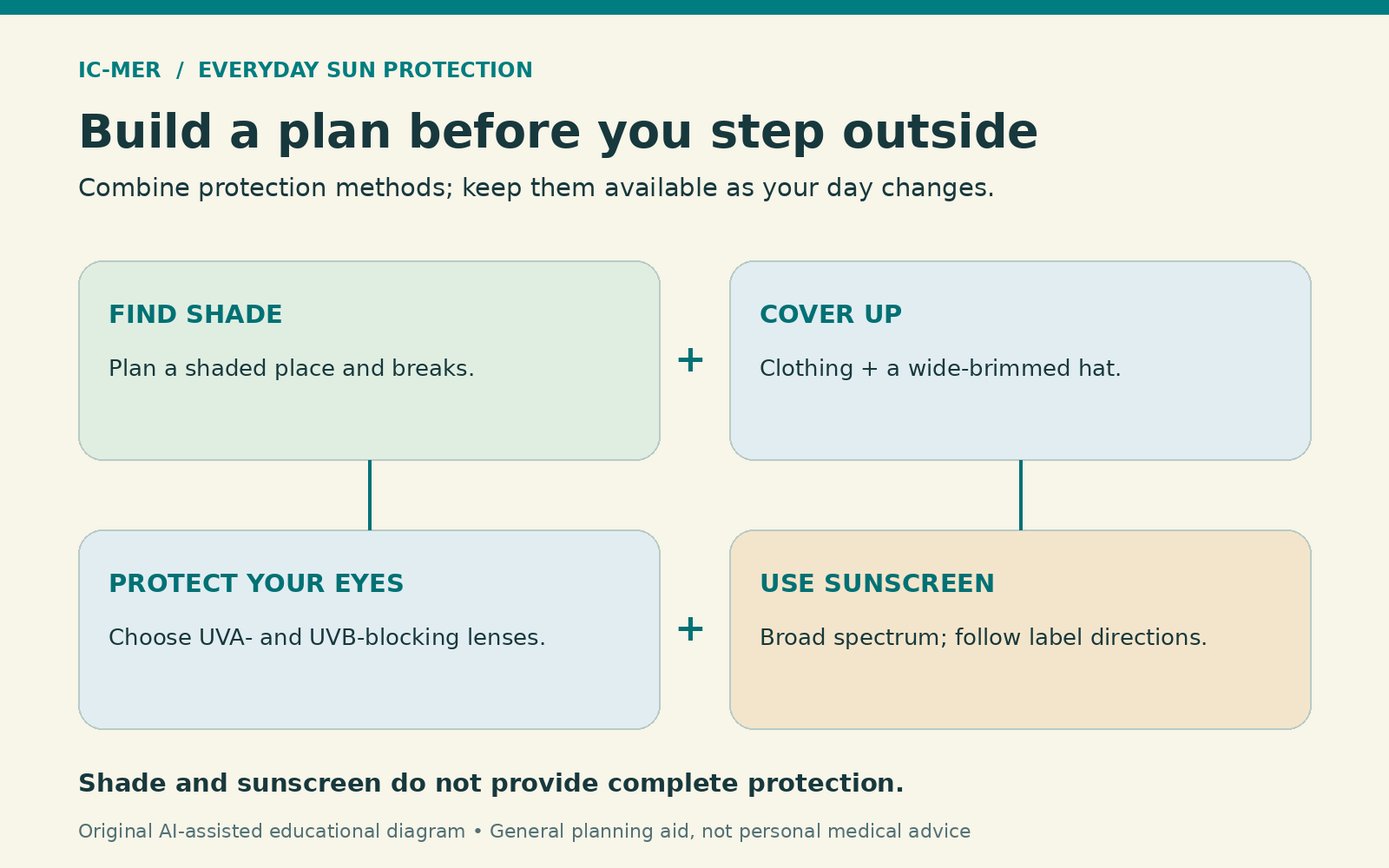
Too much ultraviolet radiation can damage skin and increase skin-cancer risk. Cloud cover and cool air do not make UV disappear, and surfaces including water and sand can reflect it. Protection is therefore a year-round habit. Sunscreen helps, but it works as part of a plan that also includes shade, clothing, a hat and sunglasses.
Think about the awkward part of your usual outing. Perhaps your hat stays at home because it does not fit in your work bag, or your sunscreen is always in the other car. Solve that small problem first. Keeping a practical kit where you prepare to leave is an original planning suggestion, not a guarantee against sun damage.
Sources: [2]
Use the UV forecast to make a practical choice
The UV Index describes expected ultraviolet intensity, rather than how warm the day feels. CDC advises protecting your skin when the local index is 3 or higher. EPA describes 3–7 as moderate to high and 8 or more as very high to extreme, when extra protection is needed. Check the forecast for the place you will actually visit.
Instead of using the number as a reason to calculate a safe tanning period, use it to change the arrangement: choose a shaded route, move a flexible task away from the middle of the day, or bring clothing that covers more skin. A forecast cannot tell you exactly how your own skin will respond.
For example, a family planning a picnic could check both the forecast and the park layout before leaving. A table under shelter, a shorter exposed walk and a bag with everyone's protection supplies may be easier to manage than trying to fix forgotten equipment after arrival. The example illustrates planning; it does not predict anyone's exposure.
Make clothing do some of the work
Choose comfortable coverage you can keep wearing. Dermatology guidance favors lightweight long sleeves and pants, densely woven fabrics, and a wide-brimmed hat. Clothing with a UPF label provides another way to identify sun-protective options. An open weave leaves gaps; wet clothing may protect less than the same garment when dry.
Check the parts a favorite cap leaves exposed. A baseball cap shades the front of the face better than the ears and back of the neck, so those areas need additional protection. A brim that goes around the head is a more complete starting point. This is a coverage question, not a reason to assume any hat makes sunscreen unnecessary.
Read the sunglasses label for UV protection. Dark-looking lenses alone do not establish that protection; larger or wraparound designs also reduce exposure from the sides. When deciding what to pack, put your hat and glasses beside the clothing you plan to wear. If the outfit changes to sandals or a sleeveless top, reconsider which areas are uncovered.
Sources: [6]
Read the sunscreen label before the front-of-bottle claims
The American Academy of Dermatology recommends a broad-spectrum, water-resistant sunscreen with SPF 30 or higher. Broad spectrum means protection against UVA as well as UVB. SPF describes sunburn protection under testing conditions; it is not a multiplier for how many hours you may safely remain outdoors.
FDA's general consumer guidance specifies broad-spectrum SPF 15 or higher alongside other protective measures. The SPF 30 choice used here follows the dermatology recommendation. Neither number removes the need to follow the directions, cover exposed skin properly, seek shade or reapply. Avoid turning a larger label number into permission for a longer unprotected outing.
Before buying a replacement, look at how you will use it: on a walk, during exercise or around water. Read the Drug Facts and application instructions rather than choosing solely by a marketing phrase. If the product irritates your skin or you are unsure which form suits you, a pharmacist or dermatologist can help you choose an alternative.
Apply deliberately, then make room for reapplication
Apply sunscreen before going outside; AAD advises allowing about 15 minutes. Cover skin that clothing does not cover, remembering easy-to-miss places such as the ears, neck and tops of the feet. Ask for help with an exposed back. Follow the product directions and keep sunscreen out of the eyes.
AAD notes that most adults need at least about an ounce to cover exposed body skin, with needs varying by body size and coverage. A tiny dab spread over a large area is not a useful substitute for adequate application. Plan enough product for the outing rather than relying on a nearly empty bottle.
Reapply every two hours outdoors and immediately after swimming or sweating, following the label. Toweling off is another reason to renew protection. A phone reminder can help, but do not wait for it after an activity that removes sunscreen. Place the bottle somewhere accessible during a break, not under everything else in a packed bag.
Keep the routine workable around water and shade
A shaded seat is helpful, but shade is not a complete substitute for the rest of the plan. Keep protective clothing and sunscreen in the routine even under an umbrella or tree. On a boat or at a beach, remember that reflected sunlight is another reason to avoid treating shelter overhead as total protection.
Build a protection check into moments that already happen: before leaving home, after swimming, or when the group stops for a break. These are practical prompts rather than additional medical rules. Someone who organizes the outing can remind everyone to bring their own supplies without assuming one product is suitable for every person.
Also check the bottle's expiration date and storage directions. An old bottle left in excessive heat is not a reliable backup plan. If you cannot tell whether a product remains suitable, replace it or ask a pharmacist. Buying a replacement is more useful than guessing that the remaining cream must still work because it looks familiar.
Know when general advice needs an individual conversation
Some medicines and skin products can cause photosensitivity, increasing sensitivity to sunlight. FDA describes reactions ranging from sunburn-like symptoms to rashes, and notes that not everyone using an implicated medicine will react. Ask a pharmacist or prescribing clinician about your actual medicines and any extra precautions you need.
Do not stop, skip or change a prescribed medicine to make an outdoor activity easier. Instead, ask how to plan the activity safely and what to do if a reaction occurs. Bring the product name and describe when symptoms started. A general article cannot determine whether a particular rash is caused by sunlight, medication or something else.
Infants need a separate plan. FDA advises keeping babies under six months out of the sun and asking a doctor before applying sunscreen. Do not simply copy an adult's routine for a baby. People with a history of skin cancer, unusual reactions or other particular concerns should also discuss their protection needs with their healthcare professional.
A small checklist you can repeat
Before you leave, ask: Is there shade where I am going? Have I packed clothing, a suitable hat and UV-protective glasses? Have I applied sunscreen according to its directions, and is there enough to reapply? Is there anything about my medicines or my child's age that needs professional advice?
After the outing, notice what made the plan difficult. Replace an empty bottle, move the hat to a convenient hook or choose a different route next time. These small adjustments are ways to support consistency; they are not measured treatments or promises that every exposure can be eliminated.
The aim is to make ordinary outdoor life easier to protect. Use several measures together, adapt them to the activity and follow current product instructions. If you repeatedly burn despite your routine, or have a skin concern that worries you, seek professional advice rather than simply buying a higher number and extending your time in the sun.
Sources & further reading
- FDA: Sunscreen—How to Help Protect Your Skin from the SunChecked 2026-10-25
- CDC: Sun Safety FactsChecked 2026-10-25
- American Academy of Dermatology: How to apply sunscreenChecked 2026-10-25
- FDA: The Sun and Your MedicineChecked 2026-10-25
- EPA: UV Index ScaleChecked 2026-10-25
- American Academy of Dermatology: What to wear to protect your skin from the sunChecked 2026-10-25
About this article
Prepared with AI assistance and an AI fact-checking pass against the sources listed above. No human clinical review is claimed. Evidence may change; consult appropriate qualified professionals for decisions about your circumstances.
Spotted a problem? Suggest a correction.