Environment · 7 min read
Wildfire smoke and health: preparing homes and workplaces
A useful smoke plan connects outdoor conditions, indoor filtration, individual needs and the decision to move somewhere safer.
General educational information, prepared with AI assistance by the IC-MER Editorial Team. Not individualized medical advice, a workplace compliance determination, or emergency-response instructions. Follow local authorities and obtain appropriate clinical, occupational-safety or building advice for your situation.
Information may contain errors, omissions or outdated guidance. This article is general education, not individual medical or other professional advice. Verify important information before acting and consult an appropriately qualified professional. Never disregard medical advice, delay care or change treatment because of this article. See our accuracy disclaimer and terms.
Make the next decision before smoke arrives
A smoke response becomes easier when the key choices are made in advance: where people can spend time, who checks official alerts, how equipment will be operated, and where to go if the building cannot remain suitable. This article offers a planning framework for households and ordinary workplaces. It is not firefighting guidance, a building assessment, or a substitute for local emergency instructions.
Start with the distinction between reducing smoke exposure and escaping a fire. A room with filtration does not protect a building from an approaching wildfire. Follow evacuation instructions promptly; do not delay because an air cleaner is running or an air-quality display looks reassuring. CDC advises following local emergency management instructions and keeping track of nearby fires.
Sources: [1]
Understand the mixture and the person exposed
Wildfire smoke contains gases and particles, with composition changing as different materials burn and conditions change. NIOSH describes uncertainties about the effects of repeated occupational exposure and mixtures involving burning manufactured materials. That uncertainty is a reason to reduce exposure, not evidence that repeated exposure is harmless.
Fine particles are a major health concern because they can enter the respiratory system. Smoke can irritate the eyes and airways and worsen existing heart or lung disease. The experience differs between people: a person with asthma and someone doing prolonged heavy outdoor work do not have the same circumstances as a healthy adult spending a short time outside.
Children, older adults, pregnant people, and people with certain chronic illnesses need particular consideration. Discuss individual plans with a clinician before smoke season, especially when there is an existing breathing or heart condition. Seek medical help for new or worsening symptoms rather than trying to interpret them from an air-quality number.
Use alerts to change activities
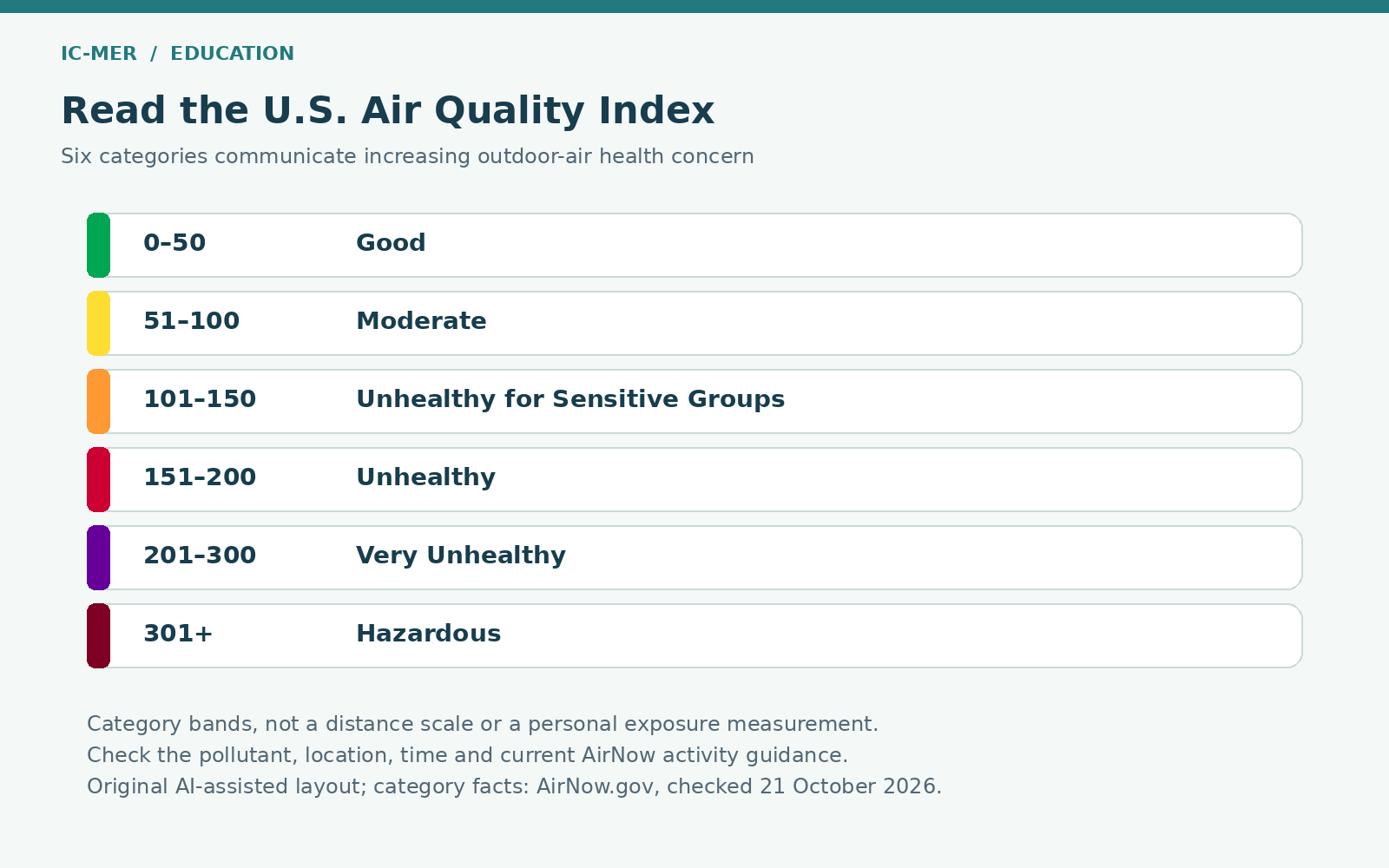
The U.S. Air Quality Index communicates outdoor pollution and health concern through six categories. Higher values indicate greater concern. It helps connect measured outdoor conditions with public advice; it is not a medical diagnosis or a measurement of the air inside your specific room.
Check AirNow and local public-health and emergency notices for your actual location. Check again as conditions change. AirNow advises reducing strenuous outdoor activity during smoky periods and postponing outdoor work where possible. A plan should say who will reconsider an activity, rather than simply telling everyone to keep watching the news.
For example, a fictional community organization could designate one person to check conditions before opening and before any outdoor session, with a backup person for absences. Its written plan could identify which activities can move inside, which can be postponed, and how participants receive updates. These are practical planning suggestions, not official exposure thresholds or a guarantee that the venue is safe.
Choose a room that people can actually use
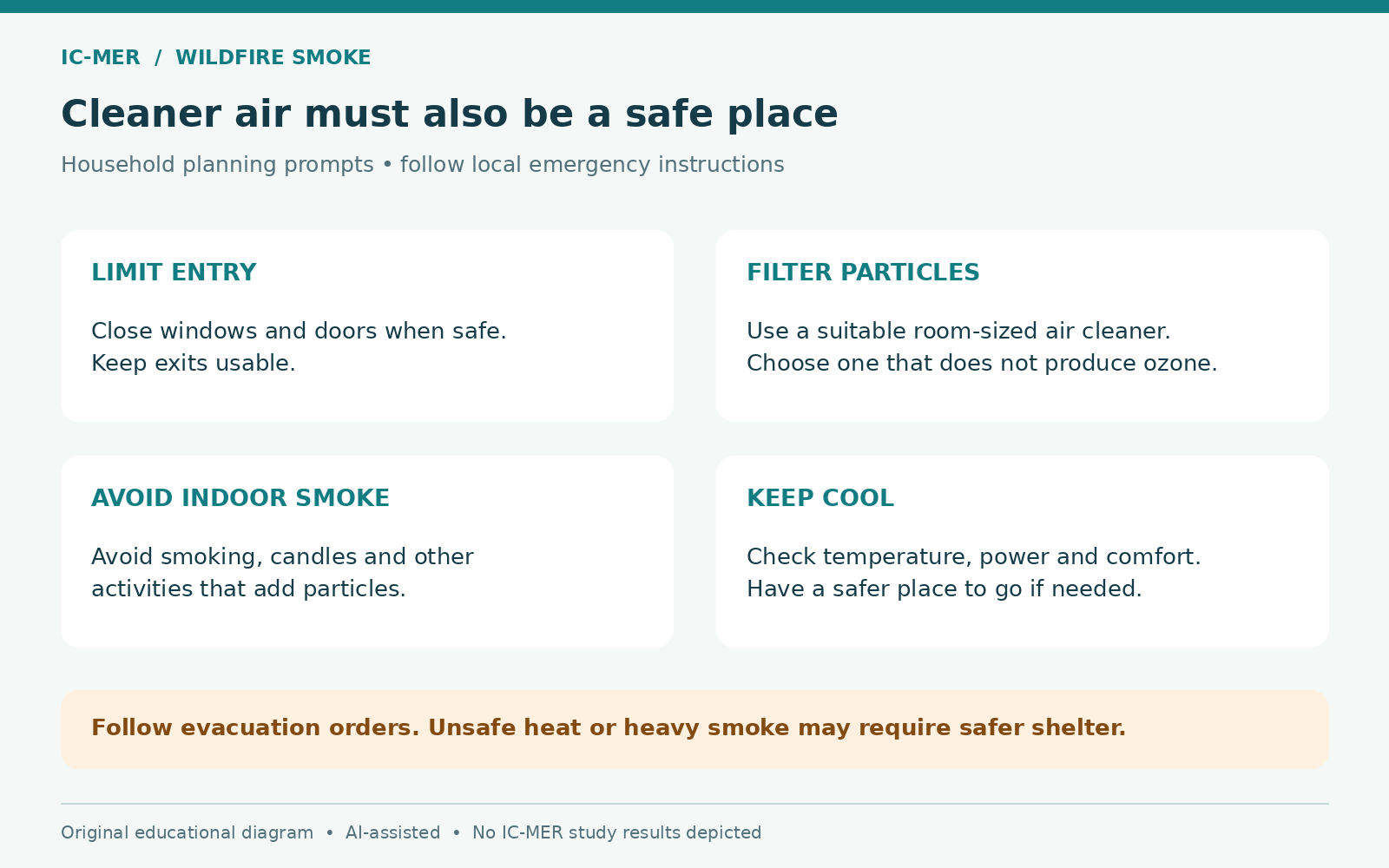
EPA's cleaner-room guidance combines limiting smoke entry, filtering particles, avoiding indoor particle sources, and staying comfortably cool. Select a room that can accommodate the household and be closed off without obstructing escape. A suitable portable air cleaner can reduce particles; the term clean room does not mean sterile or free of every pollutant.
Keep windows and doors closed during smoky conditions when it is safe to remain there. Avoid activities such as smoking, burning candles, or frying food that add particles. Run an appropriately sized air cleaner according to its instructions, using a high setting when practical. Choose equipment that does not generate ozone.
Test the arrangement before it is needed. Can people sit, sleep, and communicate comfortably? Is the air cleaner obstructed by furniture? Is the noise tolerable at the intended setting? Is there a realistic way to obtain replacement filters? This rehearsal identifies practical problems that a shopping list alone will miss.
Check filtration and ventilation as separate functions
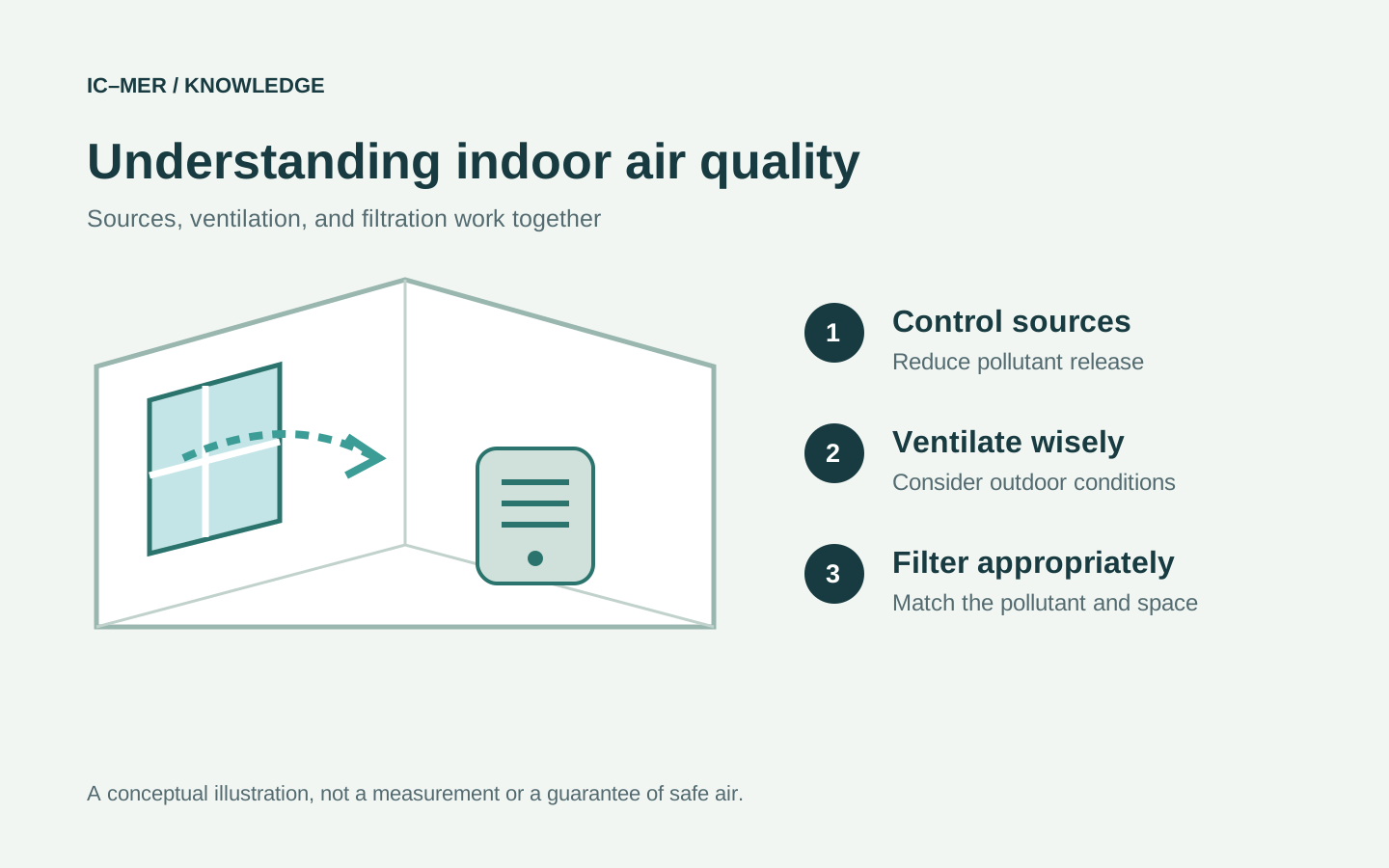
Outdoor smoke can enter through openings and gaps, as well as ventilation systems. Closing a window therefore helps without making a home airtight. EPA recommends learning how the actual heating and cooling equipment works, including whether it has an outdoor-air intake and a recirculation setting.
Use a high-efficiency central-system filter, such as MERV 13, only when the system can accommodate it. The filter must fit correctly; a technician can advise on compatibility. A portable cleaner generally serves a room, while central filtration serves the area connected to that system. Heavy smoke can make filters need attention sooner than usual.
For a workplace, ask the building manager to document the approved smoke settings and restoration steps. Do not let an informal instruction to close everything override the building's safety needs or a specialist assessment. Record the equipment model, filter specification, responsible person, and where operating instructions are kept. This creates a usable handover if the usual manager is away.
Understand the limits of a do-it-yourself cleaner
EPA research found that box-fan and filter assemblies can reduce smoke particles, with performance depending on design. Its guidance calls for newer, certified fans with safety features, specifically models from 2012 onward, and recommends MERV 13 filters. A tested design is preferable to an improvised arrangement whose airflow and electrical safety are unknown.
EPA treats these devices as a temporary option when commercial units of known performance are unavailable or unaffordable. Follow the agency's complete construction and safety instructions, check filters, and keep spare filters available. CDC says not to leave a do-it-yourself box-fan filtration unit unattended.
If your plan depends on one of these devices, list who can assemble and supervise it and what will happen when that person leaves. Avoid equating the presence of a fan with verified protection. The purchase or assembly is one step; correct operation and an alternative location remain part of preparation.
Do not trade smoke reduction for dangerous heat
A closed home can become unsuitable if it cannot stay cool. EPA advises seeking shelter elsewhere when cooling fails, electricity is lost, or too much smoke continues to enter. AirNow likewise emphasizes keeping the cleaner-air space cool and identifying another suitable building when that is not possible.
Write down an alternative before an emergency: a confirmed cleaner-air shelter, an appropriate air-conditioned public building, or a friend or relative outside the affected area. Confirm opening arrangements, transportation, accessibility, and whether pets can come. Do not assume a building is available because it appeared on last year's list.
Treat an evacuation instruction as an immediate change of plan. The backup destination for distant smoke may differ from the safe destination during an approaching fire. Keep the two decisions visible so that time spent adjusting a filter never becomes a reason to postpone leaving.
Use a respirator for the hazard it can address
A properly fitted NIOSH-approved N95 or P100 particulate respirator can reduce inhaled particles when outdoor exposure cannot be avoided. Follow its instructions and perform a user seal check each time. Facial hair crossing the sealing area can interfere with fit. Cloth coverings and loose surgical masks do not provide equivalent smoke-particle protection.
These particulate respirators do not remove gases or vapors and do not supply oxygen. They do not make it safe to enter a burning building or a dangerous atmosphere. People with heart or lung conditions should discuss respirator use with a clinician. Children need special attention to fit and usability; adult workplace products are not a dependable one-size solution. Masks or respirators must not be placed on children under two.
Use respiratory protection alongside exposure reduction. Having a respirator available is not a reason to extend a task, resume exercise, or disregard official instructions.
Give workplaces a specific response
NIOSH recommends considering relocation or rescheduling, less strenuous work, and breaks in places with cleaner air. Building managers can reduce smoke entry and use compatible filtration. Identify who can authorize these changes and how workers can report concerns without waiting for the next scheduled meeting.
Where OSHA's respiratory-protection standard applies, required respirator use entails a worksite-specific program, including the applicable medical evaluation, fit testing, training, and other provisions. Voluntary use has different requirements and exceptions; handing out respirators is not by itself a complete program. State rules and sector-specific duties also need assessment.
A short exercise can expose gaps: imagine the outdoor air worsens mid-shift while the regular manager is absent. Who checks conditions, who changes the work, and where do people take breaks? Preserve the decisions and unresolved questions. After the event, review what actually worked and update the plan before the next smoke episode.
Sources & further reading
- Safety Guidelines: Wildfires and Wildfire SmokeChecked 2026-10-21
- Create a Clean Room to Protect Indoor Air Quality During a WildfireChecked 2026-10-21
- When Smoke is in the AirChecked 2026-10-21
- Wildland Fire SmokeChecked 2026-10-21
- How to Protect Workers and the Public from Wildfire SmokeChecked 2026-10-21
- Research on DIY Air Cleaners to Reduce Wildfire Smoke IndoorsChecked 2026-10-21
- Wildfires and Indoor Air Quality (IAQ)Checked 2026-10-21
- Air Quality Index (AQI) BasicsChecked 2026-10-21
- 29 CFR 1910.134: Respiratory protectionChecked 2026-10-21
About this article
Prepared with AI assistance and an AI fact-checking pass against the sources listed above. No human clinical review is claimed. Evidence may change; consult appropriate qualified professionals for decisions about your circumstances.
Spotted a problem? Suggest a correction.