Medicine · 10 min read
Heart health: small changes that add up
A useful heart-health plan connects daily habits with the care you need. Start with one manageable change, one practical support, and a clear follow-up plan.

Prepared with AI assistance by the IC-MER Editorial Team for general education. This article is not individualized medical advice or human clinical review. Discuss prevention, exercise, medicines, and testing with your healthcare professional. For possible heart-attack symptoms, call 911 in the United States or your local emergency number immediately.
Information may contain errors, omissions or outdated guidance. This article is general education, not individual medical or other professional advice. Verify important information before acting and consult an appropriately qualified professional. Never disregard medical advice, delay care or change treatment because of this article. See our accuracy disclaimer and terms.
Start with a plan you can actually use
Heart-health advice can feel like a second job: improve your food, exercise more, sleep better, manage stress, and keep track of medical appointments. Each item may be reasonable, yet the combined list can leave you wondering where to begin. A workable plan starts by choosing a priority and making the next action specific enough to fit into an ordinary week.
The aim is to reduce risk over time while making daily life more manageable. There is no meal, workout, or perfect streak that guarantees protection from heart disease. Age, family history, existing conditions, and circumstances also matter. Healthy routines and appropriate medical care work together; doing well in one area does not cancel the need for attention elsewhere.
Think of the following as a planning guide. Choose the parts that match your situation, keep prescribed care in place, and use your healthcare team to decide which changes deserve the most attention. You do not need to buy a watch, subscription, supplement, or specialty food to begin.
Sources: [1]
Separate urgent symptoms from prevention
Prevention plans are for everyday life, not for deciding whether to wait through possible emergency symptoms. Heart attacks can involve chest pressure, heaviness, or discomfort; discomfort in an arm, jaw, back, or upper abdomen; shortness of breath; sweating; nausea; or sudden light-headedness. Symptoms may be mild, start gradually, or come and go. They do not always resemble the dramatic chest pain shown on television.
If you think you may be having a heart attack, call 911 in the United States immediately, even if you are unsure. Use your local emergency number elsewhere. Do not drive yourself or delay the call while checking a wearable, looking up symptoms, or trying a home remedy. Follow the emergency dispatcher’s instructions. A healthy lifestyle does not rule out a heart attack.
Sources: [8]
Choose the next priority with your own risks in mind
For some people, the most important next conversation concerns smoking. For others, it is follow-up for high blood pressure, cholesterol, diabetes, or an existing heart condition. These priorities cannot be ranked reliably from how healthy someone looks or how energetic they feel. High blood pressure and high cholesterol often have no obvious symptoms.
At a routine visit, explain what you already know: previous diagnoses, medications, family history of early heart disease, and any history of preeclampsia during pregnancy. Ask which issue needs action now, which can be approached gradually, and when it should be reviewed. Your clinician may use a cardiovascular risk estimate as one part of that discussion.
Turn the answer into a single sentence you can use at home: “My first priority is to complete the agreed follow-up and make my weekday routine easier.” Avoid giving yourself five equally urgent lifestyle assignments. A clear starting point does not mean abandoning the rest; it helps you make a realistic beginning.
Make a one-page care summary
Gather your medication list, recent test results if available, and the dates of planned appointments in one place. A paper folder is enough. Include prescription medicines, over-the-counter products, vitamins, and supplements, along with questions you want answered. If different clinicians are involved, bring the same current list to each visit.
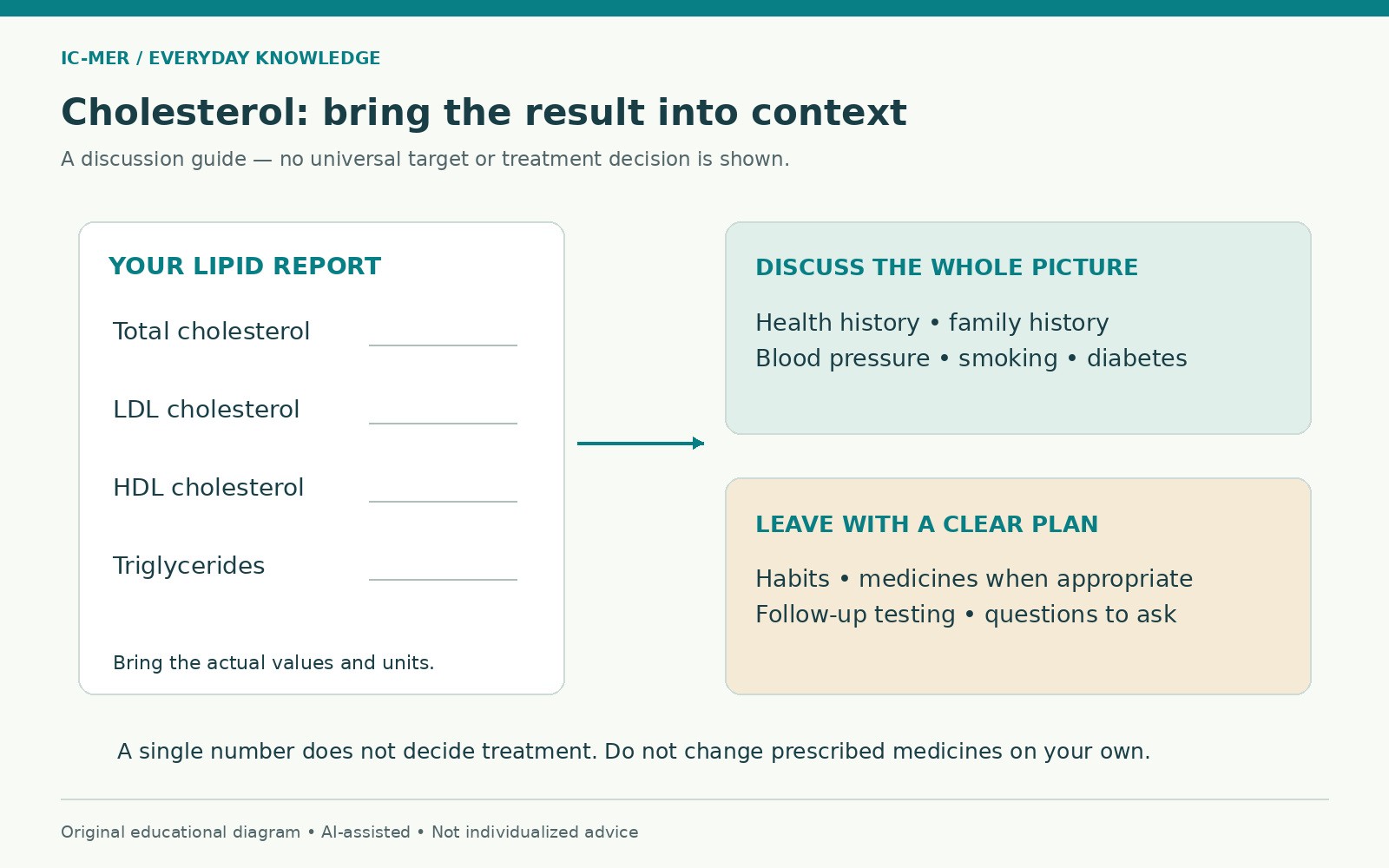
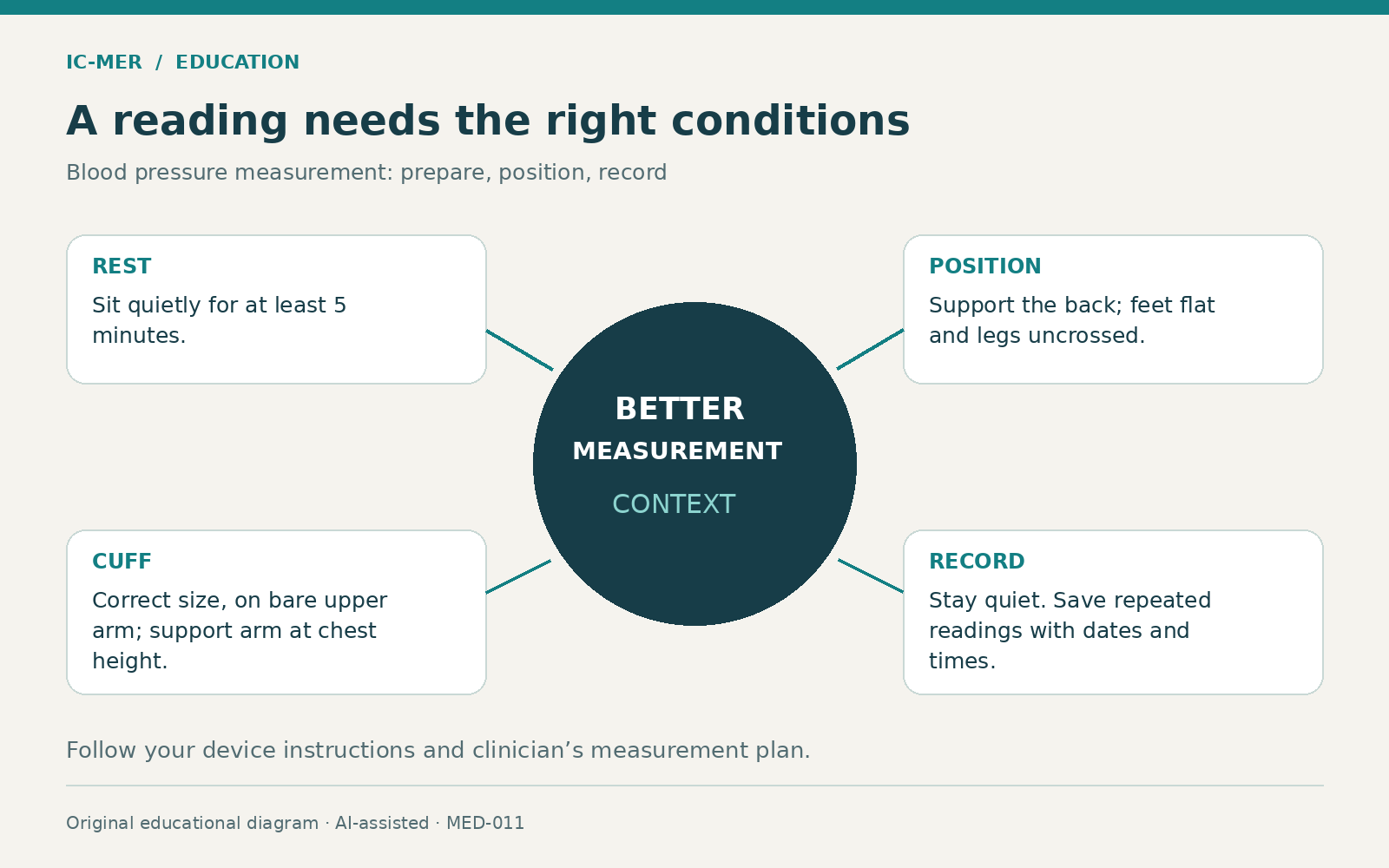
Ask what your blood pressure and cholesterol results mean for you, whether additional testing is appropriate, and how often to follow up. If home blood-pressure measurements are recommended, ask for instruction on the device and technique and for a written plan explaining which readings require a call. Do not invent a measurement schedule or treatment target from someone else’s plan.
Before leaving an appointment, write down the next action and who will arrange it. “Discuss again later” is hard to carry out; “call this office if the appointment has not been scheduled” is clearer. If a result is unclear, ask for an explanation rather than interpreting a flag in a patient portal by itself.
Sources: [3]
If you smoke, make support the first small step
Smoking increases cardiovascular risk, and avoiding secondhand smoke also matters. If you smoke, a useful first action is to ask a clinician about cessation treatment and support. This can include discussing medicines and counseling rather than treating quitting as a test of willpower. Tell your healthcare team if you vape as well.
For planning purposes, notice when cigarettes are most tied to your routine: driving, a work break, stress, or time with particular people. Write down one situation you want help handling. You can bring that note to an appointment even if you are uncertain about a quit date.
Ask a supportive person for a specific kind of help, such as keeping shared spaces free of smoke or joining you during a difficult break. Avoid vague agreements that leave both of you guessing. If a previous attempt ended with a return to smoking, bring that experience into the next discussion; it offers practical information about where more support is needed.
Sources: [6]
Choose one repeatable food decision
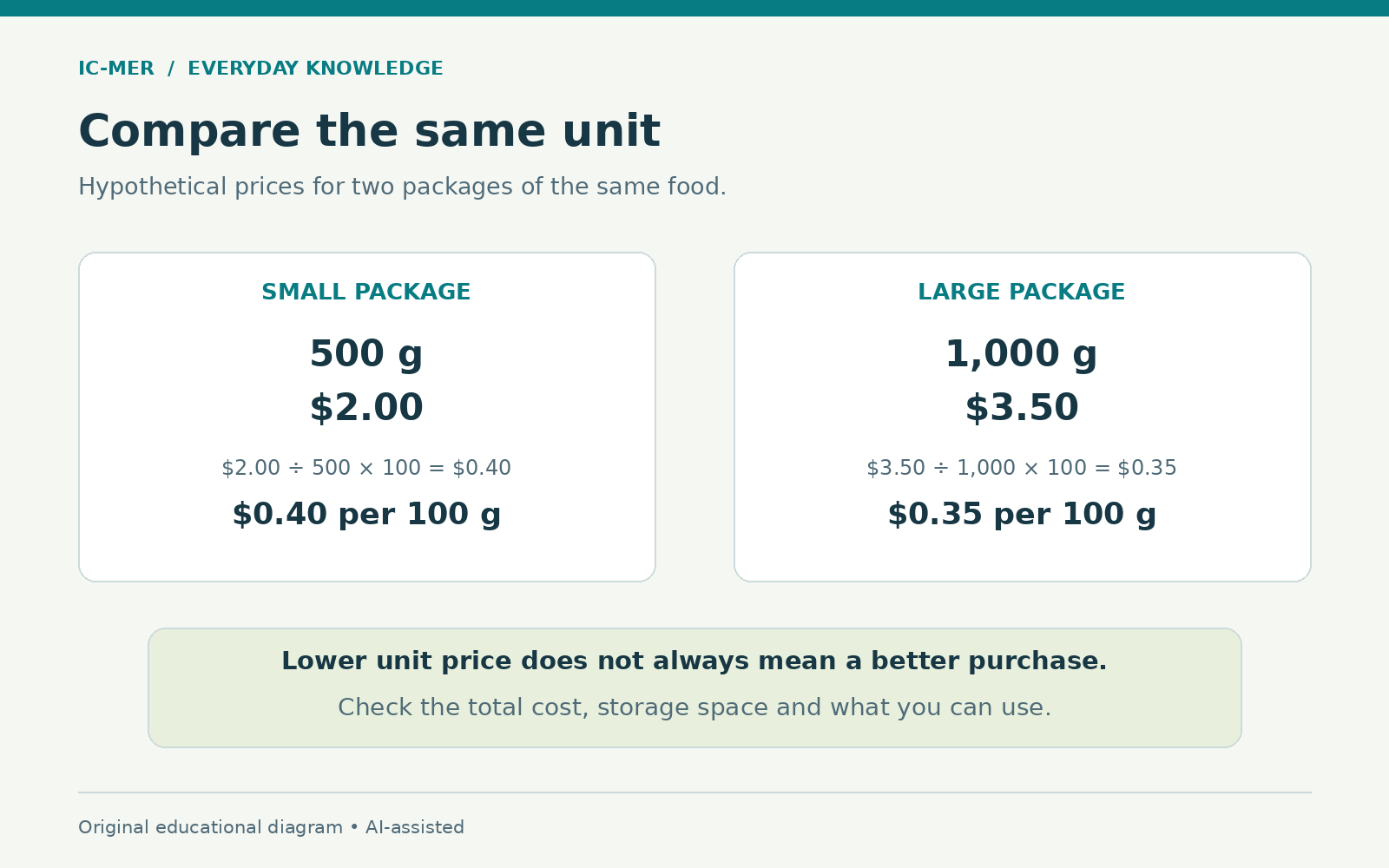
A heart-supporting eating pattern generally emphasizes vegetables, fruit, whole grains, legumes, and other suitable protein foods while limiting sodium, saturated fat, and added sugars. The practical question is often not which food is ideal, but which regular decision you can change without making meals unaffordable or unfamiliar.
Choose one repeated occasion: breakfast before work, lunch away from home, or the evening when cooking feels impossible. Plan an option you actually like. Examples include plain oats with fruit, a bean-and-vegetable meal, or a convenient lower-sodium choice compared with your usual purchase. These are flexible examples, not a prescribed menu.
Write the ingredients on the shopping list and decide where they will fit in the week. Keep a backup for a late shift or an empty refrigerator. If you share meals, agree on one change together rather than creating a separate “health meal” that doubles the work. People with kidney disease, allergies, or other dietary restrictions need advice suited to those conditions.
Sources: [4]
Give movement a place in the calendar
Regular physical activity supports heart health, and some activity is better than none. General adult guidance includes at least 150 minutes of moderate-intensity aerobic activity a week, with additional benefits at higher amounts within recommended ranges. That is a longer-term reference point, not a demand that an inactive person reach it immediately.
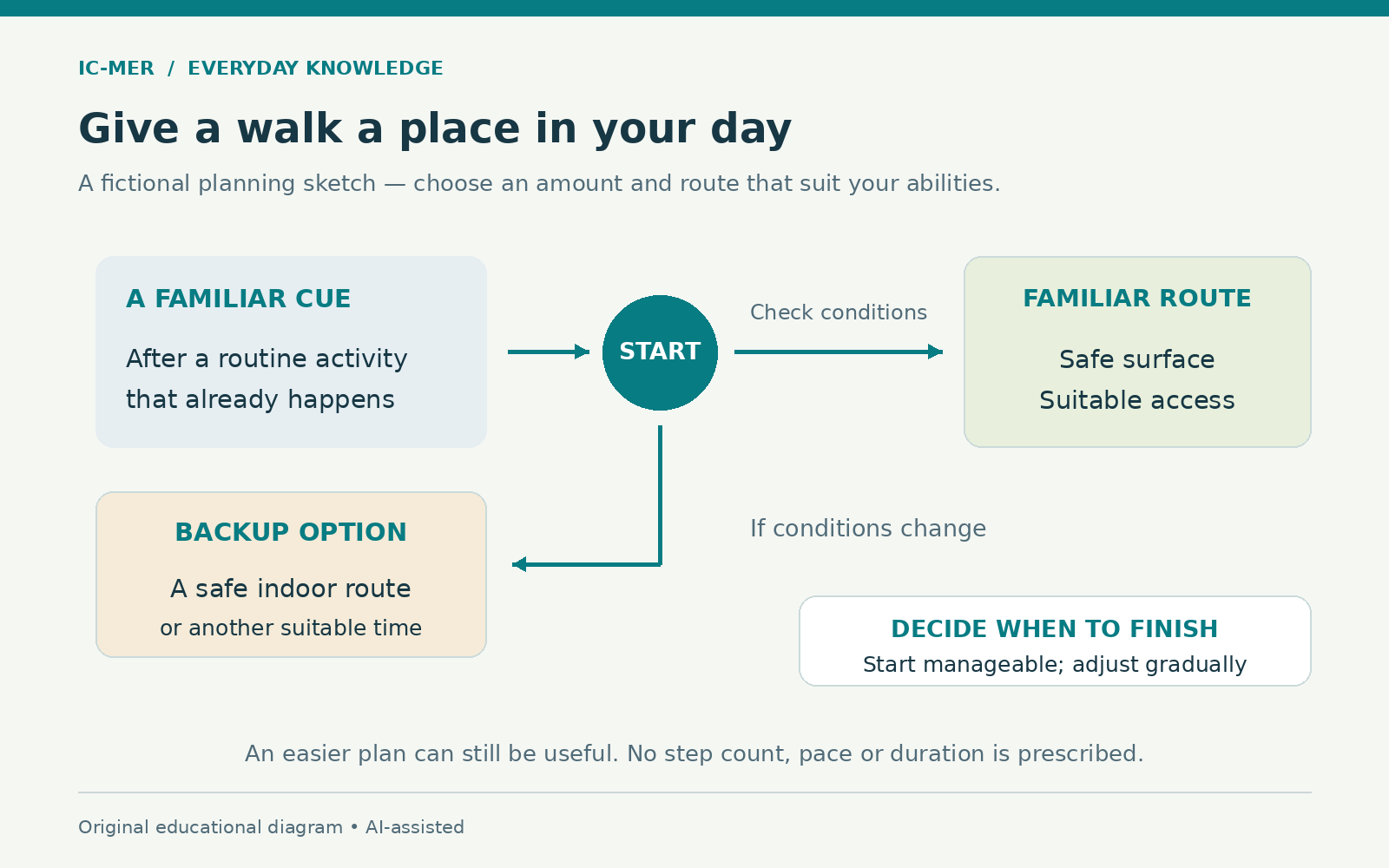
Choose a starting amount suited to your ability and circumstances, and build gradually. A short walk or an accessible indoor activity can occupy a real calendar space, such as after lunch. Ask a healthcare professional what activity is appropriate if you have heart disease, symptoms, significant limitations, or questions about starting a new plan.
Prepare a backup that solves the most likely obstacle. A rainy-day route, a different time after a late meeting, or an activity that can be done at home makes the plan less dependent on perfect conditions. A missed session does not require a punishing replacement workout. Resume at a manageable level, and seek care for concerning symptoms rather than pushing through them.
Sources: [5]
Protect the time that makes other habits possible
Sleep belongs in a heart-health plan. NHLBI describes seven to nine hours as the general adult range and links ongoing sleep deficiency with increased risk of several chronic conditions, including cardiovascular problems. Sleep needs and difficulties vary, so a number alone is not a complete assessment.
Look at the schedule around bedtime before adding another obligation. Would preparing tomorrow’s lunch earlier remove a late-night task? Could household members agree on a quieter period? Can an evening reminder mark the start of winding down rather than only the time to get into bed?
Persistent sleep problems deserve a healthcare conversation, especially when they affect daytime functioning. Keep a short description of what happens and when, rather than trying to diagnose yourself from a tracker. The same practical approach applies to stress: identify a burden and a possible source of help. A plan that depends on unlimited time, predictable work, or effortless caregiving needs revision to fit real life.
Sources: [7]
Make prescribed treatment easier to follow
When a clinician recommends treatment for blood pressure, cholesterol, or another condition, lifestyle changes should be coordinated with that treatment. Better habits do not automatically mean that a medicine is no longer needed. Discuss side effects, cost, swallowing difficulties, confusing directions, or missed doses openly rather than quietly abandoning the plan.
Bring practical questions to the pharmacist or prescriber: What is each medicine for? What should I do if I miss a dose? Which other products should I check before taking? Is there an affordable option? Ask for directions you can understand and keep with the medication list.
Daily aspirin is a particular example of why prevention advice needs individual context. Do not start it on your own to protect your heart. It can cause bleeding, and the USPSTF recommends against starting aspirin for primary cardiovascular prevention in adults 60 or older. Decisions for some younger adults also require individual assessment. This guidance about preventing a first event is not permission to stop aspirin prescribed after a heart attack or stroke; discuss changes with your clinician.
Use a two-part weekly plan
One simple planning option is to pair a household action with a healthcare action. For example: “I will prepare the ingredients for my chosen weekday lunch, and I will clarify the follow-up date for my blood-pressure review.” Another person might choose: “I will reserve a short activity period after lunch, and I will ask about support for stopping smoking.” These are planning examples, not ranked medical prescriptions.
For each action, name the cue, the practical preparation, and the fallback. The lunch cue might be packing a work bag; preparation might be putting a container beside it; the fallback might be a familiar convenient meal already on the shopping list. The appointment action might begin with placing the office number beside the calendar.
Keep the plan visible without turning it into a constant demand. A note on the refrigerator, a calendar entry, or a conversation with someone you trust can be enough. Choose a method that you will actually look at.
Sources: [1]
Plan for the difficult week, not only the ideal one
Before expanding your plan, imagine an ordinary disruption: overtime, a caregiving problem, a tight grocery budget, or several days of poor weather. Which part of the plan would disappear first? Make a smaller version for that situation. The fallback should be easy to recognize, such as using a meal already on your list or moving a planned activity to an available indoor space.
It can also help to separate tasks you control from tasks that need someone else. You can write down a medication-cost concern, but a pharmacist or prescriber may need to help resolve it. You can identify an inconvenient appointment time, but the clinic must tell you what alternatives exist. Asking for that practical help is part of carrying out the plan.
If another person is supporting you, agree on what is welcome. A shared shopping trip may help; repeated comments about your plate may not. Choose assistance that leaves you involved in decisions and makes the next action easier.
Sources: [1]
Review what happened without grading yourself
At the end of the week, ask three practical questions: What happened as planned? What got in the way? What should be easier next time? If an activity slot repeatedly disappears, try another time or a smaller starting commitment. If food is wasted, simplify the shopping list. If an appointment is difficult to arrange, ask the office what options are available.
Track actions you can observe, such as preparing a meal or attending a visit, rather than expecting to feel an immediate change in cardiovascular risk. Blood pressure, cholesterol, and other clinical measures need appropriate interpretation and follow-up. A few good days do not prove that a medical issue has resolved, and a disappointing result does not erase the value of your effort.
Also review what the plan costs in money, time, and attention. An approach that repeatedly displaces needed rest or creates financial strain is worth changing. The goal is a routine you can continue, with support where needed, rather than an impressive checklist that lasts a weekend.
Sources: [3]
Bring a focused question to the next visit
You can finish your planning note with three lines: the change you tried, the main obstacle, and the question you need answered. For example: “I have started a short activity routine. I am unsure how to increase it with my condition. What is an appropriate next step?” Or: “I understand why this medicine was prescribed, but the cost is getting in the way. Can we review options?”
If you already have heart disease, ask how your everyday plan fits the specific care you have been given. If you do not, ask which preventive checks and follow-up make sense for your age and history. Neither group needs to wait for a perfect lifestyle before seeking care.
Small changes add up when they are connected: a manageable routine, reliable access to prescribed care, and a clear way to review progress. Choose one action to make easier today and one question to resolve with the right professional. Build the next step from what you learn about your own life.
Sources: [2]
Sources & further reading
- NHLBI: What Is Heart-Healthy Living?Checked 2026-10-24
- NHLBI: Understand Your Risk for Heart DiseaseChecked 2026-10-24
- NHLBI: Get Your Blood Pressure and Cholesterol CheckedChecked 2026-10-24
- NHLBI: Choose Heart-Healthy FoodsChecked 2026-10-24
- NHLBI: Get Regular Physical ActivityChecked 2026-10-24
- NHLBI: Quit SmokingChecked 2026-10-24
- NHLBI: Get Enough Good-Quality SleepChecked 2026-10-24
- NHLBI: Heart Attack SymptomsChecked 2026-10-24
- USPSTF: Aspirin Use to Prevent Cardiovascular DiseaseChecked 2026-10-24
- NHLBI: High Blood Pressure—SymptomsChecked 2026-10-24
- NHLBI: Blood Cholesterol—SymptomsChecked 2026-10-24
About this article
Prepared with AI assistance and an AI fact-checking pass against the sources listed above. No human clinical review is claimed. Evidence may change; consult appropriate qualified professionals for decisions about your circumstances.
Spotted a problem? Suggest a correction.