Environment · 4 min read
Flood cleanup: planning for common household hazards
A room that looks ready to clean may still contain electrical, structural or contamination hazards. Start with a safe-entry plan.

AI-assisted general safety education, not an assessment of your home or personal medical advice. Follow local emergency instructions and qualified building, electrical and cleanup professionals. Call emergency services for immediate danger.
Information may contain errors, omissions or outdated guidance. This article is general education, not individual medical or other professional advice. Verify important information before acting and consult an appropriately qualified professional. Never disregard medical advice, delay care or change treatment because of this article. See our accuracy disclaimer and terms.
Safe entry comes before saving possessions
After a flood, the urge to start carrying things out is understandable. First decide whether entering is safe. Follow local return instructions. CDC advises that a damaged home be examined for safety before reentry. Structural damage, electricity and a suspected gas leak are reasons to stop and obtain qualified help, not begin a quick inspection alone.
Never operate electrical switches or equipment while standing in water. If reaching the main switch would require entering standing water, call an electrician; have the electrical system checked before power is restored. If you smell gas or suspect a leak, leave immediately, avoid switches or anything that could spark, and contact emergency services or the gas utility from a safe location.
Keep a written list of who has assessed the building and utilities and what remains unsafe. Permission to enter the neighborhood is not a room-by-room electrical or structural assessment of your house.
For example, a household could divide its first-day list into three groups: calls that establish safety, belongings that can wait, and arrangements for somewhere else to stay. Assign one adult to keep the contact list current. This is an organizing suggestion, not permission to enter or a substitute for an inspection. If nobody can establish that a task is safe, leave it on the waiting list.
Sources: [1]
Keep exhaust outside and away
Fuel-powered generators, pumps and pressure washers produce carbon monoxide. EPA says generators belong outdoors, at least 20 feet from buildings. CDC also warns against operating gasoline equipment near doors, windows or vents or inside garages, porches and other partly enclosed spaces. An open garage door does not make that location safe.
Choose the equipment location before starting work, and consider nearby homes as well as your own. Follow manufacturer and emergency guidance. If an alarm sounds or anyone may have carbon-monoxide symptoms, leave for fresh air and call emergency services; do not keep working to finish a task.
Treat floodwater as contaminated
CDC warns that floodwater can contain sewage, hazardous chemicals, sharp debris and displaced animals. Avoid contact, and never drive through flooded roads. Children should not play in floodwater or handle contaminated toys. Do not rely on the water’s color or smell to establish safety.
If skin contacts floodwater, wash with soap and clean water. Keep open wounds away from it. Seek prompt medical care for a contaminated puncture wound or signs of infection, such as worsening redness, swelling, drainage or fever. A clinician can assess whether tetanus protection needs updating.
Set up a clean area away from the work zone for drinking water, breaks and spare clothing. Follow local drinking-water notices. Do not bring muddy gloves, equipment or cleanup clothing into the space where family members eat or rest.
Sources: [4]
Match the work to the person and equipment
EPA advises that children and pregnant people should not participate in flood cleanup; people with asthma or weakened immune systems should avoid moldy sites and should not participate in flood cleanup. Ask a healthcare professional about individual limitations. Heavy work, heat and contaminated materials can make a familiar household task very different after flooding.
Cleanup protection can include gloves, boots, goggles, long clothing and a properly fitting N95 respirator. These do not make every hazard manageable. Qualified help may be needed for electrical damage, sewage contamination, extensive mold, unsafe structures or materials that may contain asbestos or lead.
CDC recommends pacing work, taking breaks and getting assistance with heavy objects. Agree on a stopping point before exhaustion develops. A short, controlled work period with another adult is a better plan than continuing alone simply because daylight remains.
Dry promptly without hiding the damage
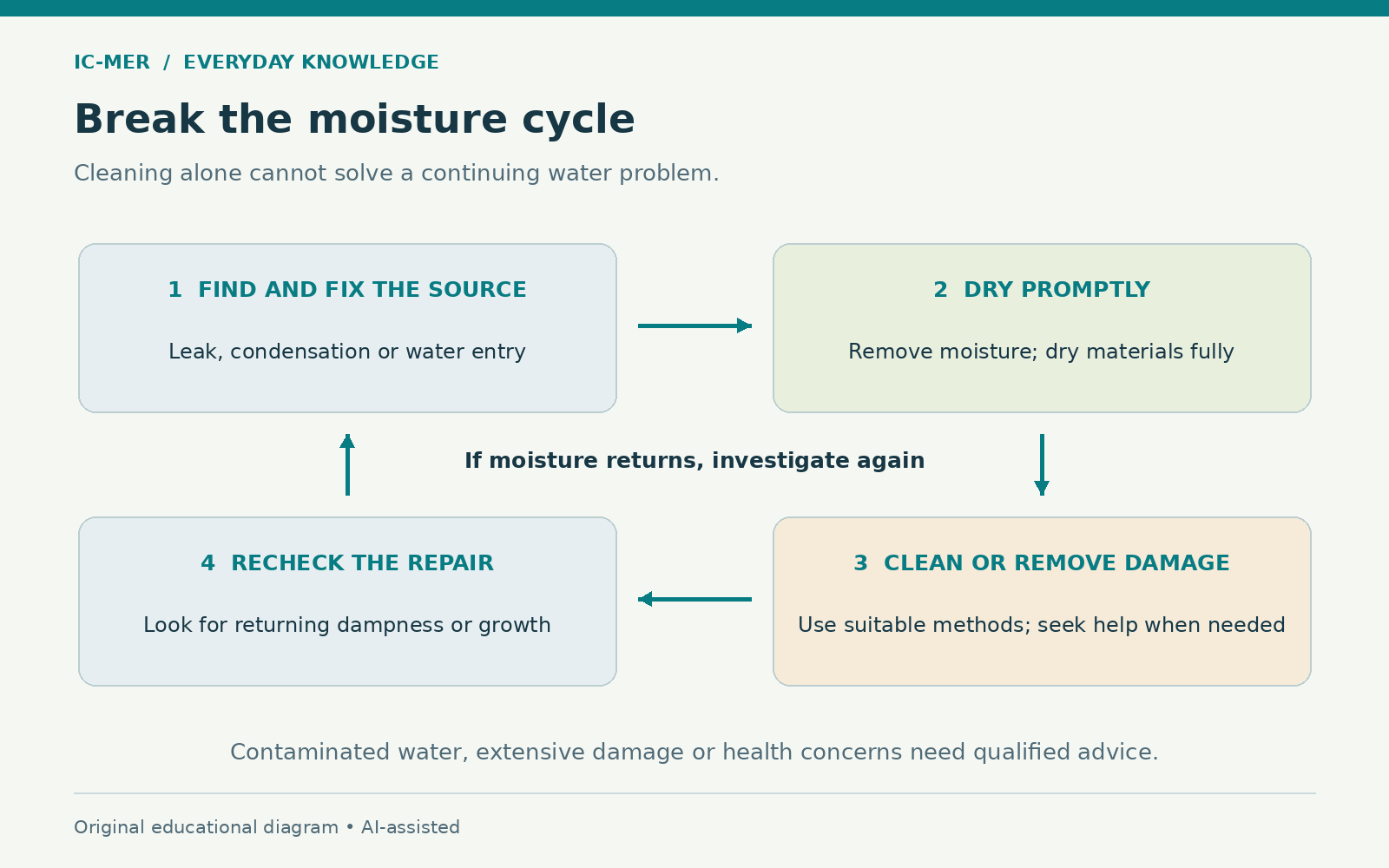
CDC recommends cleaning and drying promptly, within 24–48 hours if possible, to reduce mold growth. This does not override electrical or structural precautions. Some porous items cannot be adequately cleaned and dried; flooded drywall and insulation may need removal. Do not cover damp materials with new finishes.
Use cleaning products only as directed, and never mix them or add bleach to other chemicals. Have a flood-affected heating and cooling system assessed before operating it. Experienced restoration professionals can help determine what to remove, how to dry the building and whether conditions are suitable for repair.
Organize the next steps in a simple log: unsafe area, person to contact, action completed and unresolved question. Photograph damage only from a safe position and keep contractor documents together. The goal is a home that has been assessed, cleaned and dried appropriately—not merely a room that looks normal again.
Sources & further reading
- CDC: Safety Guidelines for Reentering Your Flooded HomeChecked 2026-10-24
- CDC: Guidelines for Cleaning Safely After a DisasterChecked 2026-10-24
- EPA: Flood Cleanup to Protect Indoor Air and Your HealthChecked 2026-10-24
- CDC: Safety Guidelines for FloodwaterChecked 2026-10-24
About this article
Prepared with AI assistance and an AI fact-checking pass against the sources listed above. No human clinical review is claimed. Evidence may change; consult appropriate qualified professionals for decisions about your circumstances.
Spotted a problem? Suggest a correction.