Business · 7 min read
Getting paid on time: clear invoices and payment expectations
A clear invoice starts with a clear agreement. Build a payment routine that customers can understand and your business can follow.
Prepared by the IC-MER Editorial Team with AI assistance. This is general business education, not individualized legal, tax or accounting advice. Examples are fictional; payment, collection and fee rules depend on the agreement and applicable law.
Information may contain errors, omissions or outdated guidance. This article is general education, not individual medical or other professional advice. Verify important information before acting and consult an appropriately qualified professional. Never disregard medical advice, delay care or change treatment because of this article. See our accuracy disclaimer and terms.
Make payment part of the job from the beginning
Finishing good work and receiving payment are different events. A small business can complete a project while the invoice sits with the wrong person, lacks a purchase-order number or contains a charge the customer never expected. A practical payment routine makes those problems easier to identify. It cannot guarantee that every customer pays on time.
Before accepting a job, discuss what the price covers, what will trigger an invoice and when payment is expected. Identify the customer or organization responsible for paying. Ask whether approval comes from the person ordering the work or a separate accounts-payable team. Write down the agreed arrangements in an appropriate agreement rather than trying to introduce important conditions on the final bill.
The workflow below is an editorial planning suggestion, not a universal invoice template or a statement of legal requirements. Adapt it to your service, customers and professional advice. A household customer booking one repair may need a different process from a company purchasing a recurring service.
Agree on amounts, stages and changes
Choose a pricing description that both sides can use. For a fixed-price job, describe the included work and any exclusions. For hourly work, discuss the rate, how time will be recorded and whether there is an approval point before costs exceed an estimate. For repeat services, specify the billing period and what happens when the scope changes.
If a deposit or milestone payment is appropriate, discuss its amount, purpose and timing before work begins. Do not assume a deposit is automatically nonrefundable. Rules can vary by transaction and jurisdiction, and your agreement needs to reflect any applicable protections. Ask a qualified adviser about unfamiliar arrangements rather than borrowing another company's wording.
When the customer requests additional work, pause long enough to confirm the change and its price or pricing method. Keep the original approval and the later change together. A friendly conversation can begin the discussion, but a retrievable record helps everyone remember which version was accepted.
Build an invoice someone can check
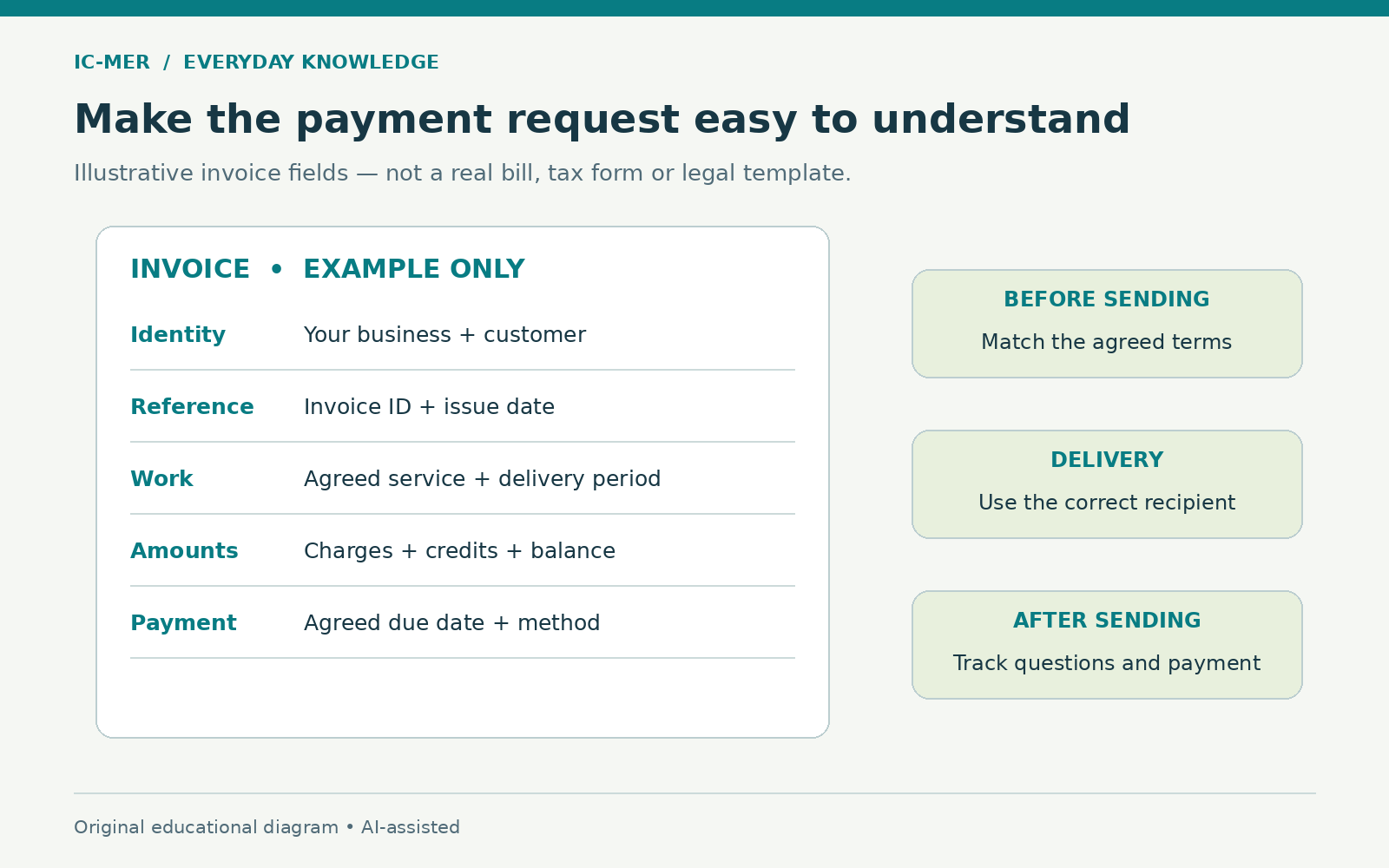
A useful invoice lets the recipient answer basic questions without a telephone investigation: Who supplied the work? Which job or billing period does it cover? What is being charged? What has already been paid? What remains due? Give the document a unique reference and include the correct customer details, invoice date and agreed due date.
Use descriptions the customer will recognize. “Repair labor, agreed service visit” with the relevant date is more useful than an unexplained “miscellaneous.” Separate approved expenses, credits and prior payments. Show taxes or other charges only as appropriate to the transaction; ask your accountant about uncertain treatment. Check names, arithmetic and attachments before sending.
Consider a fictional design job with an agreed price of $900 and an approved extra task costing $150. The combined charge is $1,050. If the customer already paid a $300 deposit, the remaining amount is $750, before any applicable taxes or other agreed adjustments. Showing both the total and the prior payment makes the calculation visible. This illustration does not determine when income is recognized for tax purposes.
Send it where payment can actually be processed
Ask for the correct billing address or portal instructions early. A project manager may love your work yet have no authority to release payment. Find out whether the customer needs a purchase-order reference, service confirmation or another supporting document. Resolve those practical requirements before the due date approaches.
Send the invoice according to the agreed process and retain a copy of what was sent. If an upload portal provides a receipt or tracking reference, keep it with the invoice. For a new customer, a short confirmation that the bill arrived can reveal a routing problem while there is still time to address it.
Make payment instructions clear without demanding unsafe shortcuts. Explain the accepted methods and any properly disclosed, lawful charges. Do not ask customers to email full card credentials or send passwords. A simple process should still allow them to verify who they are paying.
Track outstanding bills separately from available cash
Keep a working list of invoices showing the reference, customer, amount outstanding, due date, delivery status and latest follow-up. A spreadsheet can be enough for a small workload if it is maintained carefully. Accounting software may help with larger volumes, but automated reminders still need someone to notice disputes, credits and payments already received.
The SBA identifies accounts receivable, available cash and bank reconciliation among the financial functions a business needs to manage. Treat expected receipts as uncertain until payment is actually received and appropriately confirmed. When planning the next few weeks, ask what happens if a significant customer pays later than expected rather than assuming the most optimistic arrival date.
Set aside a regular time to compare the invoice list with payment records. Mark partial payments clearly and investigate unmatched deposits. Choose a review frequency that fits your business; this is an operating choice, not an official required schedule. If the records become difficult to reconcile, seek bookkeeping or accounting help.
Sources: [1]
Follow up calmly and distinguish delay from dispute
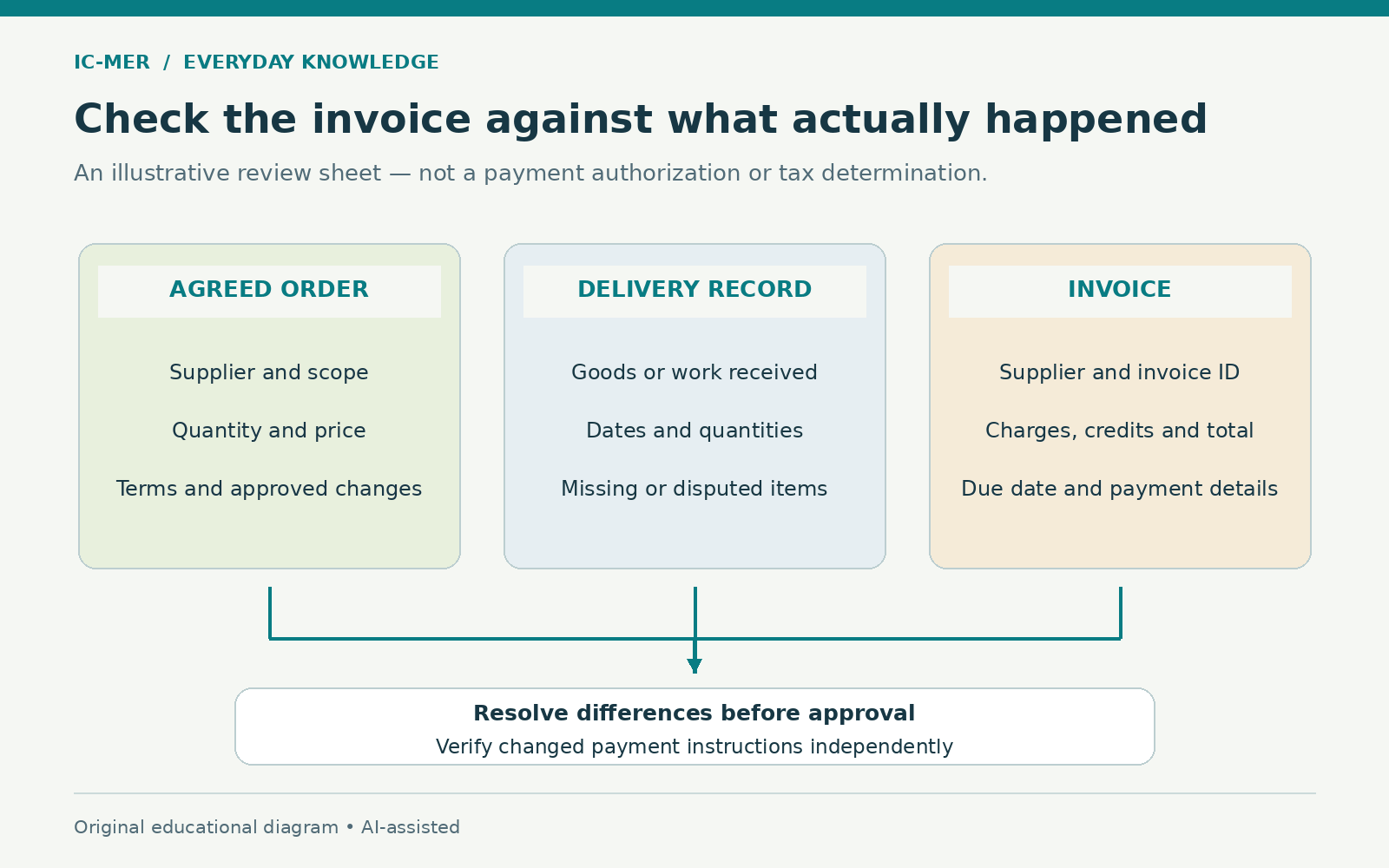
A useful reminder identifies the invoice, remaining balance and agreed due date, then asks whether anything is preventing processing. Keep the tone factual. Before sending it, check that payment has not arrived under a different reference and that a colleague has not already agreed to a correction.
If the customer disputes the work or amount, record the specific concern and compare it with the agreement and delivery evidence. Correct a genuine billing mistake promptly and preserve the relationship between the old invoice and its replacement or credit. Do not silently change records so that nobody can reconstruct what happened.
If the issue is an inability to pay, any proposed payment arrangement deserves clear documentation and appropriate advice. Do not invent late fees, threaten legal powers you do not have or assume you can stop all services immediately. Collection, suspension, interest and dispute procedures depend on the contract and applicable law. Obtain professional help before escalating a material dispute.
Protect the payment route from fraud
The FBI warns that criminals can imitate suppliers and interfere with billing conversations. Explain to customers how they should independently verify any change to your payment instructions. Internally, require a known, trusted verification route for a changed bank account; a familiar logo or convincing email thread is not sufficient authentication.
The FTC also warns about fake-check overpayments. A supposed customer may send more than the agreed amount and demand that you forward the excess. Money appearing available in a bank account does not establish that a check is genuine. Do not send money onward because someone is pressing you to refund an unexpected excess; contact your bank about the suspicious payment.
If a fraudulent transfer occurs, the FBI advises contacting the financial institution immediately and reporting the incident to IC3. Prompt reporting does not guarantee recovery. Keep the relevant messages and transaction details, and use independently verified contact information when seeking help.
Close the loop and improve the next invoice
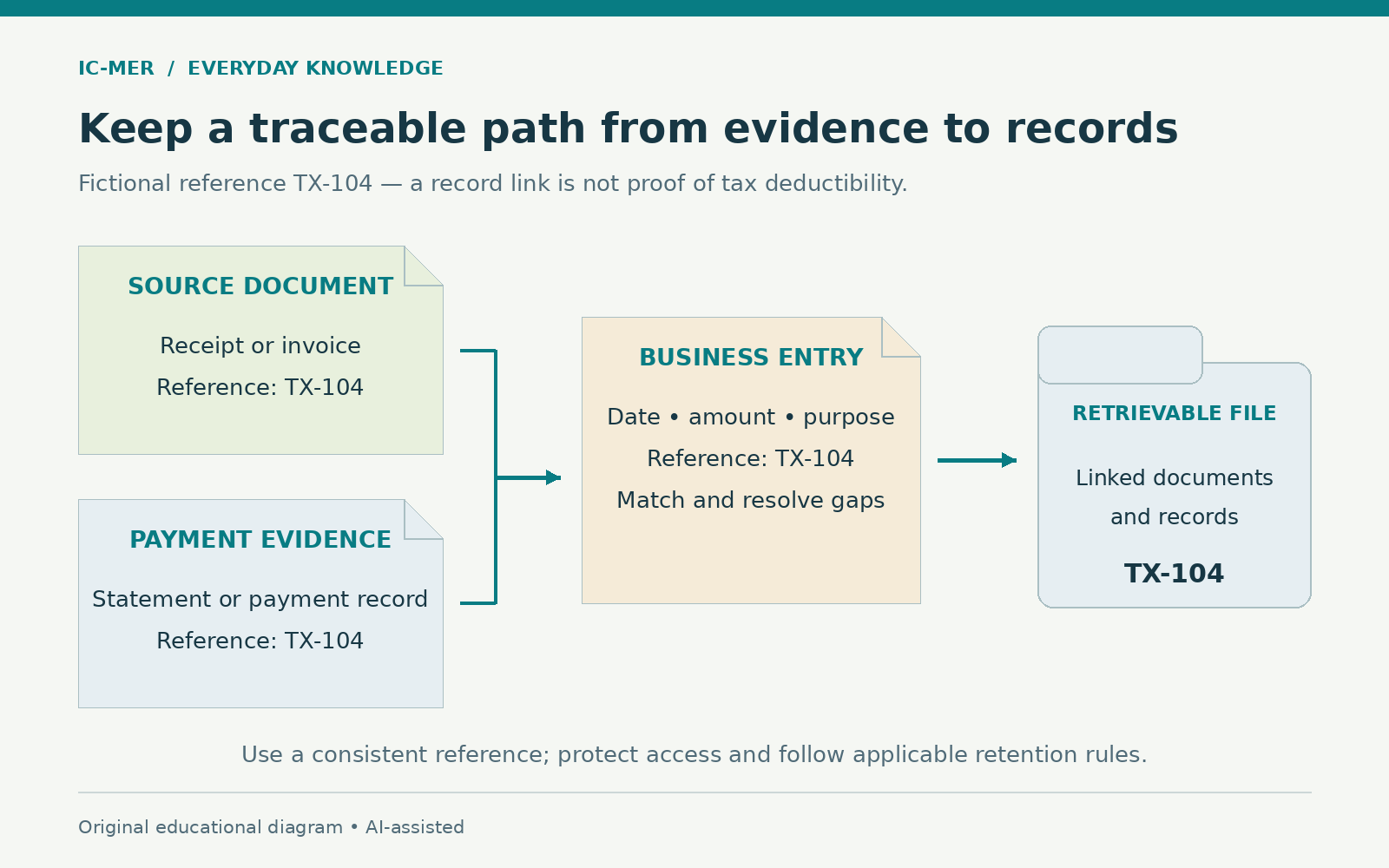
Once payment has been reconciled, update the outstanding balance and provide an appropriate receipt or confirmation. Keep the invoice, relevant approval, adjustments and payment evidence together. The IRS identifies invoices, receipts and deposit information among supporting business records and recommends orderly, secure storage. An invoice alone is not a complete substitute for the rest of the transaction record.
Review recurring causes of delay. If invoices repeatedly need a missing job number, add that question to your intake process. If clients cannot understand a line item, improve its description. If a customer consistently needs a different billing contact, update the record rather than repeatedly sending to the old address.
For a manageable first step, choose one recent unpaid invoice and trace it from agreement to delivery to billing. Identify the next concrete action: correct the recipient, supply an approved document, resolve a disputed amount or confirm a payment. A repeatable routine provides better information for decisions, even when it cannot control a customer's behavior.
Sources: [2]
Sources & further reading
- SBA: Manage your business — financesChecked 2026-10-24
- IRS: What kind of records should I keep?Checked 2026-10-24
- FBI: Business Email CompromiseChecked 2026-10-24
- FTC: How To Spot, Avoid, and Report Fake Check ScamsChecked 2026-10-24
About this article
Prepared with AI assistance and an AI fact-checking pass against the sources listed above. No human clinical review is claimed. Evidence may change; consult appropriate qualified professionals for decisions about your circumstances.
Spotted a problem? Suggest a correction.