Medicine · 7 min read
Keeping bones strong as you age
Bone health is about keeping everyday life possible. Learn how nutrition, movement, safer surroundings, and appropriate care work together as you age.
Prepared with AI assistance by the IC-MER Editorial Team for general education. This article is not individualized medical advice or human clinical review. Discuss bone-density testing, safe exercise, supplements, and treatment with your healthcare professional; seek prompt care for a suspected fracture.
Information may contain errors, omissions or outdated guidance. This article is general education, not individual medical or other professional advice. Verify important information before acting and consult an appropriately qualified professional. Never disregard medical advice, delay care or change treatment because of this article. See our accuracy disclaimer and terms.
Think beyond a calcium tablet
Keeping bones healthy supports ordinary freedoms: getting out to see friends, carrying groceries, and moving around your home with confidence. Food matters, but bone health also involves muscle strength, balance, fall prevention, and recognizing when medical assessment is needed. No single product covers all of those needs.
Osteoporosis weakens bones and increases the chance of fractures. It often causes no symptoms until a bone breaks, so feeling well does not establish that your bones are strong. Both women and men can develop it. Aging, hormonal changes, family history, some illnesses, and certain medicines can contribute to risk.
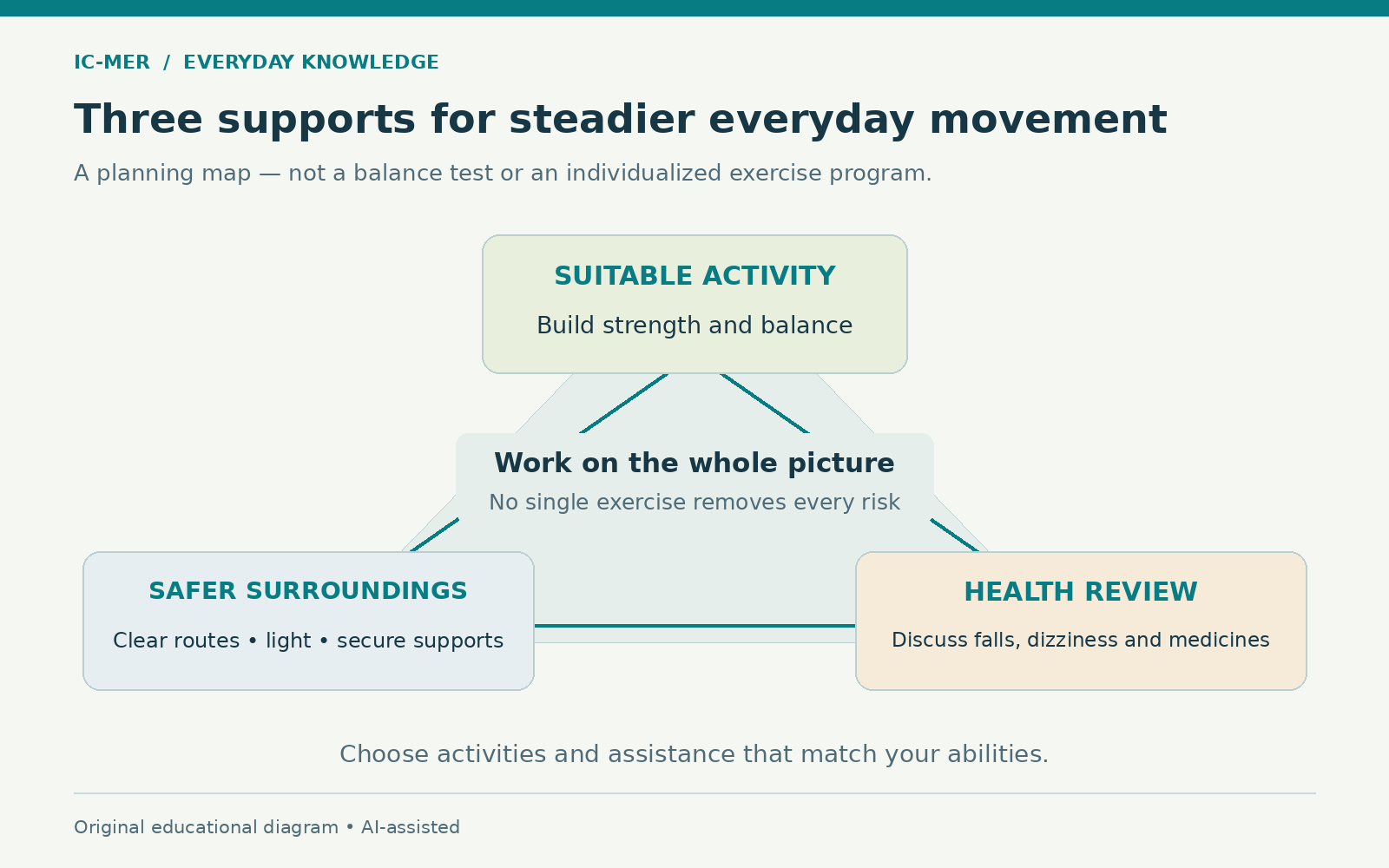
A useful plan has several parts that can fit your circumstances. Review what you eat, choose activity appropriate for you, make everyday surroundings safer, and ask whether your history calls for testing or treatment. These steps support one another; none is a guarantee against a fracture.
Sources: [1]
Make calcium a food-planning question
The U.S. recommended daily calcium intake is 1,000 milligrams for adults ages 19–50 and for men ages 51–70. It is 1,200 milligrams for women ages 51–70 and all adults 71 or older. These amounts include food, drinks, and supplements together; they are not automatic supplement doses.
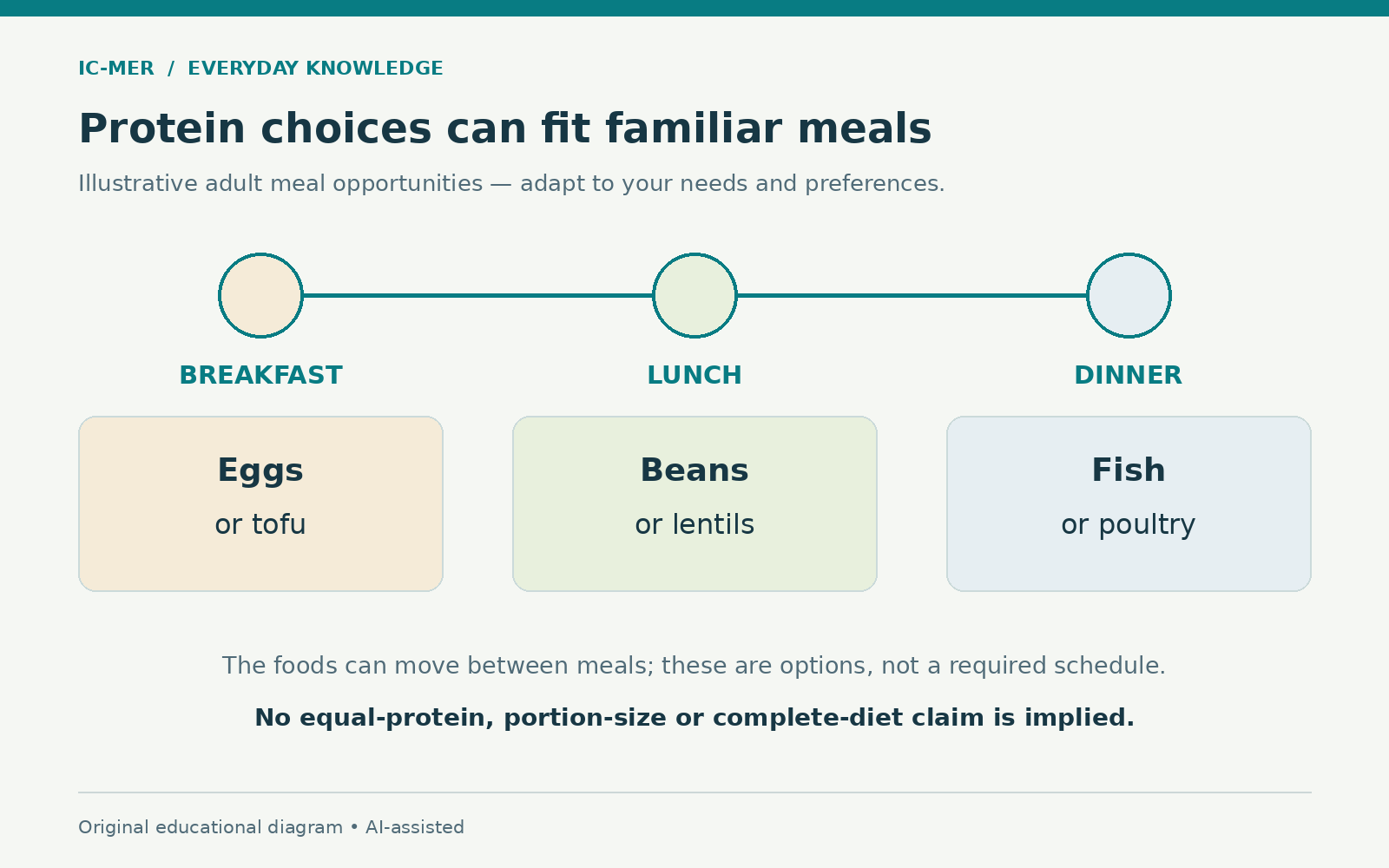
Calcium sources include milk and yogurt, fortified plant beverages, some calcium-set tofu, canned fish with edible bones, and certain vegetables. Check labels because similar-looking products can contain different amounts. A plant beverage is not necessarily fortified, and the amount of calcium in tofu varies by product.
Consider the meals you already enjoy. Is there a calcium-containing food that could regularly accompany breakfast or lunch? Keep a few days of food notes if you are unsure. A dietitian or clinician can help identify gaps, especially with food allergies, a restricted diet, digestive conditions, or difficulty eating enough. You do not need to redesign every meal before asking for help.
Sources: [4]
Understand vitamin D without chasing large doses
Vitamin D helps the body absorb calcium. U.S. recommended intake is 600 international units, or 15 micrograms, a day for adults through age 70, and 800 international units, or 20 micrograms, for adults 71 and older. Food sources include fatty fish and fortified products; check the label for the amount.
Supplements may be appropriate when intake or clinical circumstances warrant them, but more is not always better. Excess vitamin D can be harmful. A supplement plan should account for everything you already take, including combination products. Ask whether testing or a supplement is appropriate for your situation rather than assuming everyone needs a blood test or a high-dose product.
Sun exposure is not a precise vitamin D prescription. Production varies, and ultraviolet exposure can harm skin. Do not abandon sun protection to try to treat a suspected deficiency. Bring that concern to a healthcare professional instead.
Sources: [5]
Combine movement that serves different purposes
Weight-bearing activity, resistance exercise, and balance practice have different roles. Weight-bearing activities such as walking involve supporting your body against gravity. Resistance exercise makes muscles work against a load, which can come from weights, bands, or body weight. Balance training helps improve steadiness and reduce falls.
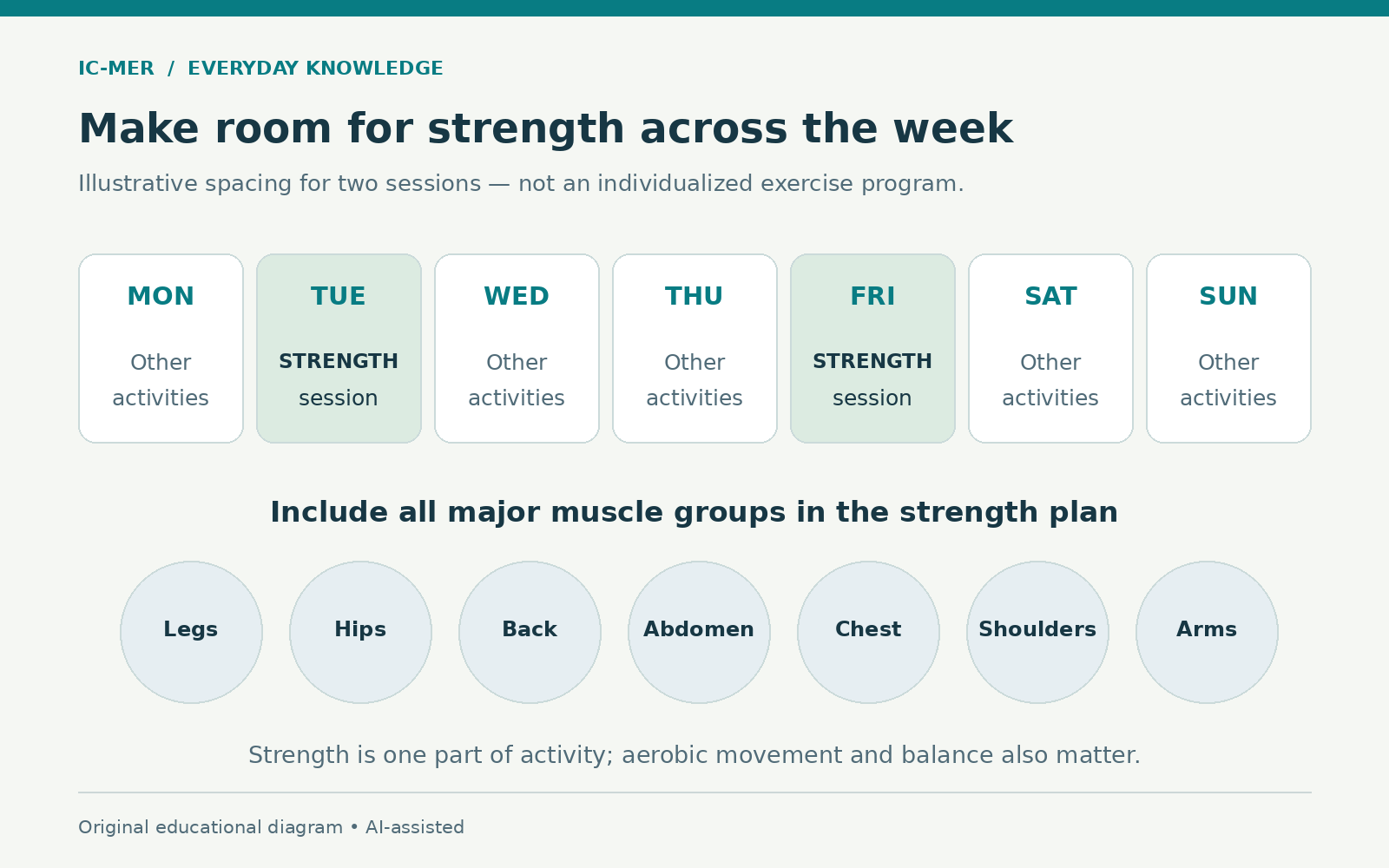
Choose an appropriate mix rather than assuming one activity meets every need. General guidance includes muscle-strengthening activity at least twice weekly, alongside aerobic activity; older adults also benefit from balance work. Starting amounts and movements should match your health and ability.
If you have osteoporosis, low bone density, a previous fracture, or significant physical limitations, get advice before beginning a new exercise program. A clinician or physical therapist can help adapt activities and identify movements that need modification. A video designed for a healthy athlete is not necessarily appropriate for someone with fragile bones. Progress should be planned, not measured by how much discomfort you can tolerate.
Sources: [3]
Walk through your home with a specific task in mind
Try following a familiar route, such as the path from your bed to the bathroom, and notice what makes it awkward. Look for poor lighting, clutter, loose rugs, and cords across walking spaces. Keep essential items within convenient reach, and consider appropriate rails or grab bars where support is needed.
You can make this a practical household project: choose one route, write down the obstacles, and decide who can help fix them. If a change requires installation, use suitable equipment and competent help. A towel rail should not be treated as a purpose-built support.
Falls also involve personal factors. Tell your clinician about dizziness, changes in vision, balance problems, or a recent fall. Ask for a medication review if side effects may be contributing. Do not stop medicines yourself. The purpose of the review is to find a safer plan while preserving treatment you need.
Sources: [2]
Ask whether a bone-density test makes sense
In its January 2025 recommendation, the U.S. Preventive Services Task Force recommends osteoporosis screening for women 65 or older and for postmenopausal women younger than 65 who are at increased fracture risk after clinical assessment. Screening commonly uses a DXA scan, a low-dose X-ray measurement of bone mineral density.
For men, the USPSTF finds the evidence insufficient to recommend for or against routine screening. That is not a statement that men cannot have osteoporosis or should never be tested. Individual history and clinical judgment still matter.
These screening recommendations address adults without known osteoporosis or a history of fragility fractures and exclude certain secondary causes of osteoporosis. A prior low-trauma fracture or long-term use of medicines associated with bone loss may call for a different assessment. Bring the details to your clinician rather than deciding that you are too young, the wrong sex, or not yet due for routine screening.
Treat a fracture or new change as information worth sharing
A broken bone after a relatively minor fall should prompt a conversation about bone health, even when the immediate injury has been treated. Tell the clinician how the injury occurred and about earlier fractures. Also report unexplained loss of height, a new stooped posture, or significant new back pain; spinal fractures can be associated with these changes.
Do not assume that pain after an injury is simply an unavoidable part of getting older. Seek prompt medical assessment for a possible fracture. Severe pain, inability to use an injured limb or bear weight, or a serious fall needs urgent attention rather than an exercise experiment at home.
For a planned visit, write a short timeline: the fall or injury, the symptoms, what has changed in daily activity, and any treatment already received. Clear practical details help the conversation more than trying to assign yourself a diagnosis.
Build a routine around what is already familiar
To turn advice into an everyday plan, choose one meal and one household task to examine first. At breakfast, for example, you might check the labels of foods you already buy and note whether they supply calcium or vitamin D. This is an inventory, not a test you have to pass. Keep the information so a professional can help interpret any gaps.
For the household task, think about something you want to keep doing comfortably, such as getting to the mailbox or carrying a small shopping bag. Describe that goal when asking for exercise advice. It gives the conversation a concrete purpose beyond a number on a scan.
Set a time to review what was practical. If a food went unused, choose a different option. If a home change needs help, identify the person or service that can do it. A manageable plan can grow from a few well-chosen actions without turning bone health into a full-time project.
Keep the plan coordinated if treatment is recommended
If osteoporosis is diagnosed, food and activity may be part of care alongside medicine aimed at reducing fracture risk. Ask what the treatment is intended to do, how to take it, what side effects to report, and when follow-up is needed. Do not independently stop prescribed osteoporosis treatment or a medicine that might affect bone health.
Bring supplements into the same discussion. Calcium products can interact with some medicines, and your pharmacist can advise on timing and combinations. Taking several products labeled for bone health can duplicate ingredients. Keep the labels or photographs of them with your medication list so the total is easier to review.
A useful starting week could include checking one food label, clearing one walking route, and making one appointment or writing one question for an existing visit. Add an activity plan appropriate to your abilities. The aim is a coordinated routine that supports independence, with clinical help for the parts that cannot be solved through household habits alone.
Sources & further reading
- NIAMS: Osteoporosis—Overview, Symptoms, and CausesChecked 2026-10-24
- NIAMS: Osteoporosis—Diagnosis, Treatment, and Steps to TakeChecked 2026-10-24
- NIAMS: Exercise for Your Bone HealthChecked 2026-10-24
- NIH Office of Dietary Supplements: Calcium Fact Sheet for ConsumersChecked 2026-10-24
- NIH Office of Dietary Supplements: Vitamin D Fact Sheet for ConsumersChecked 2026-10-24
- USPSTF: Osteoporosis to Prevent Fractures—Screening, January 14, 2025Checked 2026-10-24
- MedlinePlus: Broken bone—symptoms and when to seek careChecked 2026-10-24
About this article
Prepared with AI assistance and an AI fact-checking pass against the sources listed above. No human clinical review is claimed. Evidence may change; consult appropriate qualified professionals for decisions about your circumstances.
Spotted a problem? Suggest a correction.