Medicine · 7 min read
Sustainable weight management beyond quick-fix diets
A workable plan should fit ordinary weeks, include support and make room for health goals beyond a number on the scale.

General adult health education, prepared with AI assistance; not a personal calorie prescription, diagnosis or human clinical review. Children, pregnancy, eating disorders and complex medical conditions need individualized professional guidance.
Information may contain errors, omissions or outdated guidance. This article is general education, not individual medical or other professional advice. Verify important information before acting and consult an appropriately qualified professional. Never disregard medical advice, delay care or change treatment because of this article. See our accuracy disclaimer and terms.
Choose a health goal before a deadline
A diet advertisement often starts with a deadline: lose a certain amount before a holiday, a reunion or the end of the month. A more useful starting question is what you want daily life to look like. Perhaps you want meals that feel less chaotic, enough stamina for ordinary errands or help managing a condition with your healthcare team.
Weight management is influenced by more than willpower. CDC identifies medicines, medical conditions, stress, genes, hormones, environment and age among relevant factors. A plan should therefore begin with your situation, including whether intentional weight loss is appropriate. This article concerns general adult habits; it is not a diet prescription for every reader.
Ask a clinician what outcomes matter for your health and how progress should be assessed. Bring up unexplained weight change, eating concerns or treatment questions. A number from a scale cannot by itself explain why a change occurred or determine the best next step.
Sources: [1]
Build meals you can keep making
CDC describes healthy eating as a varied pattern that includes vegetables, fruits, whole grains and appropriate protein foods, while limiting added sugars and excess sodium. Healthy options can include frozen and canned foods. A plan does not need expensive specialty products to be worth considering.
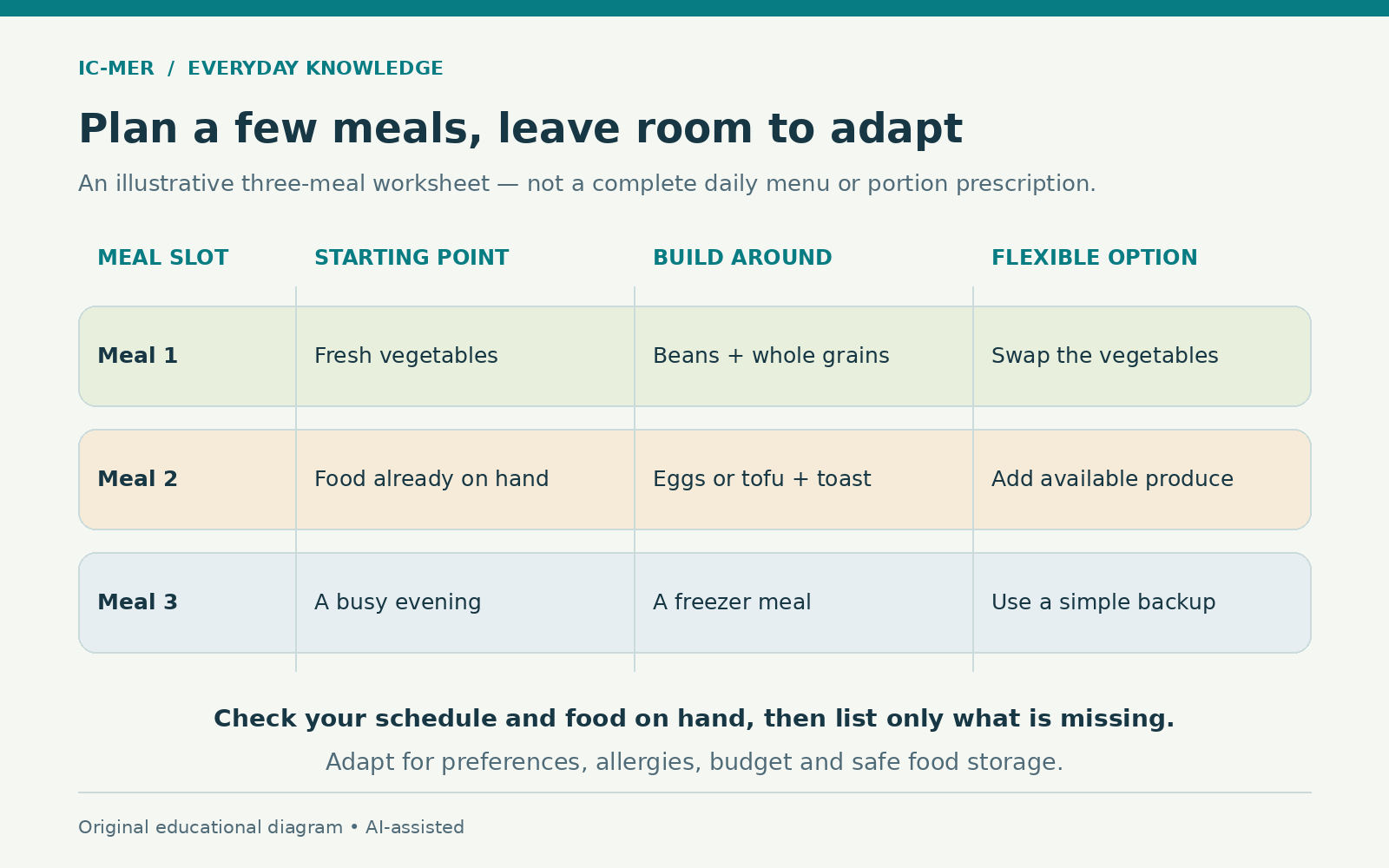
Translate that principle into a few meals you actually enjoy. An illustrative lunch might use beans, vegetables and a grain you already keep at home; another might combine leftover chicken with vegetables and bread. Adapt food choices to allergies, cultural preferences and any medical dietary advice. These examples are ideas for planning, not fixed portions or calorie targets.
Choose one recurring difficulty to address. If lunch is often improvised after a busy morning, prepare its main ingredients the evening before. If fresh produce regularly spoils, compare smaller purchases with suitable frozen options. The test is whether the arrangement works in your kitchen, with your budget and available time. A complicated menu that repeatedly goes unused needs revision, not more guilt.
Sources: [2]
Look at the whole day without judging it
CDC suggests briefly recording food, activity, sleep and relevant circumstances to identify opportunities for change. This can be a useful conversation aid, but detailed tracking is not compulsory. If recording food or weight becomes distressing or compulsive, discuss a different approach with a qualified professional.
An original planning exercise is to sketch an ordinary workday rather than an ideal weekend. Mark when you leave home, when a meal break is realistic, what food is available and when you tend to feel rushed. Then choose one practical change, such as carrying a simple lunch or arranging a reliable break.
Keep observations separate from criticism. “I had no prepared food after a late shift” describes a problem that can be planned for. “I have no discipline” does not identify what should change. If you notice that a proposed habit depends on equipment, money or time you do not have, make the plan smaller or seek support rather than pretending the barrier is absent.
Sources: [1]
Use movement for health as well as weight
Physical activity has benefits beyond weight change, including support for sleep, strength and everyday function. CDC’s general adult guidance includes at least 150 minutes of moderate aerobic activity each week and muscle-strengthening activity on at least two days. The appropriate starting point and type of activity depend on health and ability; these weekly targets are not a demand to do everything immediately.
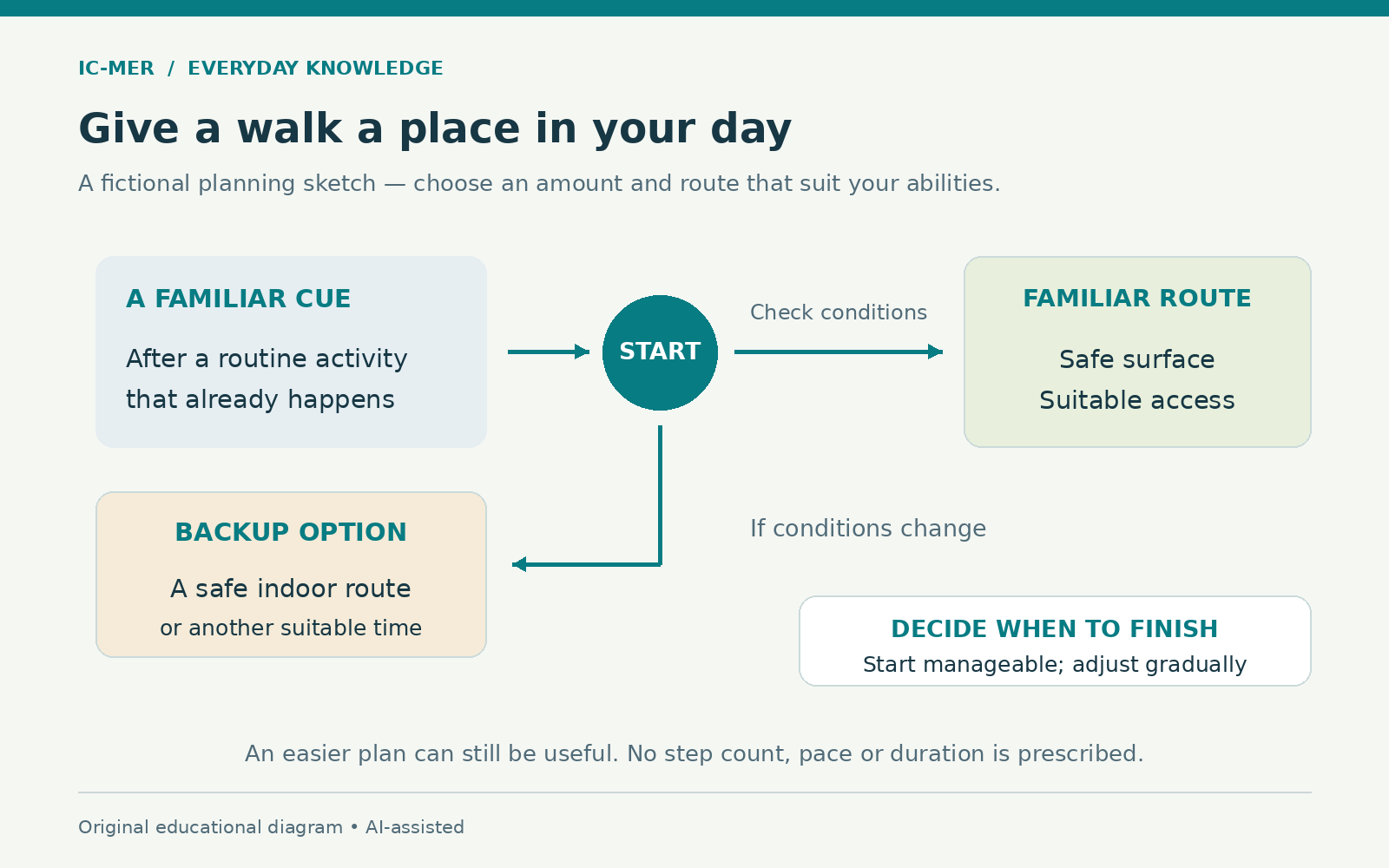
Choose a repeatable opportunity. A fictional office worker might start with a short walk during a break, while someone who dislikes walking might prefer another accessible activity. Check the route, footwear, weather and time needed. If a plan requires a long journey to a gym every day, compare it with an option that is easier to reach.
The amount of activity needed for weight maintenance varies between people. Avoid treating a watch’s calorie display as permission or punishment for eating. When pain, disability, recent illness or a chronic condition makes activity choices uncertain, ask for individualized guidance. The useful question is what you can do safely and consistently, not what produces the largest number on a screen.
Sources: [3]
Be skeptical of a plan that works only on perfect days
A sustainable routine needs an ordinary-day version and a disrupted-day version. Imagine that the planned dinner ingredients are unavailable, an appointment runs late or the weather prevents your usual activity. Write down a reasonable alternative in advance. This is a planning exercise, not a guaranteed method for losing weight.
For example, a fictional household could keep two simple backup meals on its shopping list and decide which evenings are least suitable for cooking from scratch. Someone planning activity could choose an indoor alternative or a different time of day. The point is to reduce the number of decisions required when the original plan fails.
A missed walk or an unplanned meal does not require an extreme compensatory response. Return to a workable routine and ask what got in the way. If the same obstacle recurs, change the arrangement. A plan that demands secrecy, continual distress or withdrawal from normal social life deserves a careful discussion with a healthcare professional rather than automatic persistence.
Ask useful questions before buying a program
NIDDK recommends evaluating whether a program offers an appropriate eating plan, activity guidance, ongoing support and a maintenance strategy. It also emphasizes tailoring the plan to health needs and preferences. Before paying, ask who provides advice, what their relevant qualifications are and what happens if the approach does not suit you.
An original comparison sheet can list the full price, required products, appointment frequency, cancellation terms and the support included after the initial phase. Ask for answers in writing where possible. “Support available” is less useful than knowing who responds, how you contact them and whether that service costs extra.
Be cautious when marketing replaces an individual assessment with a promise. Before-and-after pictures cannot tell you what every participant experienced. Do not assume that a branded supplement, meal package or app is essential because it appears in a testimonial. If a program discourages you from discussing it with your own healthcare team, that is a reason to pause and ask more questions.
Sources: [4]
Plan for maintenance from the beginning
NIDDK treats maintaining change as part of a weight-management program, not a separate issue to solve after a target is reached. Its guidance describes continuing support and attention to habits over time. A plan should explain what changes after the initial phase and which costs or appointments continue.
In practical terms, ask which parts of your routine you would be willing to keep during an ordinary month next year. Can the food pattern travel with you? Does it work when the household schedule changes? What happens if you lose access to an exercise venue? These questions help distinguish a temporary project from a way of living that you can adapt.
Progress discussions can include how consistently you are eating planned meals, whether movement is becoming more comfortable and whether the approach is manageable. Weight can be one part of the conversation when appropriate, but avoid making every meal or activity a verdict on a single measurement. If progress stalls or the plan feels unsustainable, review it with the professional helping you rather than automatically making it more restrictive.
Sources: [4]
Use professional support without treating it as failure
Weight concerns deserve respectful care. Professional support can help establish appropriate goals, review medicines and medical conditions, and tailor an eating or activity plan. Bring a clear account of what you have tried, what was difficult and what resources you have. You do not need a perfect food diary to start the conversation.
Tell the clinician if food rules are becoming rigid, eating feels out of control, or weight monitoring is affecting your wellbeing. Those concerns need attention in their own right. Do not stop a prescribed medicine or begin an extreme restriction because you believe it is affecting your weight; discuss the concern and possible options with the prescriber.
For this week, select one food arrangement and one realistic activity opportunity. Write down when each could happen, a backup if it cannot, and whether you need help. At the end of the week, review what was workable. Keep useful changes, revise impractical ones and bring unresolved health questions to an appropriate professional. The goal is a sustainable plan that supports your health, not proof that you can endure a punishing diet.
Sources: [1]
Sources & further reading
- Steps for Losing Weight — CDCChecked 2026-10-24
- Tips for Healthy Eating for a Healthy Weight — CDCChecked 2026-10-24
- Physical Activity and Your Weight and Health — CDCChecked 2026-10-24
- Choosing a Safe and Successful Weight-loss Program — NIDDKChecked 2026-10-24
About this article
Prepared with AI assistance and an AI fact-checking pass against the sources listed above. No human clinical review is claimed. Evidence may change; consult appropriate qualified professionals for decisions about your circumstances.
Spotted a problem? Suggest a correction.