Medicine · 4 min read
Cholesterol: everyday habits and questions for your clinician
A cholesterol result is a starting point for a practical plan. Here is how everyday choices and a better conversation with your care team can work together.
AI-assisted educational content; not human clinical review or individualized medical advice. Discuss testing, treatment, and activity changes with a qualified health professional. Do not stop prescribed medicines on your own.
Information may contain errors, omissions or outdated guidance. This article is general education, not individual medical or other professional advice. Verify important information before acting and consult an appropriately qualified professional. Never disregard medical advice, delay care or change treatment because of this article. See our accuracy disclaimer and terms.
Start with a conversation, not a verdict
A cholesterol result can turn an ordinary day into a rush to change everything in the kitchen. Pause before buying a special food or adopting a strict diet. Cholesterol is a substance your body needs, but too much LDL cholesterol can contribute to plaque in arteries and raise the risk of heart disease and stroke. A lipid panel measures several things, including LDL cholesterol and triglycerides; they are not interchangeable numbers.
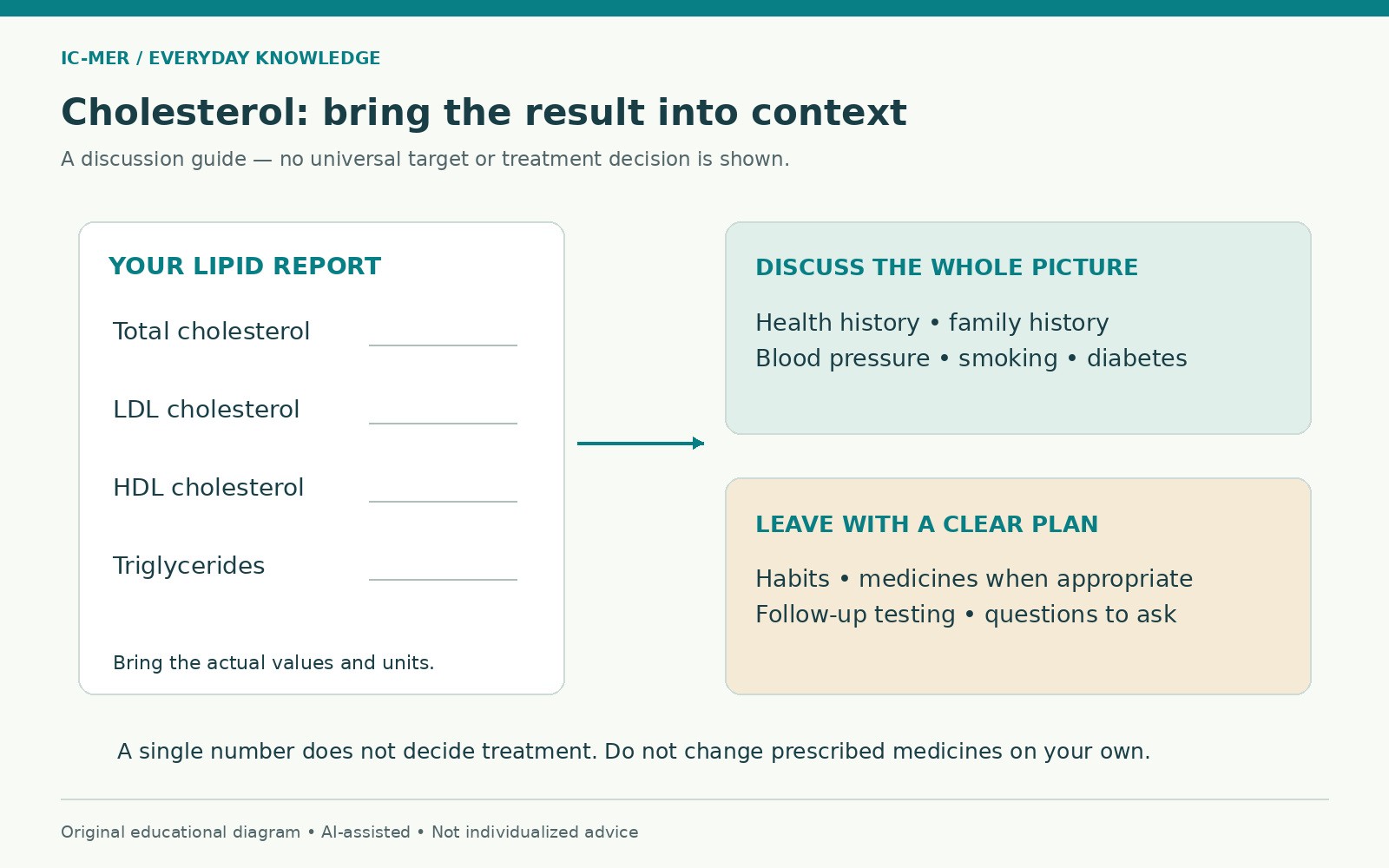
Ask your clinician to explain what your results mean for you and which part of the plan deserves attention first. Bring the actual report if it was ordered elsewhere. You do not have to arrive with a diagnosis or a proposed treatment. A useful opening is: “Please show me the result you are most concerned about, and explain what we can do next.”
Sources: [1]
Bring the family history you actually know
Family history matters alongside everyday habits. One inherited condition, familial hypercholesterolemia, can cause very high LDL cholesterol from a young age. Lifestyle changes alone are often insufficient for this condition, and medicines may be needed. Tell your care team about known inherited cholesterol problems and relatives who had heart attacks unusually young.
You do not need a perfect family tree. Write down the relative, the condition, and the approximate age if known; label uncertain details as uncertain. Useful questions include: “Does my family history change your advice?” and “Should other relatives ask about testing?” This is more informative than assuming everyone in the family has the same risk or needs the same prescription.
Sources: [2]
Choose one food change you can repeat
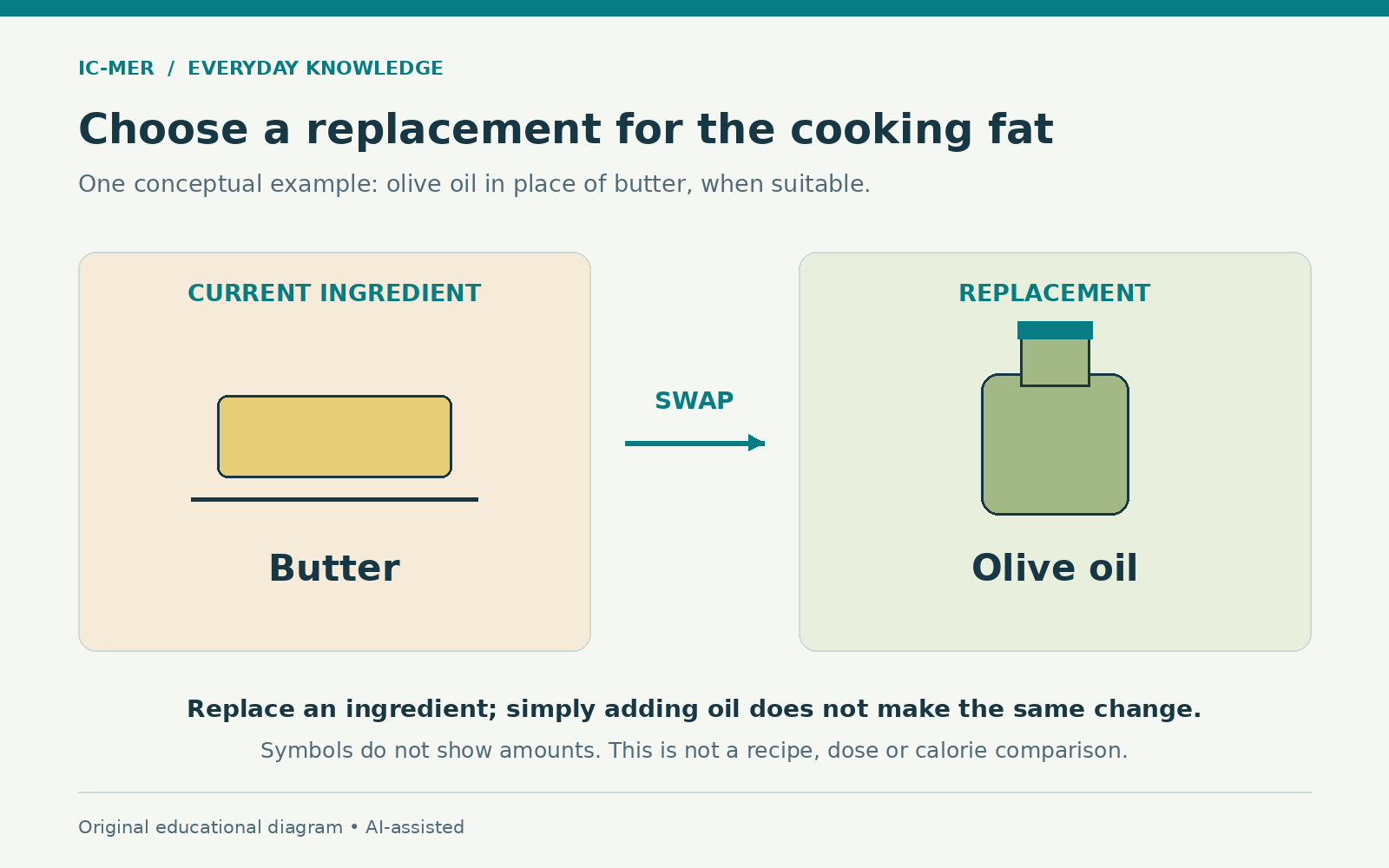
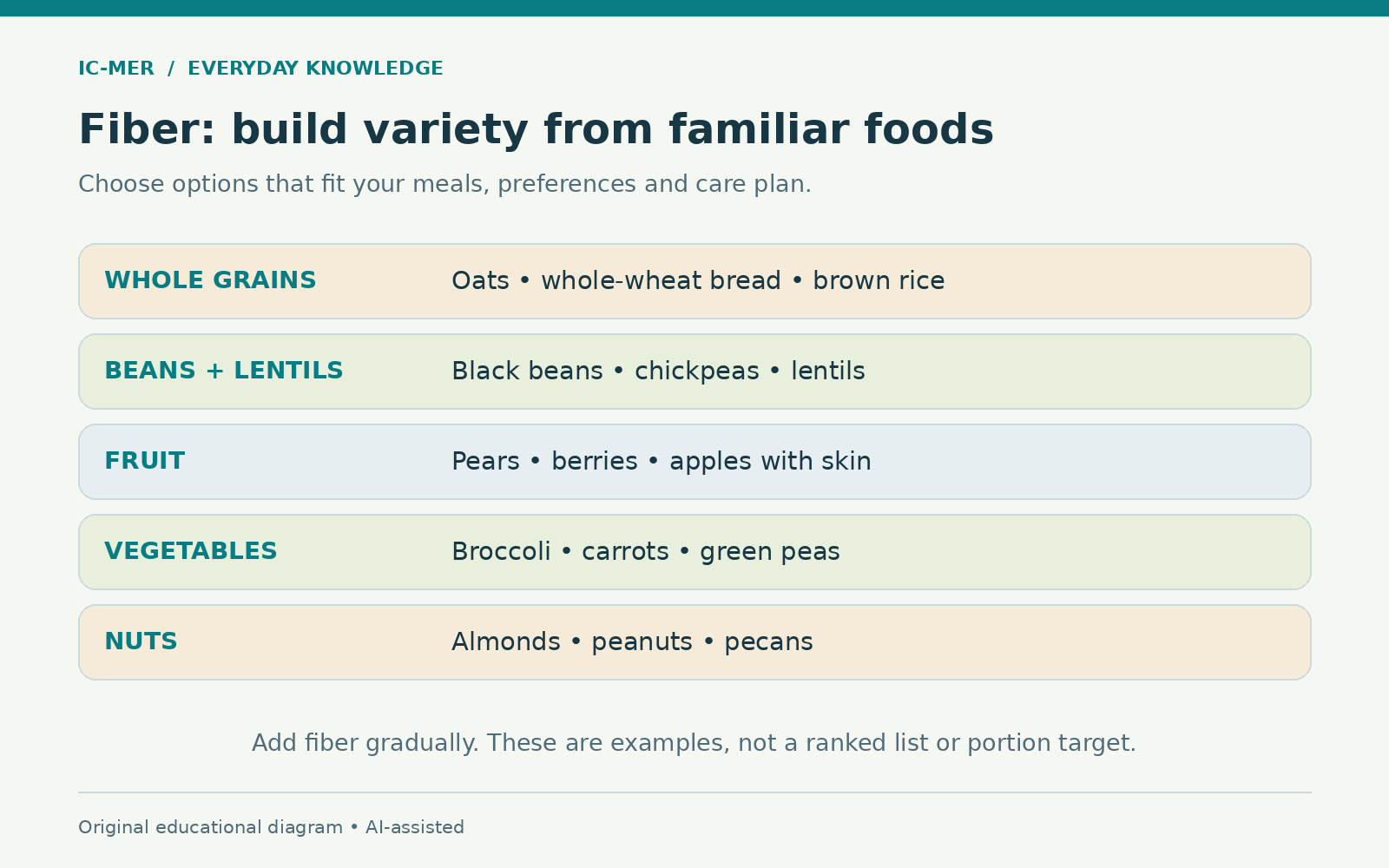
CDC recommends limiting saturated and trans fats and choosing foods that provide fiber or unsaturated fats. Oats, beans, nuts, and olive oil are examples within that guidance. Think about a familiar meal where a substitution would be easy, rather than searching for a single food to fix a laboratory result.
For example, someone who enjoys a hot breakfast could try oatmeal on two regular mornings. Someone who already cooks beans could make them a more frequent part of dinner. These are planning examples, not a prescribed menu or a promise about how much cholesterol will change. Choose foods that suit your allergies, budget, preferences, and any dietary advice you already follow.
Make the choice concrete on the shopping list. “Buy oats for Tuesday and Thursday breakfast” is easier to act on than “eat better.” Before making several changes, ask which ones are most relevant to your situation. A registered dietitian can help turn general guidance into an eating plan when individual needs are complicated.
Sources: [3]
Make room for movement and smoking support
Physical activity supports cholesterol management and cardiovascular health. Smoking damages blood vessels; quitting is another important part of protecting them. If smoking is relevant to you, ask the care team for cessation support rather than leaving it as an unspoken item on a checklist.
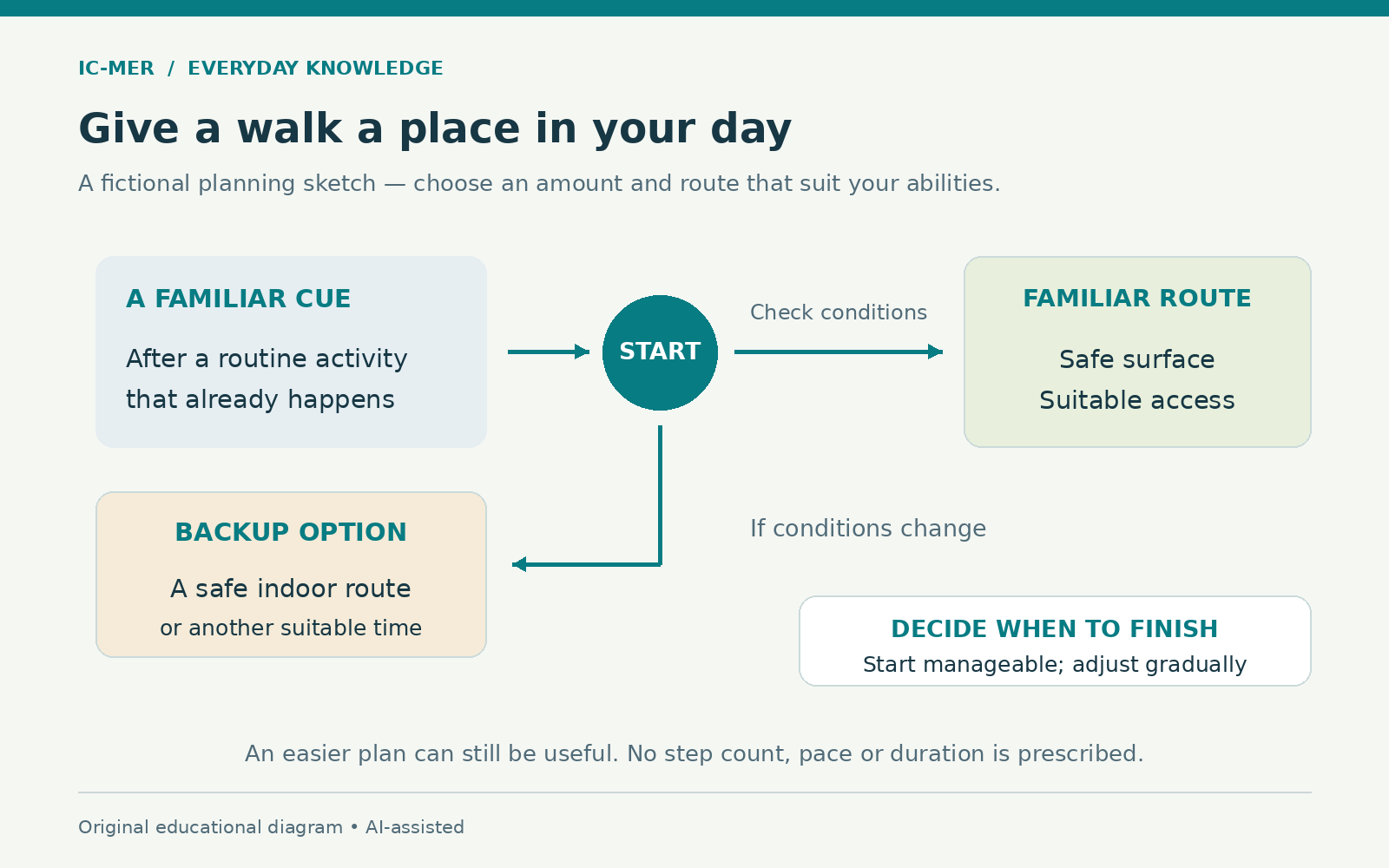
For movement, identify a realistic opening in your day: a walk with a friend, an activity you already enjoy, or a suitable option discussed with your clinician if health limitations affect exercise. Put the time and location in your calendar. Keep a backup idea for bad weather or a disrupted workday. The practical question is what you can return to regularly, without treating one missed day as the end of the plan.
Sources: [3]
Leave with a treatment and follow-up plan
Cholesterol treatment can combine lifestyle changes and prescribed medicine. Needing medicine does not make the daily habits pointless. Take medicines as directed and speak to your doctor, nurse, or pharmacist before stopping them. If cost, possible side effects, or unclear instructions make the plan difficult, tell the team so those concerns can be addressed.
Before leaving, ask: “What is our goal? What should I expect from this treatment? Who should I contact if I have a problem? When should we repeat the blood test?” Testing intervals vary, so get a date or a clear follow-up instruction rather than borrowing someone else's schedule.
Write a short note with the agreed next step, any medicine instructions, and the follow-up date. Add one habit you chose to practice. Bring that note to the next visit and describe what was manageable and what got in the way. The aim is an ongoing plan you understand, with room to adjust it together.
Sources: [4]
Sources & further reading
- CDC: About CholesterolChecked 2026-10-24
- CDC: Risk Factors for High CholesterolChecked 2026-10-24
- CDC: Preventing High CholesterolChecked 2026-10-24
- CDC: Treat and Manage High CholesterolChecked 2026-10-24
About this article
Prepared with AI assistance and an AI fact-checking pass against the sources listed above. No human clinical review is claimed. Evidence may change; consult appropriate qualified professionals for decisions about your circumstances.
Spotted a problem? Suggest a correction.