Business · 10 min read
Planning for irregular income when you work for yourself
A strong month does not have to become a spending spree, and a slow month does not have to be a surprise. Plan how business earnings reach your household.
AI-assisted educational content, checked against the listed official sources on 24 October 2026. Examples are fictional. This is general budgeting information, not individualized financial, tax, accounting or legal advice. Confirm requirements for your circumstances with appropriate qualified advisers.
Information may contain errors, omissions or outdated guidance. This article is general education, not individual medical or other professional advice. Verify important information before acting and consult an appropriately qualified professional. Never disregard medical advice, delay care or change treatment because of this article. See our accuracy disclaimer and terms.
Make the household plan fit the way you are actually paid
Working for yourself can mean receiving three payments in one week and none in the next. A photographer may earn most of a season’s revenue before winter. A freelance designer may finish work in May but receive payment in June. In either case, the household still needs groceries, housing, transport and other essentials while the business waits.
The practical goal is to decide how much money can safely move from the business to the household, and when. That is a different question from whether a job was profitable. A large payment may already have several jobs: covering business costs, meeting tax obligations, funding a predictable quiet period and supporting current household spending.
This article offers a planning framework, with fictional examples rather than recommended spending amounts. It does not assume that everyone has enough income to build a cushion immediately. Start with a plan you can describe clearly, even if the first version reveals a shortfall. Knowing the size and timing of that shortfall gives you something specific to address.
Describe your household’s minimum workable month
Write down the household expenses that would remain in a lean month. Include housing, utilities, basic food, necessary transport, insurance, essential care and required debt payments. Include dependents’ needs and costs that help you keep working, such as necessary childcare. The list should reflect your real household rather than an idealized budget that nobody can follow.
Then separate expenses that can be adjusted, paused or delayed without creating a larger problem. A restaurant meal and an essential prescription do not belong in the same category. A subscription might be optional for one person but necessary for another person’s work. Make these distinctions before a disappointing payment week, when every decision can feel urgent.
Call the total your minimum workable month. It is a planning reference, not a moral judgment or a permanent austerity target. Alongside it, keep an ordinary-month budget that includes modest discretionary spending and longer-term goals. The gap between the two shows which choices are available when receipts are lower than expected.
Use received income and a cautious look backward
Review your available records for the past year, or whatever period you have. Note what actually reached the business account, when it arrived, and what had to remain in the business. Mark unusual events: a one-time project, an unpaid break, illness, a large equipment expense or a customer who paid several invoices together. A monthly average can hide all of these.
For household planning, distinguish confirmed money from money you hope to receive. An accepted proposal, an invoice and a cleared payment are different stages. You can list expected receipts in a separate column with their expected dates, but avoid treating every possible sale as money available for groceries this week.
If you are new to self-employment, you will not have a dependable history yet. Use shorter planning intervals and label estimates as estimates. Keep a dated note of what you assumed and compare it with what happened. This creates a useful record without pretending that a few good weeks establish a dependable annual income.
Choose a household transfer rhythm you can explain
Some people find it useful to make a planned household transfer once or twice a month, instead of moving money whenever a customer pays. The amount can be reviewed as circumstances change. The purpose is to give household decisions a predictable reference while leaving enough money for known business obligations.
For example, a self-employed person might review funds every other Friday and approve only the transfer that the next few weeks can support. A planned date is not permission to transfer money that is unavailable. If the business cannot support the usual amount, record the smaller amount and the household adjustment rather than silently borrowing from money reserved for something else.
How an owner is paid depends on the business structure and applicable rules. A household transfer in this article is a budgeting concept, not instructions about payroll, distributions or accounting entries. Confirm the correct treatment with a qualified professional. Household predictability is useful only when the underlying business records and payment arrangements remain accurate.
A fictional example: one strong month supports a weaker one
Imagine that Sam has calculated a household transfer of $2,400 for the coming month. After accounting for business expenses and the tax amount established with professional help, Sam has $3,600 available for household support and a seasonal reserve. Sam transfers $2,400 and sets aside the remaining $1,200. These figures are invented for illustration; they are not tax rates or suggested income targets.
The following month, only $1,800 is available on the same basis. Sam uses $600 of the seasonal reserve to bring the household transfer to $2,400. The reserve then contains $600. Across the two months, $5,400 became available, $4,800 supported the household, and $600 remains. There is no additional income created by moving money between categories.
This approach works only while the amounts support it. Another month with $1,800 available would use the remaining $600. A further similar month would require a smaller household transfer, additional income or another explicit decision. The reserve buys time; it does not turn a persistent income gap into a sustainable budget.
Keep predictable quiet periods separate from surprises
A slow season that happens most years is worth planning for as a known feature of the work. So are annual insurance payments, scheduled time away and equipment replacement that you can reasonably anticipate. Give each a name and an estimated date. Otherwise, several predictable costs can arrive together and feel like an emergency.
Emergency savings serve a different purpose: unexpected expenses or disruptions. The Consumer Financial Protection Bureau explains that a suitable emergency savings amount depends on a person’s circumstances and that even a small amount can help. There is no single reserve target in this article that fits every household.
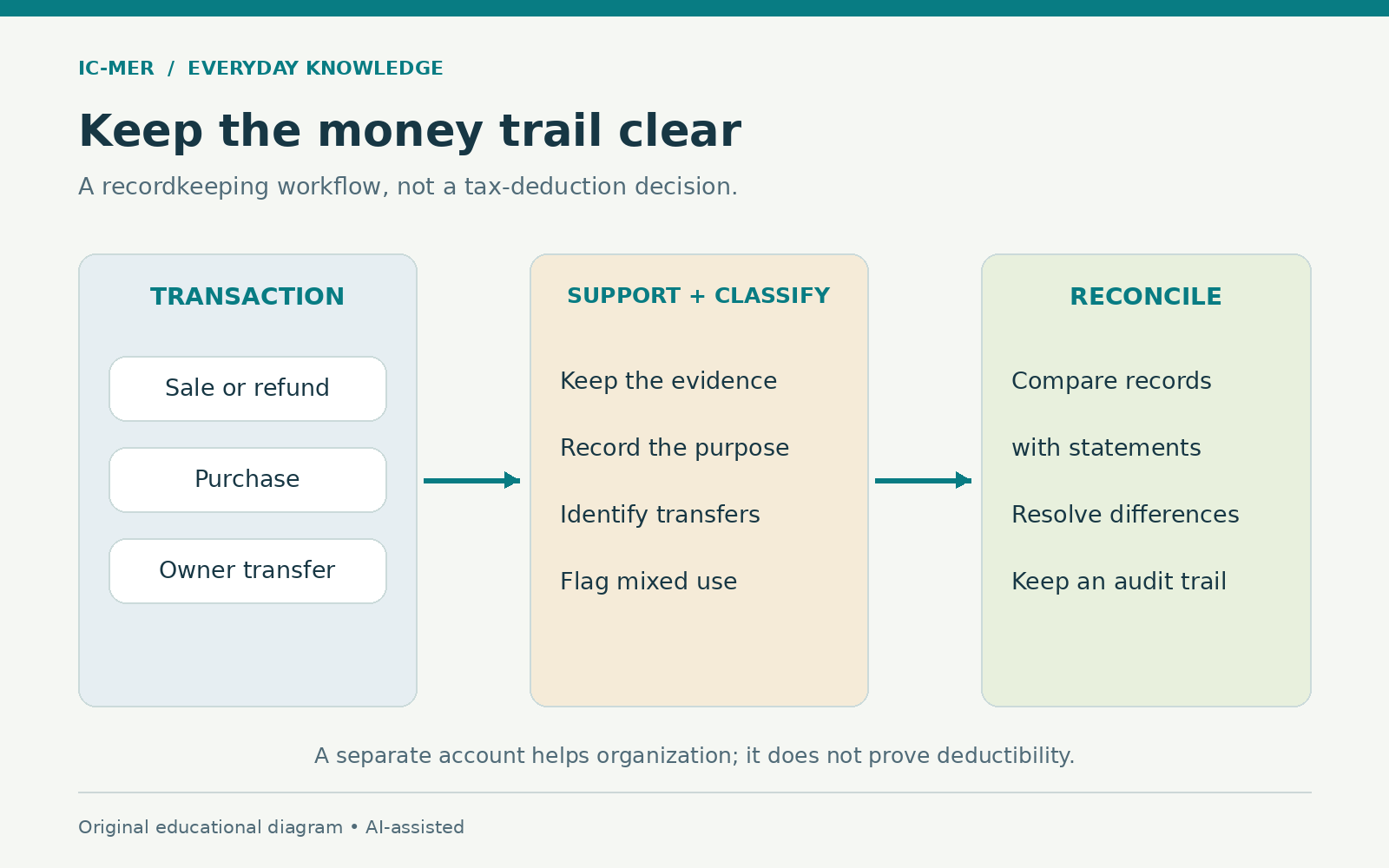
You do not necessarily need a new bank account for every purpose. A clear record can distinguish amounts within an account, provided you do not count the same dollars twice. For example, $500 earmarked for an annual bill is not also $500 available to cover a quiet month. Choose a method that you can maintain and reconcile with the actual balance.
Sources: [1]
Put dates beside the household numbers
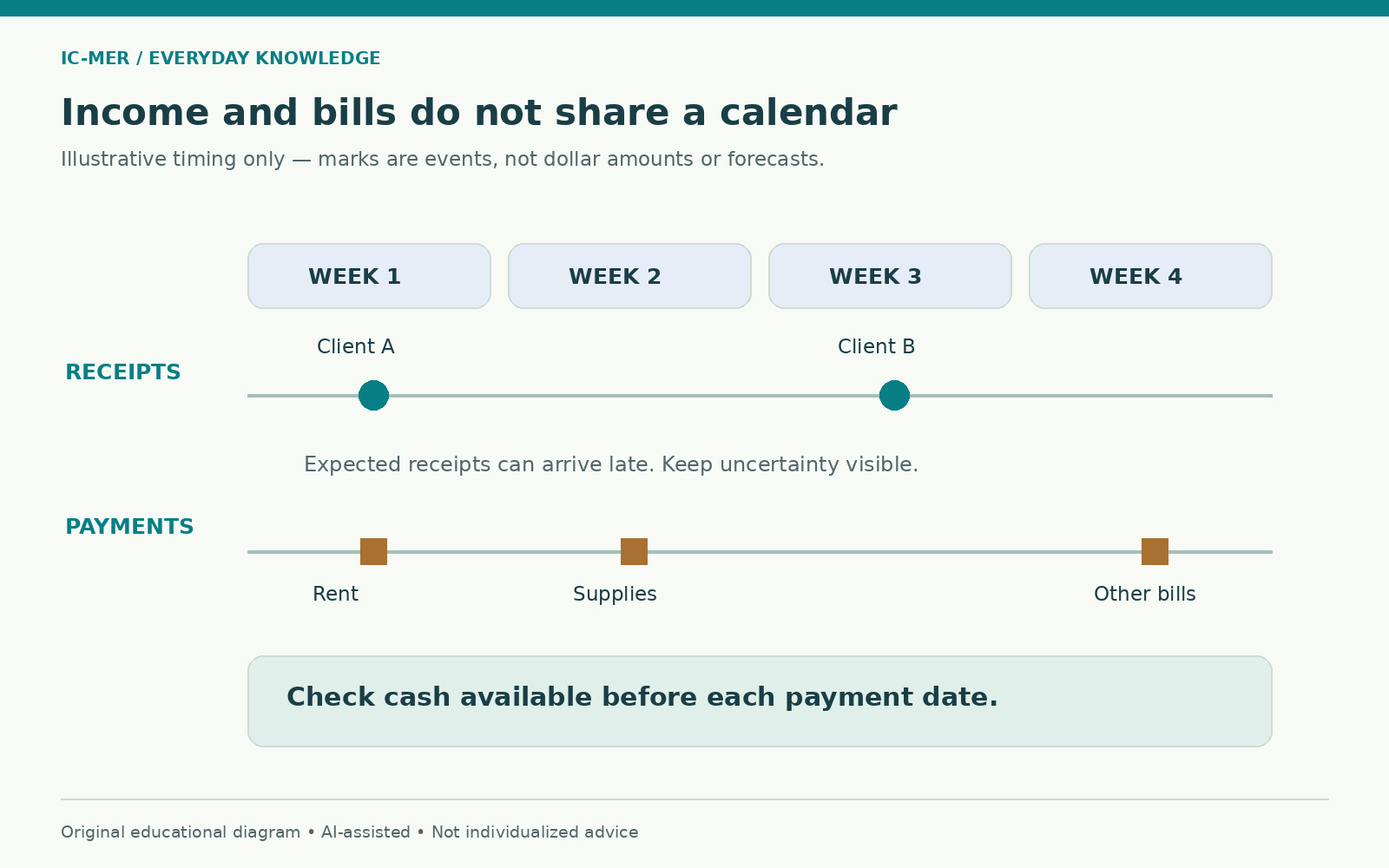
A monthly total may look manageable while the first week is impossible. Put expected household transfers and bill dates on one calendar. Add essential weekly spending and any minimum balance you intend to preserve. Check whether money is available before each payment, rather than looking only at the end-of-month total.
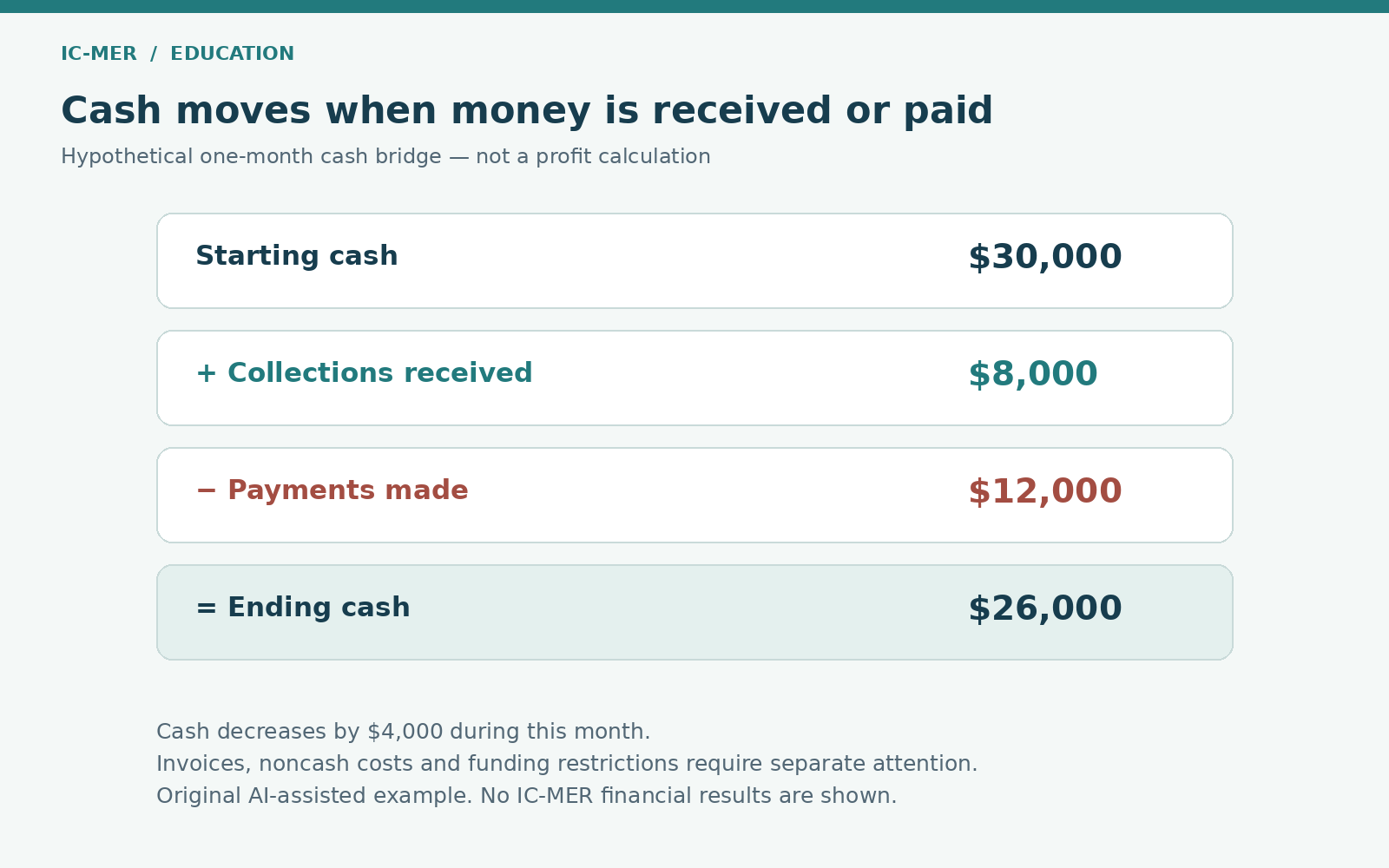
The CFPB’s cash flow budget tool uses a week-by-week approach: start with available money, add income, subtract spending and carry the ending balance into the next week. You can apply that timing idea to the household without building an elaborate spreadsheet. A notebook with four or five weekly columns is enough to start.
If a timing gap appears, investigate it early. You might be able to discuss a different bill date with a provider, but a requested change is not effective until confirmed. Check whether the change affects the next bill or creates an unusual first payment. Keep the original due date in your plan until the provider has told you otherwise.
Give tax money its own job
A customer payment is not automatically spendable household income. In the United States, federal tax is generally paid as income is earned or received, through withholding or estimated payments. The IRS says people in business for themselves generally need to make estimated tax payments; these may cover income tax and self-employment tax.
Ask a qualified tax professional, or use the current official IRS instructions where appropriate, to establish your own calculation and payment dates. Do not adopt a universal percentage from a social post or another freelancer’s budget. Household circumstances, other income, business structure and tax rules can change the amount needed.
If earnings change substantially, revisit the estimate. The IRS describes recalculating estimated tax when expected earnings change and notes that uneven income can affect the available calculation methods. This is a reason to obtain advice, not to improvise a payment schedule. In the household plan, treat money reserved for an expected tax bill as assigned money, even when the account balance looks reassuring.
Sources: [3]
Write a lean-month response before you need it
Choose a few observable signals that tell you to review the plan. Examples might include a customer payment moving beyond its expected date, a cancelled project, or the seasonal reserve falling below the amount intended for the next quiet period. Your signals should relate to actual obligations and available funds rather than an arbitrary rule borrowed from someone else.
For each signal, decide what you will check first. Is the problem a delayed receipt, lower demand, a higher expense or several things together? Then list actions in a sensible order: confirm payment information, stop optional purchases, revise the next household transfer and discuss necessary changes with anyone sharing the budget. Do not assume an overdue invoice will resolve itself just because it has been added to a forecast.
If essential bills cannot be paid, contact the relevant provider promptly to ask about available arrangements and their terms. Avoid promising a payment date based solely on uncertain future work. A clear account of what you can pay and when is more useful than a reassuring number that the budget cannot support.
Decide in advance what a good month will change
A strong month can be a chance to repair the plan. Before making new commitments, check whether it represents genuinely higher ongoing earnings or payment for several months of work. A large deposit after a long wait can feel like a windfall even when it simply catches up with expenses already incurred.
Write a short order of priorities that suits your circumstances. For example: cover overdue obligations, restore money used for the expected quiet season, fund an upcoming annual expense and then consider discretionary spending or longer-term goals. This is an example of a decision sequence, not a requirement to use these priorities in every household.
Be especially careful about turning a one-time receipt into a permanent monthly cost. A purchase that is affordable today may bring subscriptions, maintenance or financing payments later. Review those future costs against a quieter month. You can enjoy the benefits of successful work while still distinguishing a one-time choice from a commitment that must be supported repeatedly.
Include time off and the people who share the budget
Self-employment planning should make room for ordinary life. Identify periods when you expect fewer billable hours: holidays, caregiving, school breaks or planned training. If taking a week away reduces receipts later, place the expected effect in the month when payment would otherwise arrive. The income impact may not fall in the same week as the absence.
If you share household finances, agree on what the planned transfer covers and what happens if it changes. A partner should not have to guess whether a large business deposit means more household money is available. It can help to use a short shared note showing the next transfer date, the agreed amount and any decision that needs discussion.
Keep the conversation specific. Instead of saying that work is unpredictable, explain which receipts are uncertain and which household choices might change. This leaves room for collaborative decisions about spending, caregiving or work availability. It also prevents one person from carrying the entire planning burden while everyone else sees only the bank balance.
Review the plan with a few useful questions
Once a week, compare the next planned household transfer with actual available money and the obligations already assigned to it. Once a month, compare expected and actual receipts, household spending and reserve use. Record the reason for meaningful differences. You are looking for a pattern that changes decisions, not an immaculate spreadsheet.
Ask whether the usual household transfer is supported over time. Ask whether a quiet period is lasting longer than expected. Ask whether an annual expense has been omitted or a supposedly temporary cost has become routine. If the plan depends on repeatedly using reserves without rebuilding them, make that visible and reconsider the spending level, income assumptions or both.
Start with one practical action today: write your minimum workable month, choose the next household review date and identify which available dollars already have a job. A modest plan that you revisit can become more accurate as your business develops. The aim is to make the next decision clearer, without pretending that uneven income can be made perfectly predictable.
Sources & further reading
- Consumer Financial Protection Bureau: An essential guide to building an emergency fundChecked 2026-10-24
- Consumer Financial Protection Bureau: Creating a cash flow budgetChecked 2026-10-24
- Internal Revenue Service: Estimated taxesChecked 2026-10-24
About this article
Prepared with AI assistance and an AI fact-checking pass against the sources listed above. No human clinical review is claimed. Evidence may change; consult appropriate qualified professionals for decisions about your circumstances.
Spotted a problem? Suggest a correction.