Medicine · 7 min read
Reducing type 2 diabetes risk through everyday habits
Reducing type 2 diabetes risk involves more than a strict diet. Learn how to connect manageable daily changes with testing, a prevention program, and follow-up.
AI-assisted educational content; not human clinical review or individualized medical advice. A qualified health professional can assess diabetes risk, arrange testing, and advise on appropriate activity, nutrition, and treatment.
Information may contain errors, omissions or outdated guidance. This article is general education, not individual medical or other professional advice. Verify important information before acting and consult an appropriately qualified professional. Never disregard medical advice, delay care or change treatment because of this article. See our accuracy disclaimer and terms.
Make prevention a supported plan
Learning that you might develop type 2 diabetes can bring a strong urge to overhaul your life immediately. A more useful first step is to connect two things: a clear conversation about your risk and a few changes you can keep practicing. Healthy eating and physical activity can help prevent or delay type 2 diabetes. They do not guarantee that a person will never develop it.
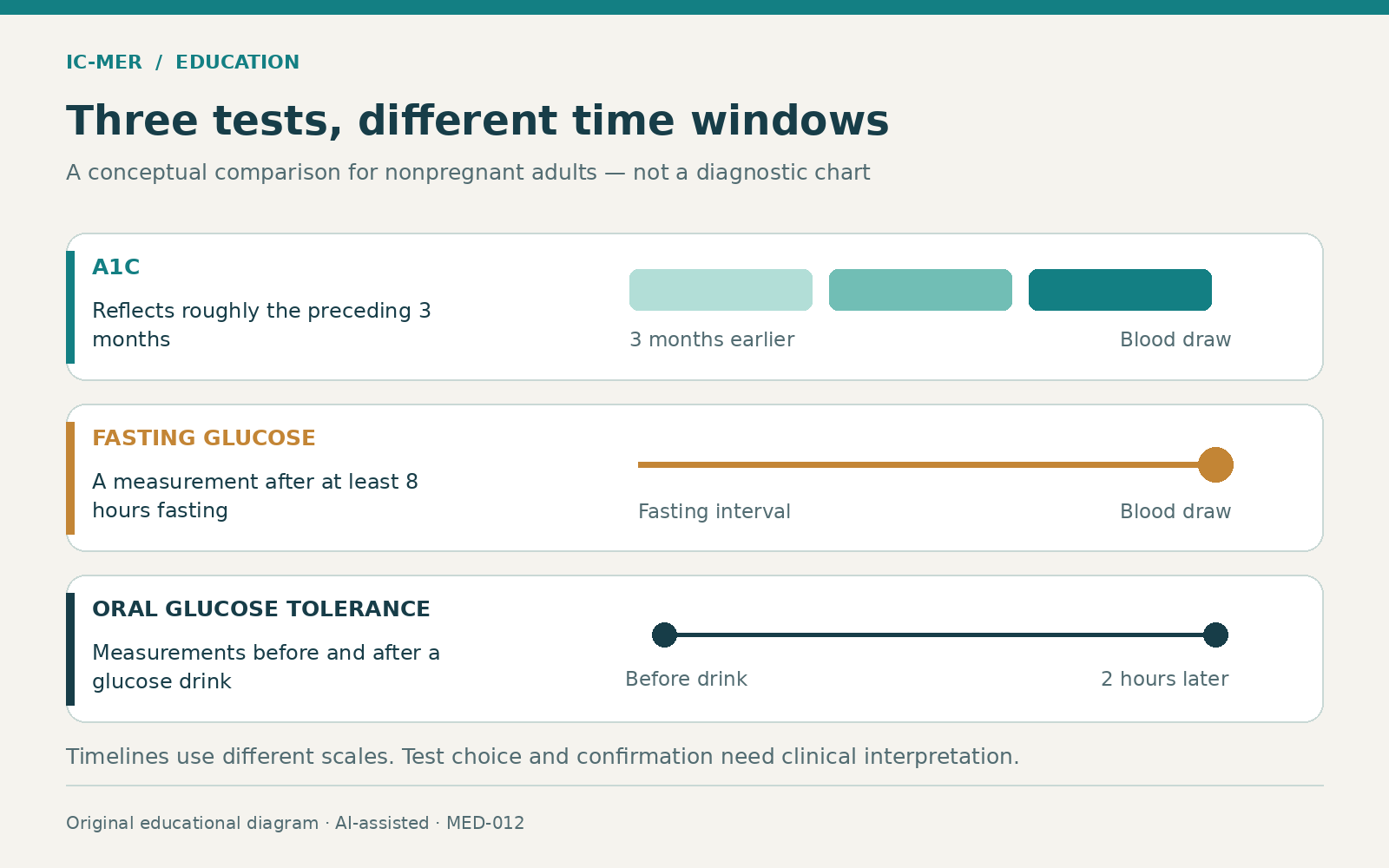
Prediabetes means blood sugar is above the normal range but below the range used to diagnose diabetes. It often has no obvious symptoms. Feeling well therefore does not tell you whether testing is needed. Ask a health professional about your risk, especially if you have a family history of type 2 diabetes or previously had diabetes during pregnancy.
This article concentrates on building everyday support for prevention. It does not diagnose prediabetes, provide a weight-loss prescription, or replace care for someone who already has diabetes. The most useful outcome is a plan that names what you will try, who can help, and when you will check back.
Sources: [1]
Give the medical conversation a specific purpose
A risk questionnaire can help start a discussion; it does not diagnose diabetes or prediabetes. CDC advises people with a high risk-test result to discuss blood testing with their doctor. Instead of waiting until you have achieved an ideal routine, make the appointment part of the prevention plan.
Prepare a short note with what you know: relevant family history, any prior gestational diabetes, previous blood-test results, current medicines, and the main question you want answered. Unknown details can stay unknown. You are gathering useful information, not proving that you have done everything correctly.
Try asking: “Do I need testing now? If the result shows prediabetes, what support would you recommend? When should I return?” Ask the clinician to explain how the answers fit your own situation. Record the agreed follow-up rather than choosing a testing interval from a friend or an internet discussion.
If you already have a diagnosis of diabetes, ask about diabetes management and education. A prevention program has a different purpose; it should not substitute for the treatment and monitoring you need.
Turn eating advice into two repeatable decisions
NIDDK recommends eating healthfully most of the time and replacing sweetened drinks with water as part of lowering type 2 diabetes risk. If weight loss is appropriate, portions and total calorie intake may also be part of an individualized plan. You do not need to invent a new menu for every meal to start a conversation about those changes.
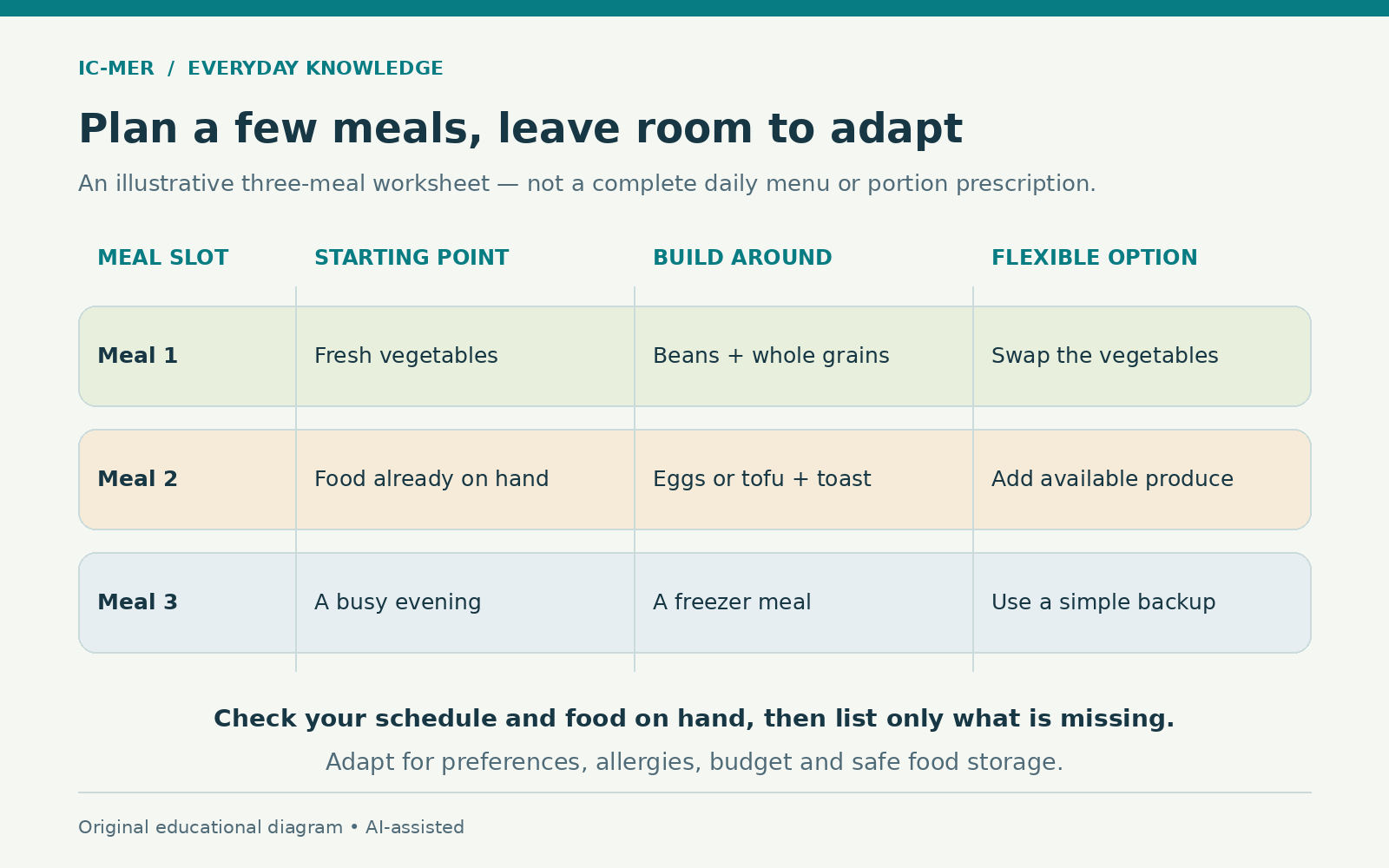
Choose two recurring decisions that currently feel rushed. Perhaps one is the drink purchased on the way to work, and the other is dinner when you arrive home late. Write a specific alternative for each. For the first, that might mean carrying water. For the second, it could mean keeping ingredients for a familiar meal that fits the eating advice you received.
These are examples of organizing a routine, not a prescribed diabetes-prevention menu. Check your cupboards before adding purchases, and choose an option your household actually eats. A meal plan that depends on unfamiliar ingredients and uninterrupted cooking time may need a simpler version.
Ask for help translating recommendations when food allergies, kidney disease, an eating disorder history, limited food access, or other needs make generic advice unsuitable. Bring a real example of a difficult day. “I finish work late and have ten minutes to prepare food” gives a dietitian or clinician something concrete to work with.
Sources: [3]
Build activity around an available place and time
General adult activity guidance calls for at least 150 minutes of moderate-intensity aerobic activity weekly, alongside muscle-strengthening activity on at least two days. Brisk walking is one example of moderate activity. Activity can be divided into smaller periods, and some activity is better than none. These are general guidelines, not a requirement to reach the full amount on your first week.
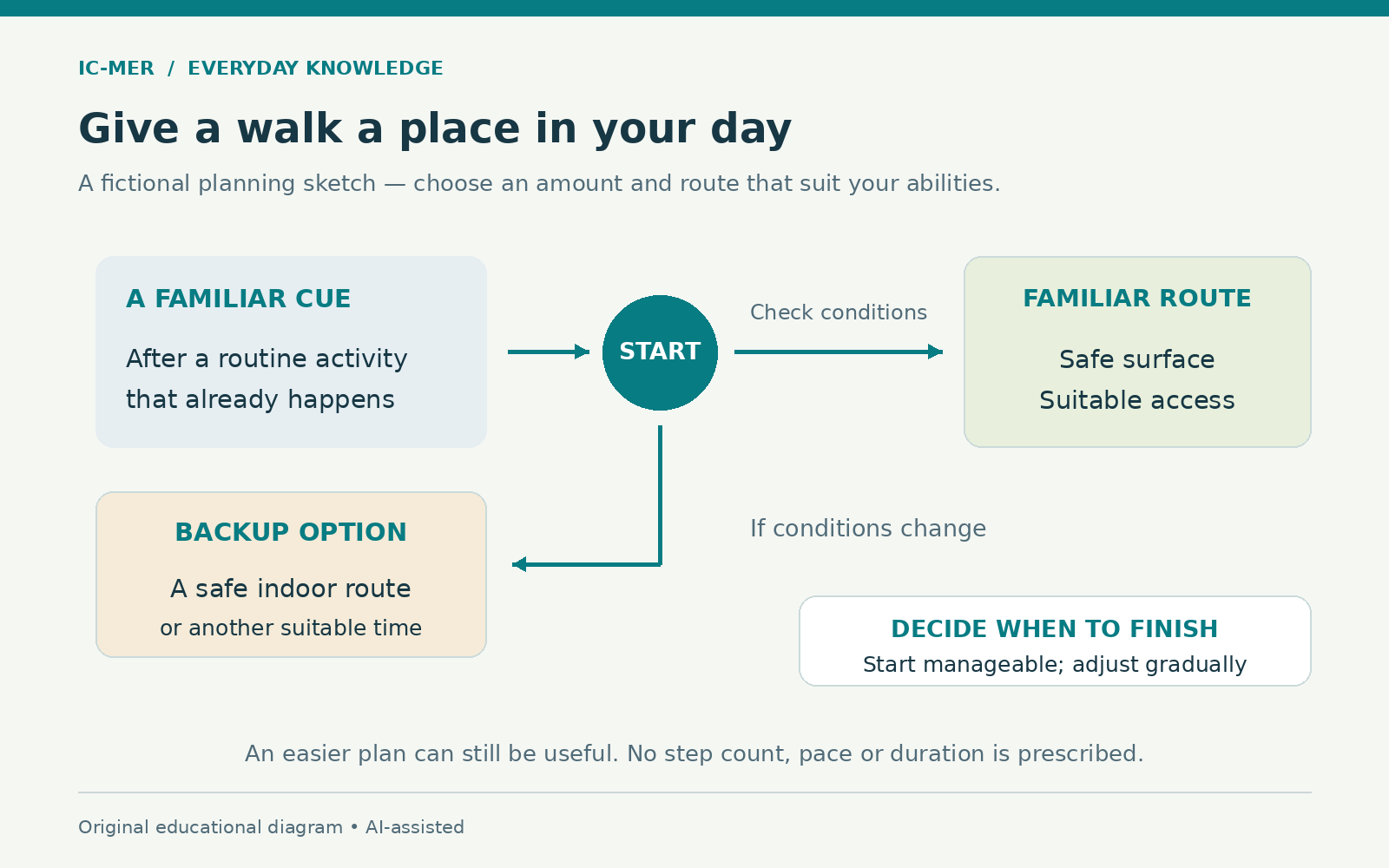
If you have been inactive, discuss suitable activities with a health professional and build gradually. Think about a place you can actually use: a route near home, an indoor space, or another accessible setting. An expensive membership is not the starting question. The starting question is whether the activity is suitable and feasible for you.
Make an appointment with the activity, then identify the obstacle most likely to interrupt it. For example, a person planning an outdoor walk might decide in advance what to do if the weather is poor. Another person might need an activity that fits around childcare. Treat these as design problems in the plan, rather than a judgment about motivation.
Keep a simple record of what you tried and how it felt. Bring questions about pain, limitations, or appropriate progression to your care team rather than using an online schedule as a personalized exercise prescription.
Discuss weight without making it the whole story
For people for whom weight loss is appropriate, NIDDK identifies losing about 5% to 7% of starting weight as a goal that may help prevent or delay type 2 diabetes. This is not a universal instruction for everyone to lose weight, and it is not a threshold that guarantees protection. Ask whether weight change belongs in your own plan and what support would make that safe and sustainable.
Even if weight is one agreed goal, bring other information to follow-up visits. Were you able to practice the activity plan? Did the meal arrangement fit your workday? Did a change create hunger, stress, or an expense you could not maintain? These observations help explain what needs adjusting.
Avoid turning each day into a pass-or-fail score. If the plan repeatedly breaks down at the same point, change that part of the plan. For example, an evening routine might need a different time or a simpler starting step. The purpose of recording difficulties is to make support more useful.
Sources: [3]
Ask about a recognized prevention program
CDC's National Diabetes Prevention Program includes recognized lifestyle-change programs for people with prediabetes or at high risk of type 2 diabetes who do not already have diabetes. The program lasts a year and combines coaching, practical skills, and group support. Options may be offered in person or online. It is designed for sustained change rather than a brief diet challenge.
Ask your clinician whether this type of program is suitable for you. Then ask the program provider about eligibility, the meeting schedule, cost or coverage, and what participation involves. Do not assume that a listing means the service is free, available immediately, or covered by your insurance.
Also ask the questions that determine whether you can attend: Is the format accessible? Is support available in your preferred language? What happens when work or caregiving makes you miss a session? For an online option, clarify the technology and internet access needed.
A useful program conversation starts with your actual circumstances. You can say that you want support with shopping, movement, stress, or staying engaged after a difficult week. You do not need to solve those problems before asking whether the program can help.
Sources: [2]
Make a small first-week plan
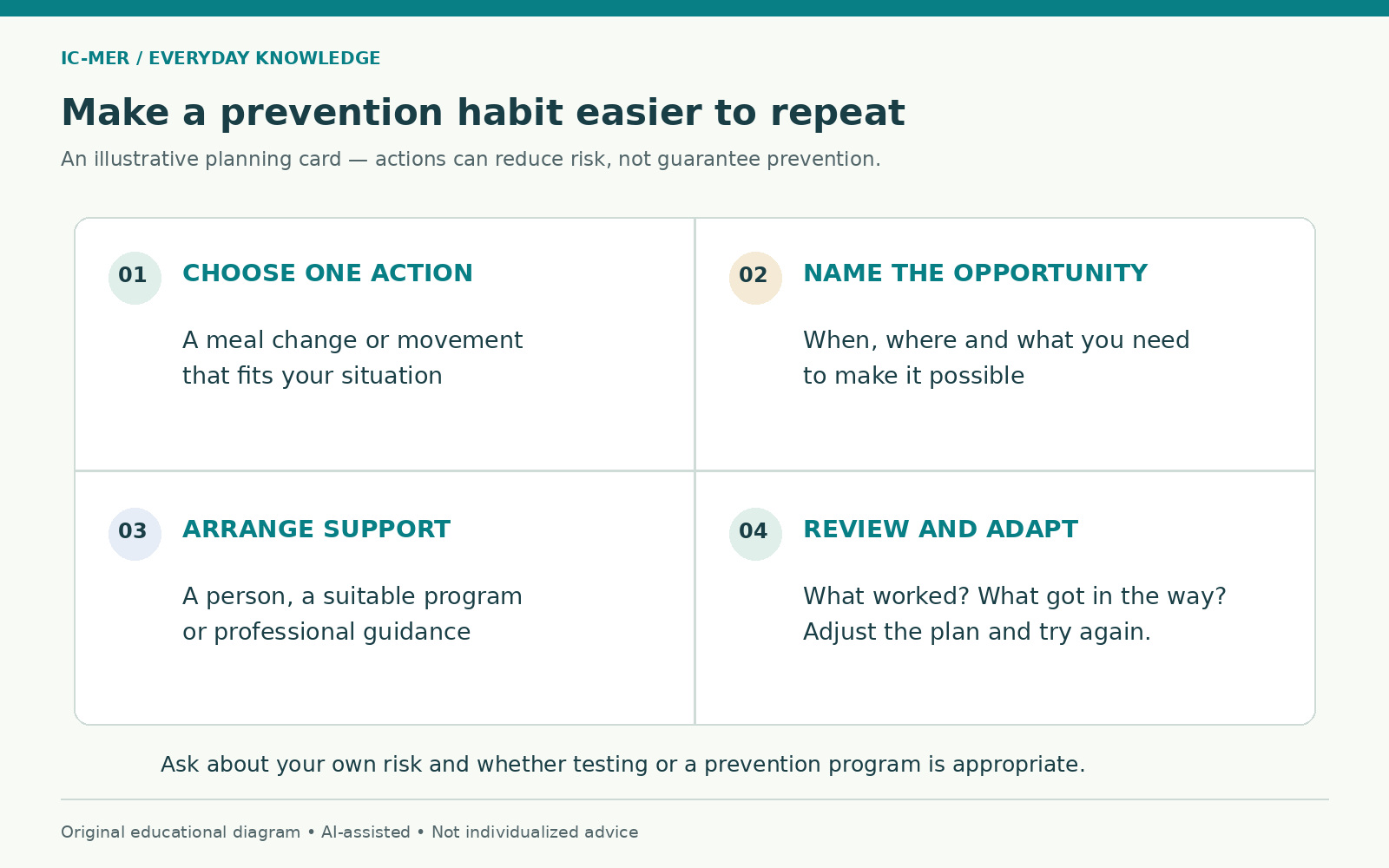
Here is an illustrative starting structure, not a tested treatment schedule. First, put the clinical next step in your calendar: an appointment, a requested blood test, or a follow-up conversation. Then choose one food or drink decision and one suitable activity opportunity to practice. Keep the plan small enough that you can describe it in a few sentences.
For example: “I will ask about my testing needs, carry water on my workdays, and set aside a suitable time for activity.” Add what you need beforehand, such as a water bottle or a conversation about exercise limitations. There is no need to promise a laboratory change by the end of the week.
At the end of that week, review the practical details. Which action happened? What made it easier? Which obstacle appeared twice? Decide whether to repeat the same plan, simplify it, or ask for additional support. A prevention program or care team can help with that problem-solving over time.
Sources: [2]
Keep follow-up in the plan
Everyday habits and medical follow-up belong together. NIDDK also advises discussing whether medication such as metformin has a role in prevention for your circumstances; that decision belongs with a clinician. Do not start a medicine or change an existing prescription based on general prevention advice.
Keep the next review date visible. Take your questions, your test results if available, and a brief account of what you have tried. Ask what to continue, what to adapt, and what the next assessment should be. You can make useful changes while still needing professional support. Prevention is an ongoing effort to lower risk, not a promise that effort alone controls every outcome.
Sources: [3]
Sources & further reading
- CDC: Preventing Type 2 DiabetesChecked 2026-10-24
- CDC: Preventing Type 2 Diabetes with the Lifestyle Change ProgramChecked 2026-10-24
- NIDDK: Preventing Type 2 DiabetesChecked 2026-10-24
- CDC: Adult Activity: An OverviewChecked 2026-10-24
About this article
Prepared with AI assistance and an AI fact-checking pass against the sources listed above. No human clinical review is claimed. Evidence may change; consult appropriate qualified professionals for decisions about your circumstances.
Spotted a problem? Suggest a correction.